Qiang Wang, Deng Wen Juan, Song Shu Ling, Pan Ling Hui
Department of Anesthesiology, Guangxi Medical University Cancer Hospital, Guangxi, China.
Department of Radiology, Guangxi Medical University Cancer Hospital, Guangxi, China.
Heliyon. 2024 Aug 31;10(17):e37101. doi: 10.1016/j.heliyon.2024.e37101. eCollection 2024 Sep 15.
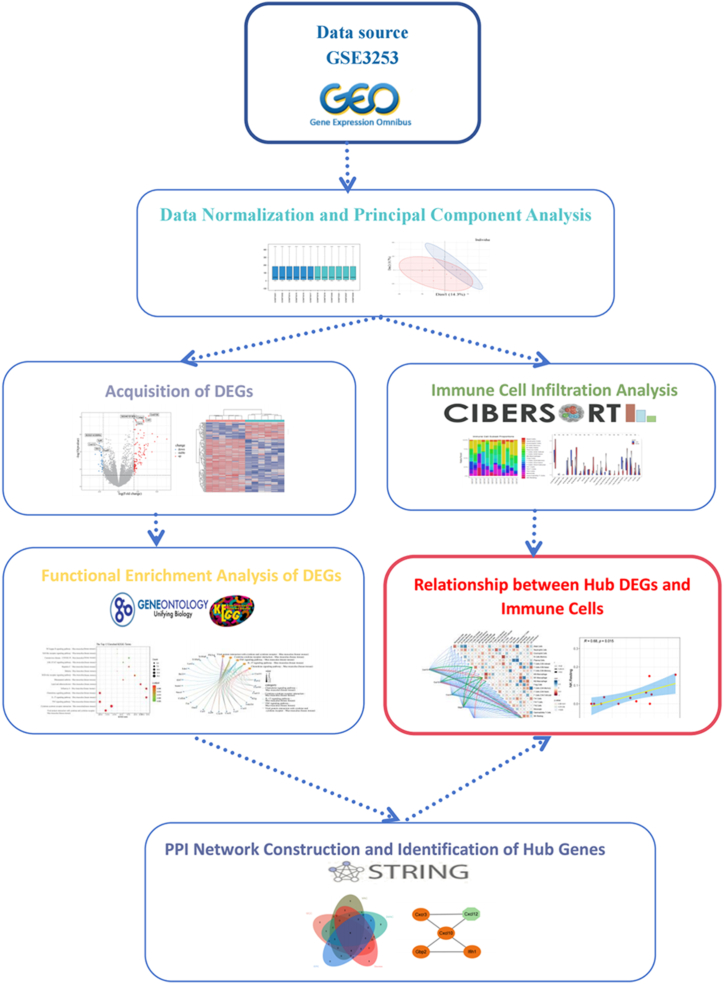
The occurrence of immunity and inflammation outside the central nervous system frequently results in acute cognitive impairment among elderly patients. However, there is currently a lack of standardized methods for diagnosing acute cognitive impairment. The objective of our study was to identify potential mRNA biomarkers and investigate the pathogenesis of acute cognitive impairment in mice brains.
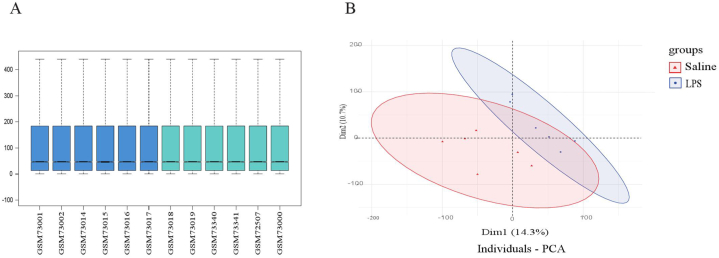
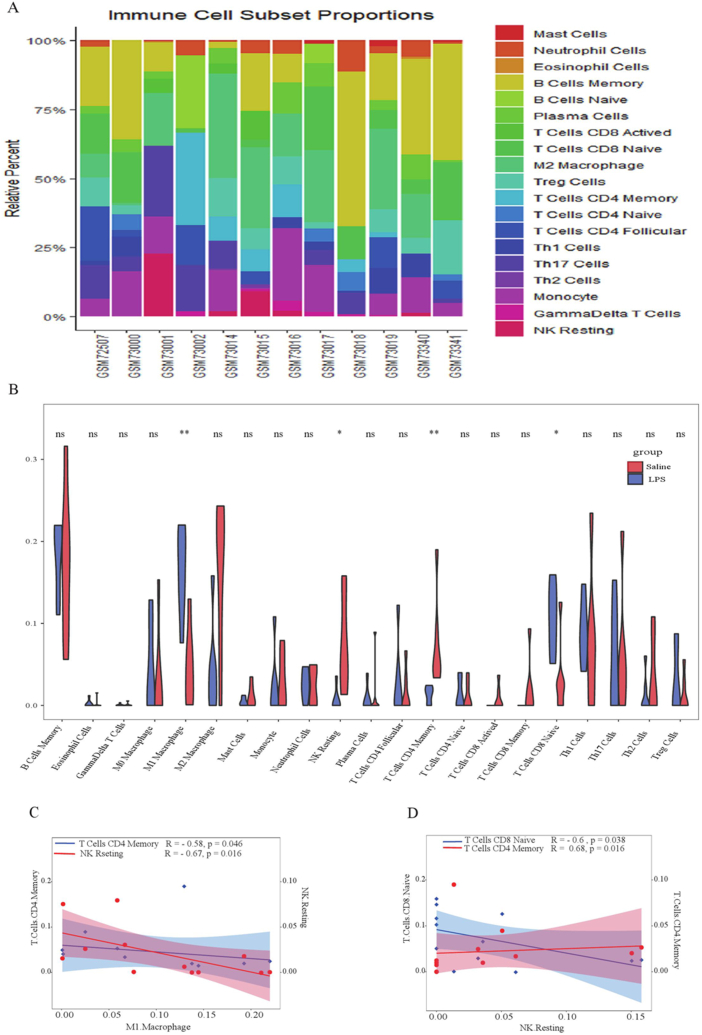
To analyze changes in hub genes associated with acute cognitive impairment, bioinformatics analysis was performed on the mouse brain injury data of sterile saline control group and lipopolysaccharide (LPS) induced experimental group in Gene Expression Omnibus (GEO). Functional analysis was conducted using Gene Ontology (GO), Kyoto Encyclopedia of Genes and Genomes (KEGG), which facilitated to identify some potential mRNA biomarkers for hub gene expression in mice brains. Additionally, the "CIBERSORT X″ R kit was employed to examine immune cell infiltrations of mice brains in LPS group and saline group.
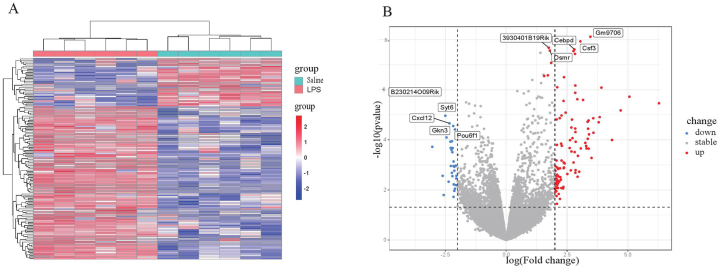
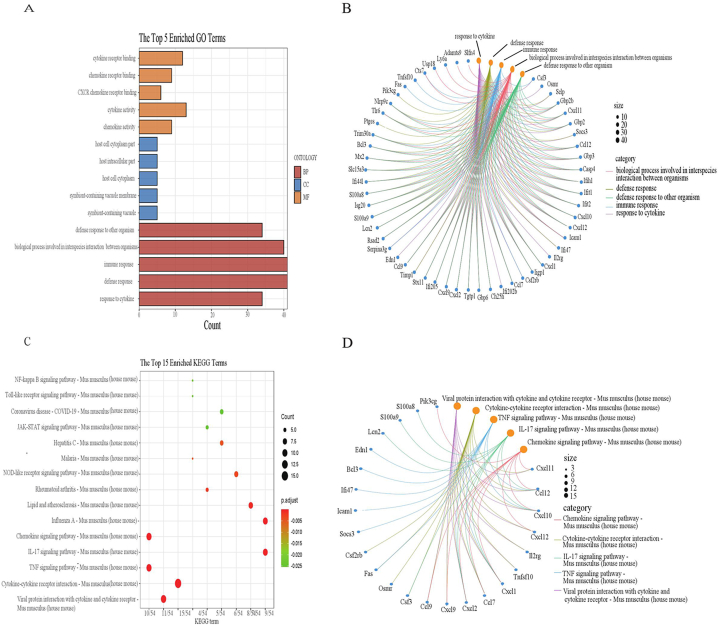
In the LPS and saline group, 102 significantly upregulated differentially expressed genes (DEGs) and 32 downregulated DEGs were identified. The pathway enrichment analysis using GO and KEGG revealed that these DEGs were mainly related to the regulation of cytokine, cytokine-cytokine receptor interaction, as well as protein interaction with cytokine and cytokine receptor. Immune cell infiltration analysis indicated potential involvement of M1 macrophages, NK cells resting, T cells CD4 memory, and T cells CD8 naive in the process of cognitive impairment. By constructing a protein-protein interaction (PPI) network, five hub genes (Cxcl10, Cxcl12, Cxcr3, Gbp2, and Ifih1) showed significant associations with immune cell types by using a threshold Spearman's rank correlation coefficient of R > 0.50 and p < 0.05.
The mRNA expression profile of the mice brain tissues in the LPS group differed from that in the normal saline group. These significantly expressed mRNAs may act an importance in the pathogenesis of acute cognitive impairment through mechanisms involving immunity and neuroinflammation.
中枢神经系统外的免疫和炎症反应频繁导致老年患者出现急性认知障碍。然而,目前缺乏诊断急性认知障碍的标准化方法。我们研究的目的是识别潜在的mRNA生物标志物,并探讨小鼠大脑中急性认知障碍的发病机制。
为分析与急性认知障碍相关的枢纽基因变化,对基因表达综合数据库(GEO)中无菌生理盐水对照组和脂多糖(LPS)诱导实验组的小鼠脑损伤数据进行生物信息学分析。使用基因本体论(GO)、京都基因与基因组百科全书(KEGG)进行功能分析,有助于识别小鼠大脑中枢纽基因表达的一些潜在mRNA生物标志物。此外,使用“CIBERSORT X”R工具包检查LPS组和生理盐水组小鼠大脑的免疫细胞浸润情况。
在LPS组和生理盐水组中,共鉴定出102个显著上调的差异表达基因(DEG)和32个下调的DEG。使用GO和KEGG进行的通路富集分析表明,这些DEG主要与细胞因子调节、细胞因子 - 细胞因子受体相互作用以及蛋白质与细胞因子和细胞因子受体的相互作用有关。免疫细胞浸润分析表明,M1巨噬细胞、静息NK细胞、CD4记忆T细胞和CD8幼稚T细胞可能参与了认知障碍过程。通过构建蛋白质 - 蛋白质相互作用(PPI)网络,使用阈值Spearman等级相关系数R > 0.50和p < 0.05,五个枢纽基因(Cxcl10、Cxcl12、Cxcr3、Gbp2和Ifih1)与免疫细胞类型显示出显著关联。
LPS组小鼠脑组织的mRNA表达谱与生理盐水组不同。这些显著表达的mRNA可能通过免疫和神经炎症机制在急性认知障碍的发病机制中发挥重要作用。