Akbar Ubaida, Singh Jyoti, Rasane Prasad, Nanda Vikas, Basak Achyuta, Assouguem Amine, Ullah Riaz, Ali Essam A, Kaur Sawinder
Department of Food Technology and Nutrition, Lovely Professional University, Phagwara, 144003, Punjab, India.
Department of Food Engineering and Technology, Sant Longowal Institute of Engineering and Technology, Longowal, 148106, Distt. Sangrur, Punjab, India.
Heliyon. 2024 Aug 29;10(17):e36964. doi: 10.1016/j.heliyon.2024.e36964. eCollection 2024 Sep 15.
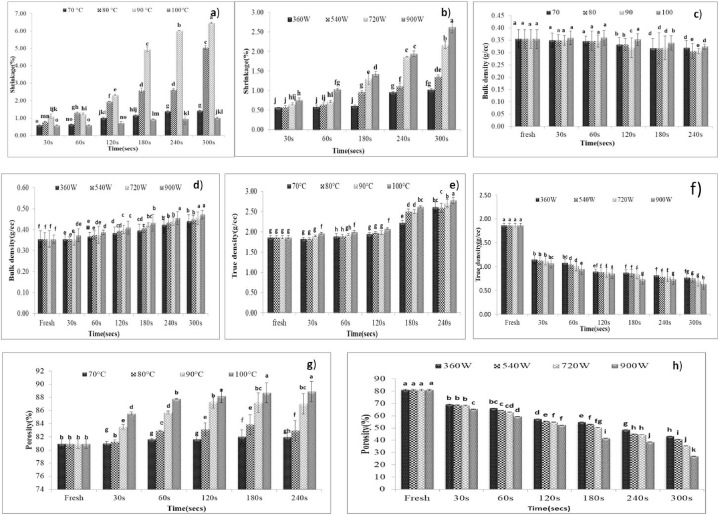
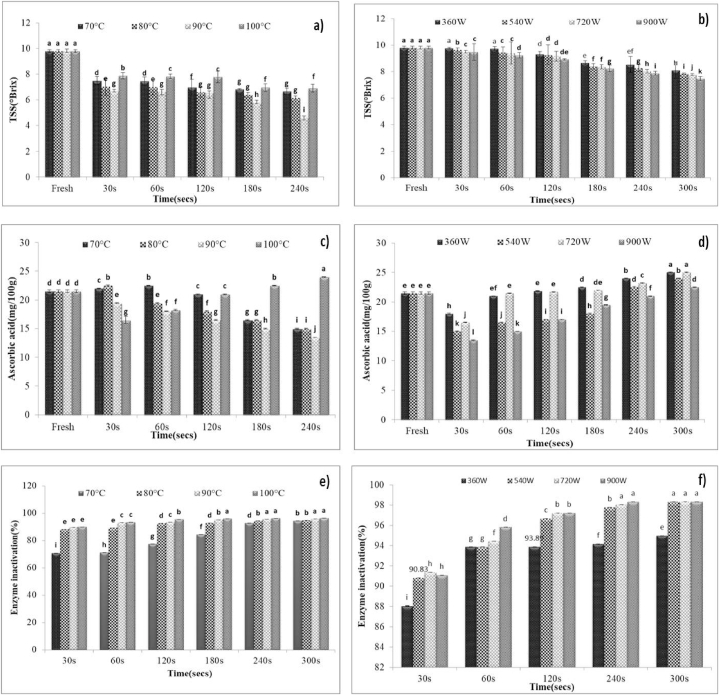
Baby corn, characterized by its high water activity and elevated respiration rate, poses a formidable obstacle to prolonged storage under standard ambient conditions and necessitates specialized treatments for transportation to distant locations. One of the primary postharvest challenges associated with baby corn is the occurrence of brown pigment formation because of enzymatic browning at the apex of its immature ovules, cut surfaces, and silk attached to the young ears. The present study was undertaken to investigate the effect of different blanching treatments on peroxidase inactivation, physicochemical properties, and functional properties of baby corn. The treatments applied were hot water blanching (HWB) at temperatures ranging from 70°C to 90 °C for 30-240 s, steam blanching (SB) for 30-240 s, and microwave blanching (MWB) at power levels of 360 W-900 W for 30-300 s. Results indicated that 90 % peroxidase enzyme inactivation occurred under different methods as 90 °C for 60 s for HWB, 100 °C for 60 s for SB, and 540 W for 30 s for MWB. These blanching methods have shown significant effects on the properties under investigation. MWB demonstrated the highest retention of ascorbic acid (94.15 %) and minimal color changes (ΔE = 5.72) in comparison to hot water and steam blanching. Similarly, the result for total flavonoid content for 540 W, 90 °C and 100 °C for 30, 60, and 60 s were found to be 3.01,1.99 and 2.10 mg QE/100g, phenols 48.98, 47.99 and 48.03 mg GAE/100g and DPPH (%) 42.55, 34.20 and 37.08 % respectively. The findings suggest that microwave blanching of baby corn at 540 W for 30 s holds promise to inactivate the peroxidase enzyme with better retention of physicochemical and functional properties.
嫩玉米因其高水分活性和较高的呼吸速率,在标准环境条件下长时间储存构成了巨大障碍,远距离运输需要进行专门处理。与嫩玉米相关的主要采后挑战之一是,由于其未成熟胚珠顶端、切割表面以及附着在嫩穗上的花丝发生酶促褐变,从而出现褐色色素形成。本研究旨在探究不同热烫处理对嫩玉米过氧化物酶失活、理化性质和功能特性的影响。所采用的处理方法包括:70°C至90°C热水热烫(HWB)30 - 240秒、蒸汽热烫(SB)30 - 240秒以及功率为360W - 900W的微波热烫(MWB)30 - 300秒。结果表明,不同方法下过氧化物酶失活率达90%的条件为:热水热烫90°C 60秒、蒸汽热烫100°C 60秒、微波热烫540W 30秒。这些热烫方法对所研究的特性显示出显著影响。与热水热烫和蒸汽热烫相比,微波热烫显示出最高的抗坏血酸保留率(94.15%)和最小的颜色变化(ΔE = 5.72)。同样,540W、90°C和100°C分别处理30、60和60秒后的总黄酮含量结果分别为3.01、1.99和2.10mg QE/100g,酚类物质含量分别为48.98、47.99和48.03mg GAE/100g,DPPH(%)分别为42.