Zhai Qiming, Wang Zhiwei, Tang Han, Hu Shanshan, Chen Meihua, Ji Ping
Stomatological Hospital of Chongqing Medical University, Chongqing Key Laboratory of Oral Diseases and Biomedical Sciences, Chongqing Municipal Key Laboratory of Oral Biomedical Engineering of Higher Education, Chongqing 401147, China.
Department of Orthodontics, School of Stomatology, Fourth Military Medical University, Xi'an, Shaanxi 710032, China.
Genes Dis. 2024 Jan 19;11(6):101212. doi: 10.1016/j.gendis.2024.101212. eCollection 2024 Nov.
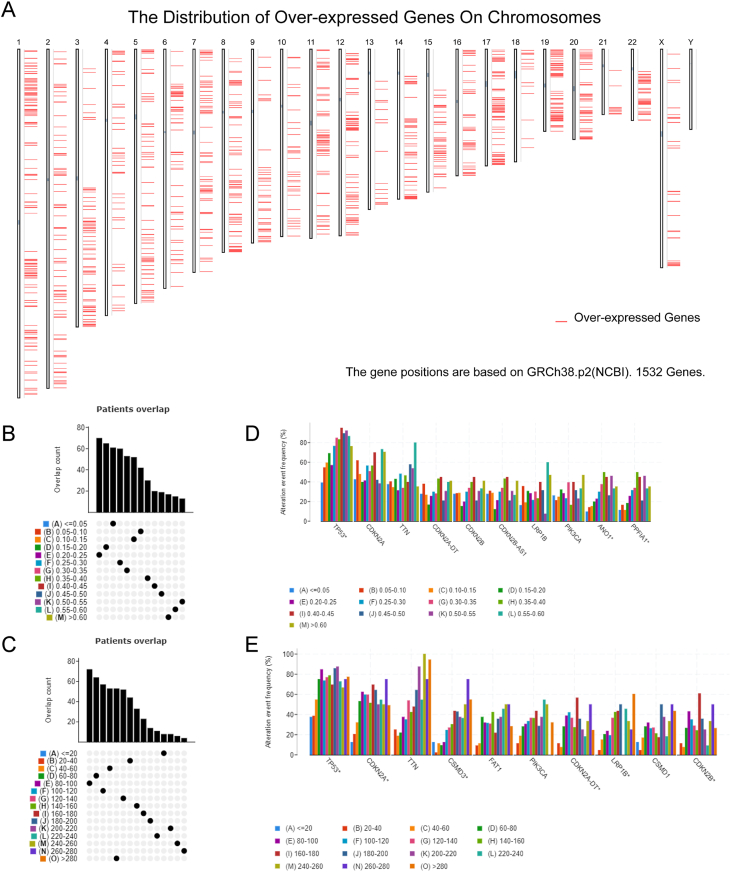
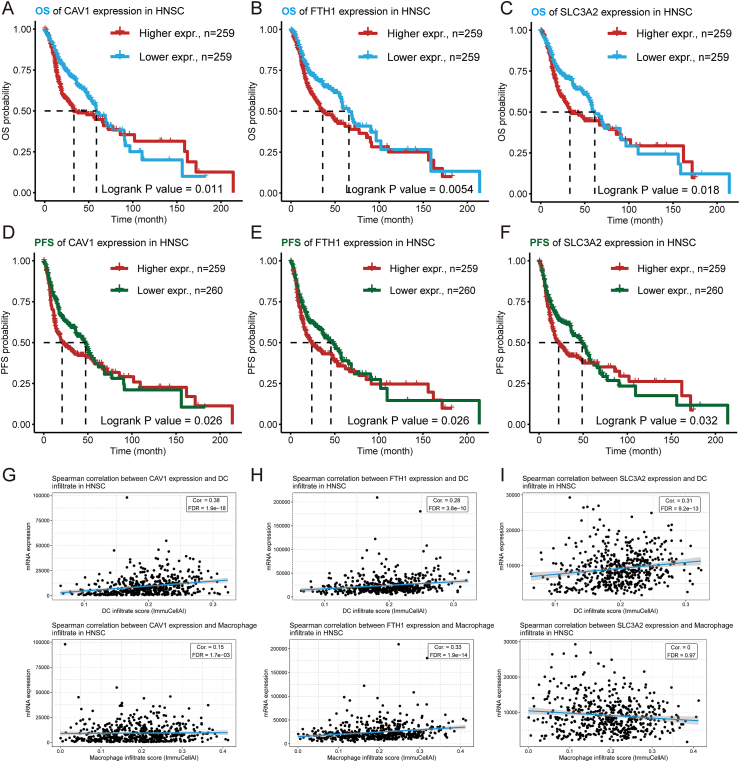
Head and neck squamous cell carcinoma (HNSC) represents nearly 90% of all head and neck tumors. The current treatment modality for HNSC patients primarily involves surgical intervention and radiotherapy, but its therapeutic efficacy remains limited. The mRNA vaccine based on tumor antigens seems promising for cancer treatment. Ferroptosis, a novel form of cell death, is linked to tumor progression and cancer immunotherapy. Nevertheless, the effectiveness of ferroptosis-associated tumor antigens in treating HNSC remains uncertain. In this study, we identified three ferroptosis-associated tumor antigens, namely caveolin1 (CAV1), ferritin heavy chain (FTH1), and solute carrier 3A2 (SLC3A2), as being overexpressed and mutated based on data obtained from The Cancer Genome Atlas and Gene Expression Omnibus databases. These antigens were strongly associated with poor prognosis and infiltration of antigen-presenting cells in HNSC. We further identified two ferroptosis subtypes (FS1 and FS2) with distinct molecular, cellular, and clinical properties to identify antigen-sensitive individuals. Our findings indicate that FS1 exhibits an immune "hot" phenotype, whereas FS2 displays an immune "cold" phenotype. Additionally, differential expression of immunogenic cell death modulators and immune checkpoints was observed between these two immune subtypes. Further exploration of the HNSC's immune landscape revealed significant heterogeneity among individual patients. Our findings suggest that CAV1, FTH1, and SLC3A2 are potential targets to prevent HNSC in FS2 patients. Overall, our research reveals the potential of ferroptosis-associated mRNA vaccines for HNSC and identifies an effective patient population for vaccine treatment.
头颈部鳞状细胞癌(HNSC)占所有头颈部肿瘤的近90%。目前HNSC患者的治疗方式主要包括手术干预和放疗,但其治疗效果仍然有限。基于肿瘤抗原的mRNA疫苗在癌症治疗方面似乎很有前景。铁死亡是一种新型细胞死亡形式,与肿瘤进展和癌症免疫治疗有关。然而,铁死亡相关肿瘤抗原在治疗HNSC中的有效性仍不确定。在本研究中,我们根据从癌症基因组图谱和基因表达综合数据库获得的数据,确定了三种铁死亡相关肿瘤抗原,即小窝蛋白1(CAV1)、铁蛋白重链(FTH1)和溶质载体3A2(SLC3A2),它们在HNSC中过表达且发生突变。这些抗原与HNSC患者的不良预后和抗原呈递细胞浸润密切相关。我们进一步确定了两种具有不同分子、细胞和临床特性的铁死亡亚型(FS1和FS2),以识别对抗原敏感的个体。我们的研究结果表明,FS1表现出免疫“热”表型,而FS2表现出免疫“冷”表型。此外,在这两种免疫亚型之间观察到免疫原性细胞死亡调节剂和免疫检查点的差异表达。对HNSC免疫格局的进一步探索揭示了个体患者之间存在显著的异质性。我们的研究结果表明,CAV1、FTH1和SLC3A2是预防FS2患者发生HNSC的潜在靶点。总体而言,我们的研究揭示了铁死亡相关mRNA疫苗治疗HNSC的潜力,并确定了疫苗治疗的有效患者群体。