Department of Psychology, Durham University, Durham, United Kingdom.
PLoS One. 2024 Sep 18;19(9):e0309347. doi: 10.1371/journal.pone.0309347. eCollection 2024.
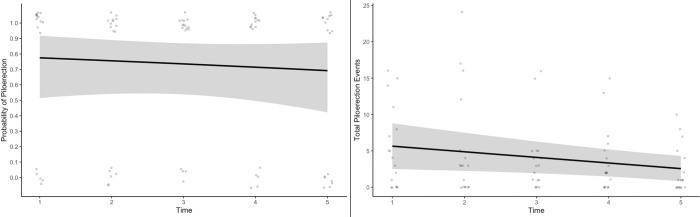
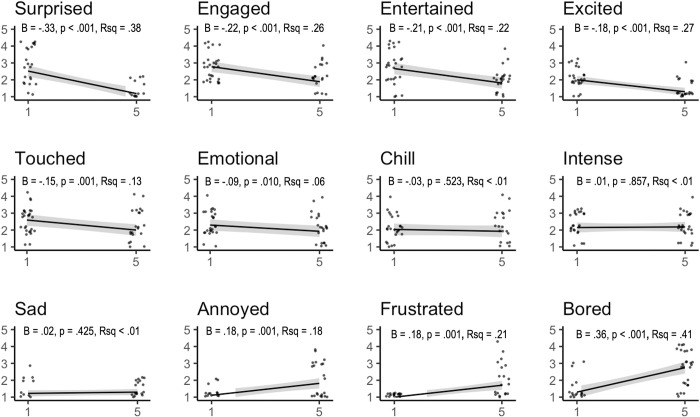
It is often suggested that piloerection, or goosebumps, is primarily triggered by emotional experience-theoretical perspectives place a heavy emphasis on experiencing novelty and surprise. However, the two studies described here challenge this perspective, demonstrating that the incidence of piloerection is not contingent upon exposure to novel stimuli and is disconnected from self-reported emotions. Study 1 (N = 80) shows that piloerection was not more likely to occur among individuals exposed to unfamiliar stimuli compared to those with prior exposure. Additionally, self-reported emotions were not correlated with observed piloerection. Study 2 (N = 27) found that piloerection persists throughout multiple exposures to identical stimuli. Importantly, the trajectories of observed piloerection and self-reported emotions diverged greatly. These findings challenge the common view that piloerection-unlike self-reported goosebumps and chills-is driven by emotional experience, suggesting that it may not be as closely connected to emotional experiences as previously theorised.
人们常说,竖毛反应(俗称鸡皮疙瘩)主要是由情绪体验触发的——理论观点非常强调体验新奇和惊喜。然而,这里描述的两项研究挑战了这一观点,表明竖毛反应的发生并不取决于接触新奇刺激,也与自我报告的情绪无关。研究 1(N=80)表明,与有过接触的个体相比,暴露于不熟悉刺激下的个体更不容易出现竖毛反应。此外,自我报告的情绪与观察到的竖毛反应没有相关性。研究 2(N=27)发现,竖毛反应在多次接触相同刺激时持续存在。重要的是,观察到的竖毛反应和自我报告的情绪轨迹有很大的差异。这些发现挑战了竖毛反应(不同于自我报告的鸡皮疙瘩和发冷)是由情绪体验驱动的普遍观点,表明它可能不像之前理论认为的那样与情绪体验密切相关。