Centre for Vestibular Neurology, Department of Brain Sciences, Imperial College London, Laboratory Block, Charing Cross Campus, London W6 8RF, UK.
Department of Physical Therapy, School of Health and Rehabilitation Science, University of Pittsburgh, 4200 Fifth Ave, Pittsburgh, PA 15260, USA.
Age Ageing. 2024 Sep 1;53(9). doi: 10.1093/ageing/afae177.
Dizziness is common in older adults, especially in those attending falls services. Yet, the extent to which dizziness is associated with future falls has not been reviewed. This systematic review and meta-analysis assessed the association between dizziness and future falls and related injuries in older adults.
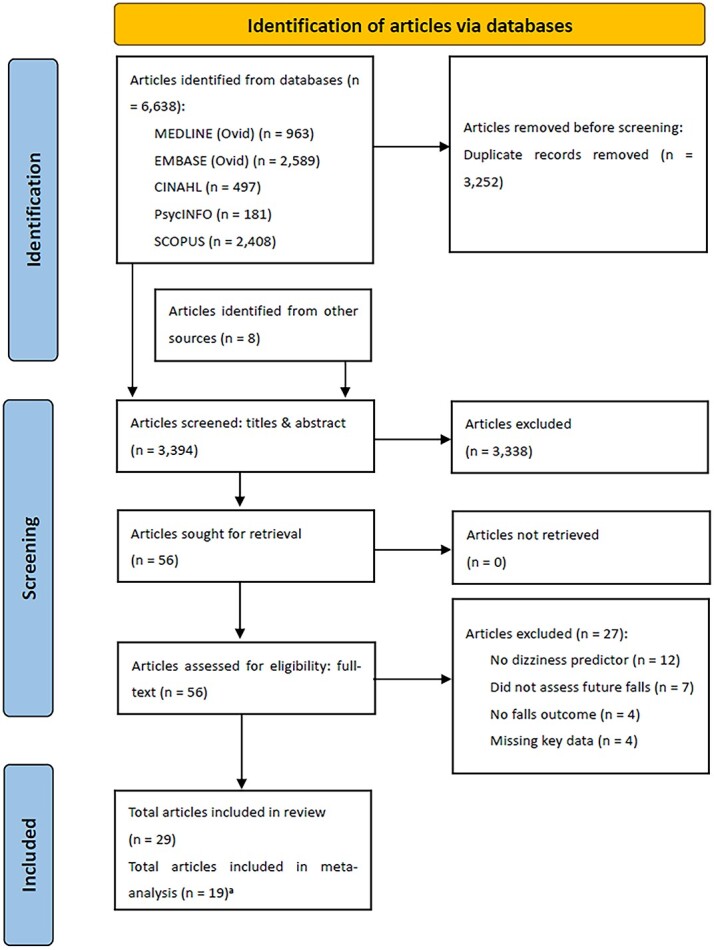
EMBASE, CINAHL Plus, SCOPUS and PsycINFO databases were searched from inception to 5 February 2024. The review was registered on PROSPERO (registration ID: CRD42022371839). Meta-analyses were conducted for the associations of dizziness with future falls (including recurrent and injurious falls). Three meta-analyses were performed on different outcomes: any-type falls (≥1 falls), recurrent falls (≥2 falls) and injurious falls.
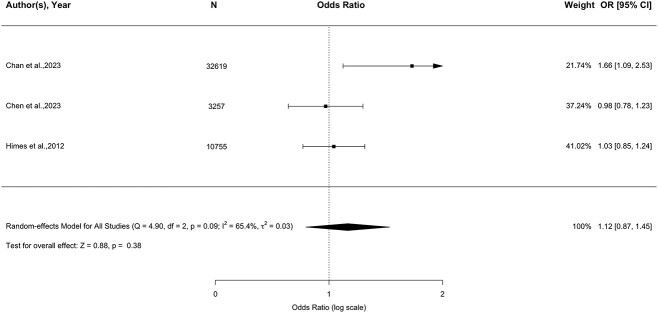
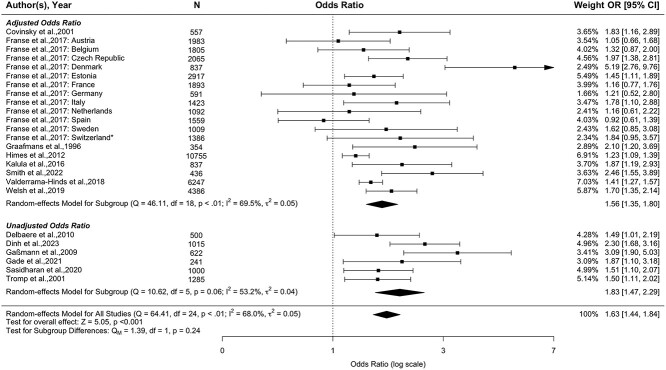
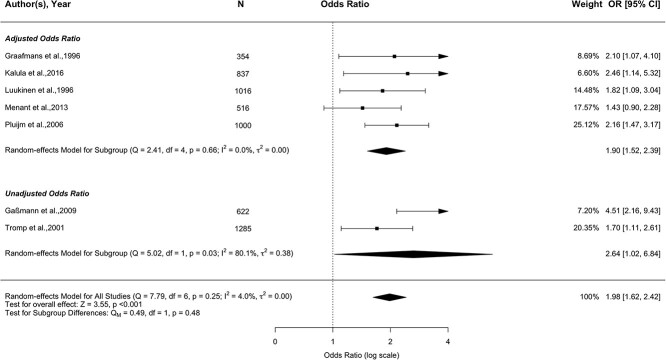
Twenty-nine articles were included in the systematic review (N = 103 306 participants). In a meta-analysis of 14 articles (N = 46 795 participants), dizziness was associated with significantly higher odds of any-type future falls (OR = 1.63, 95% CI = 1.44-1.84). In another meta-analysis involving seven articles (N = 5630 participants), individuals with dizziness also had significantly higher odds of future recurrent falls (OR = 1.98, 95% CI = 1.62-2.42). For both meta-analyses, significant overall associations were observed even when adjusted for important confounding variables. In contrast, a meta-analysis (three articles, N = 46 631 participants) revealed a lack of significant association between dizziness and future injurious falls (OR = 1.12, 95% CI = 0.87-1.45).
Dizziness is an independent predictor of future falls in older adults. These findings emphasise the importance of recognising dizziness as a risk factor for falls and implementing appropriate interventions.
头晕在老年人中很常见,尤其是在那些参加跌倒服务的老年人中。然而,头晕与未来跌倒的关联程度尚未得到审查。本系统评价和荟萃分析评估了头晕与老年人未来跌倒和相关伤害的关联。
从建库到 2024 年 2 月 5 日,检索了 EMBASE、CINAHL Plus、SCOPUS 和 PsycINFO 数据库。该综述在 PROSPERO(注册号:CRD42022371839)上进行了注册。对头晕与未来跌倒(包括复发性和伤害性跌倒)的关联进行了荟萃分析。对三种不同结局进行了三项荟萃分析:任何类型的跌倒(≥1 次跌倒)、复发性跌倒(≥2 次跌倒)和伤害性跌倒。
29 篇文章被纳入系统评价(N=103306 名参与者)。在对 14 篇文章(N=46795 名参与者)的荟萃分析中,头晕与未来任何类型跌倒的发生风险显著增加相关(OR=1.63,95%CI=1.44-1.84)。在另一项涉及 7 篇文章(N=5630 名参与者)的荟萃分析中,头晕者未来复发性跌倒的发生风险也显著增加(OR=1.98,95%CI=1.62-2.42)。这两项荟萃分析均观察到了显著的总体关联,即使在调整了重要的混杂变量后也是如此。相比之下,一项荟萃分析(三篇文章,N=46631 名参与者)显示头晕与未来伤害性跌倒之间缺乏显著关联(OR=1.12,95%CI=0.87-1.45)。
头晕是老年人未来跌倒的独立预测因素。这些发现强调了将头晕识别为跌倒风险因素的重要性,并应采取适当的干预措施。