Li Tuo, Wang Qin, Liu Yang, Wang Jiaguo, Zhu Han, Cao Linhua, Liu Dongyang, Shen Qirong
Key Lab of Organic-Based Fertilizers of China and Jiangsu Provincial Key Lab for Solid Organic Waste Utilization, Nanjing, China.
Nanjing Agricultural University, Nanjing, 210095, Jiangsu, China.
Biotechnol Biofuels Bioprod. 2024 Sep 18;17(1):122. doi: 10.1186/s13068-024-02570-w.
The ability of lignocellulose degradation for filamentous fungi is always attributed to their efficient CAZymes system with broader applications in bioenergy development. ADP-ribosylation factor GTPase-activating proteins (Arf-GAPs), pivotal in fungal morphogenesis, lack comprehensive studies on their regulatory mechanisms in lignocellulose utilization.
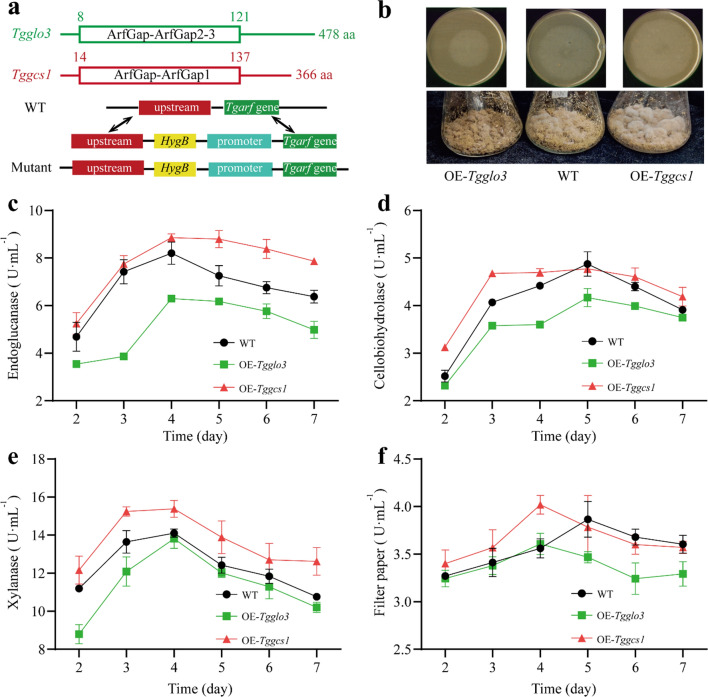
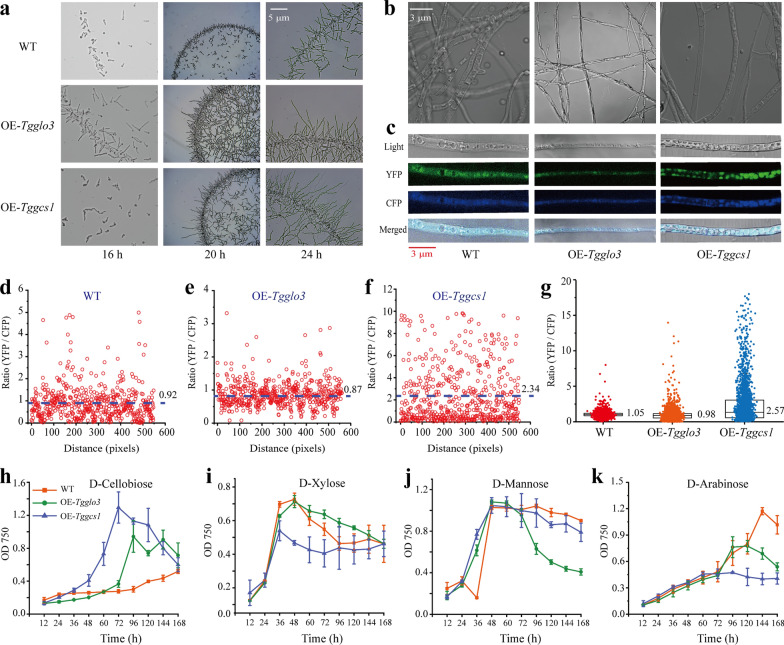
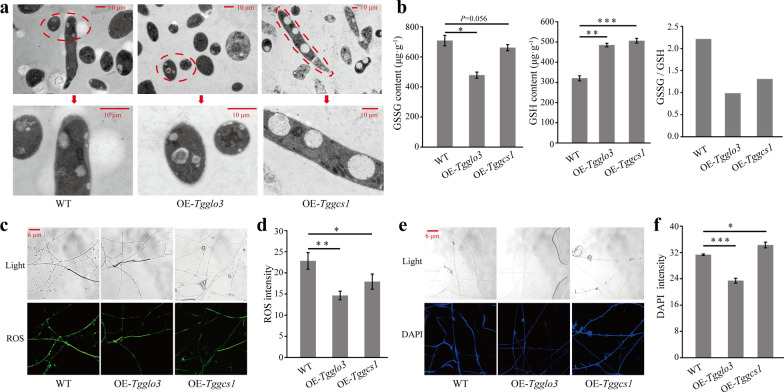
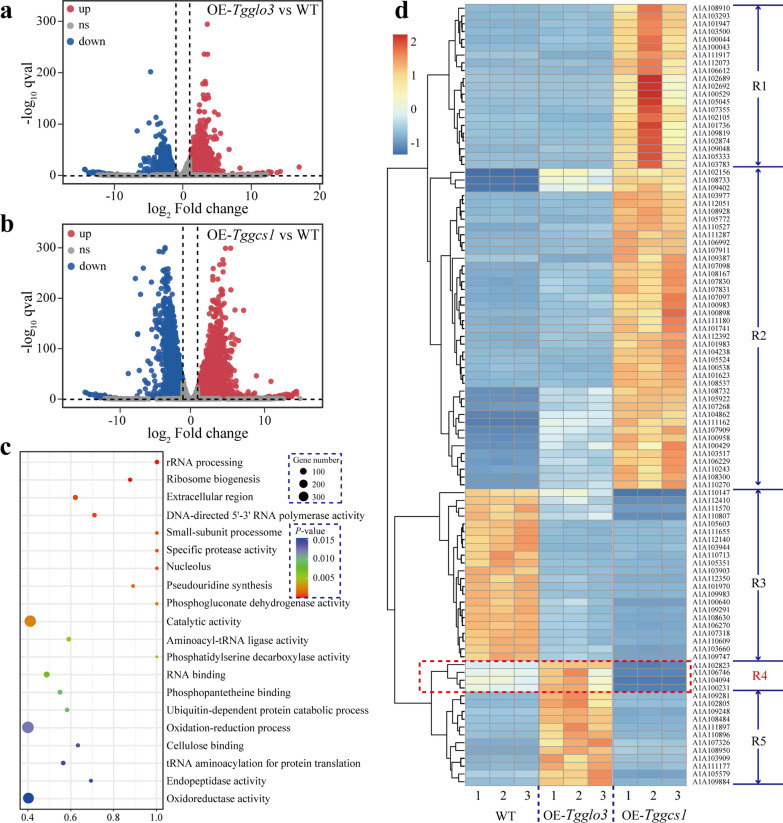
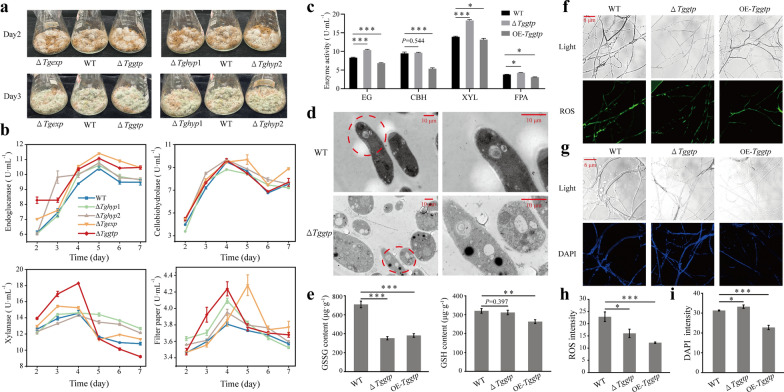
Here, the orthologs (TgGlo3 and TgGcs1) of Arf-GAPs in S. cerevisiae were characterized in Trichoderma guizhouense NJAU4742. The results indicated that overexpression of Tggcs1 (OE-Tggcs1) enhanced the lignocellulose utilization, whereas increased expression of Tgglo3 (OE-Tgglo3) elicited antithetical responses. On the fourth day of fermentation with rice straw as the sole carbon source, the activities of endoglucanase, cellobiohydrolase, xylanase, and filter paper of the wild-type strain (WT) reached 8.20 U mL, 4.42 U mL, 14.10 U mL, and 3.56 U mL, respectively. Compared to WT, the four enzymes activities of OE-Tggcs1 increased by 7.93%, 6.11%, 9.08%, and 12.92%, respectively, while those decreased to varying degrees of OE-Tgglo3. During the nutritional growth, OE-Tgglo3 resulted in the hyphal morphology characterized by sparsity and constriction, while OE-Tggcs1 led to a notable increase in vacuole volume. In addition, OE-Tggcs1 exhibited higher transport efficiencies for glucose and cellobiose thereby sustaining robust cellular metabolic rates. Further investigations revealed that Tgglo3 and Tggcs1 differentially regulated the transcription level of a dynamin-like GTPase gene (Tggtp), eliciting distinct redox states and apoptotic reaction, thus orchestrating the cellular response to lignocellulose utilization.
Overall, these findings underscored the significance of TgArf-GAPs as pivotal regulators in lignocellulose utilization and provided initial insights into their differential modulation of downstream targets.
丝状真菌降解木质纤维素的能力一直归因于其高效的碳水化合物活性酶(CAZymes)系统,该系统在生物能源开发中具有更广泛的应用。ADP-核糖基化因子GTP酶激活蛋白(Arf-GAPs)在真菌形态发生中起关键作用,但在木质纤维素利用中的调控机制缺乏全面研究。
在此,对酿酒酵母中Arf-GAPs的直系同源物(TgGlo3和TgGcs1)在贵州木霉NJAU4742中进行了表征。结果表明,TgGcs1过表达(OE-Tggcs1)增强了木质纤维素利用,而TgGlo3表达增加(OE-Tgglo3)则引发相反的反应。以稻草为唯一碳源发酵的第四天,野生型菌株(WT)的内切葡聚糖酶、纤维二糖水解酶、木聚糖酶和滤纸酶活性分别达到8.20 U/mL、4.42 U/mL、14.10 U/mL和3.56 U/mL。与WT相比,OE-Tggcs1的这四种酶活性分别提高了7.93%、6.11%、9.08%和12.92%,而OE-Tgglo3的酶活性则有不同程度的降低。在营养生长期间,OE-Tgglo3导致菌丝形态稀疏且收缩,而OE-Tggcs1导致液泡体积显著增加。此外,OE-Tggcs1对葡萄糖和纤维二糖表现出更高的转运效率,从而维持强劲的细胞代谢率。进一步研究表明,TgGlo3和TgGcs1对动力蛋白样GTP酶基因(Tggtp)的转录水平有不同的调控作用,引发不同的氧化还原状态和凋亡反应,从而协调细胞对木质纤维素利用的反应。
总体而言,这些发现强调了TgArf-GAPs作为木质纤维素利用关键调节因子的重要性,并为其对下游靶点的差异调节提供了初步见解。