Trotta Antonella, Gerber Andrew J, Rost Felicitas, Robertson Sarah, Shmueli Avi, Perelberg Rosine J
School of Health and Social Care, University of Essex, Colchester, United Kingdom.
Social, Genetic & Developmental Psychiatry Centre, Institute of Psychiatry, Psychology & Neuroscience, King's College London, London, United Kingdom.
Front Psychol. 2024 Sep 4;15:1366032. doi: 10.3389/fpsyg.2024.1366032. eCollection 2024.
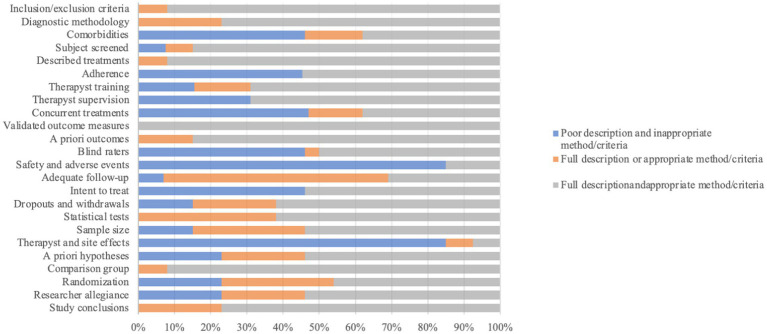
One in six young adults presents with at least one mental health problem. However, so far, little attention has been directed to the mental health needs and the efficacy of therapeutic interventions for young adults. We conducted a systematic review and meta-analysis of the type, quality and efficacy of psychoanalytic psychotherapy for young people.
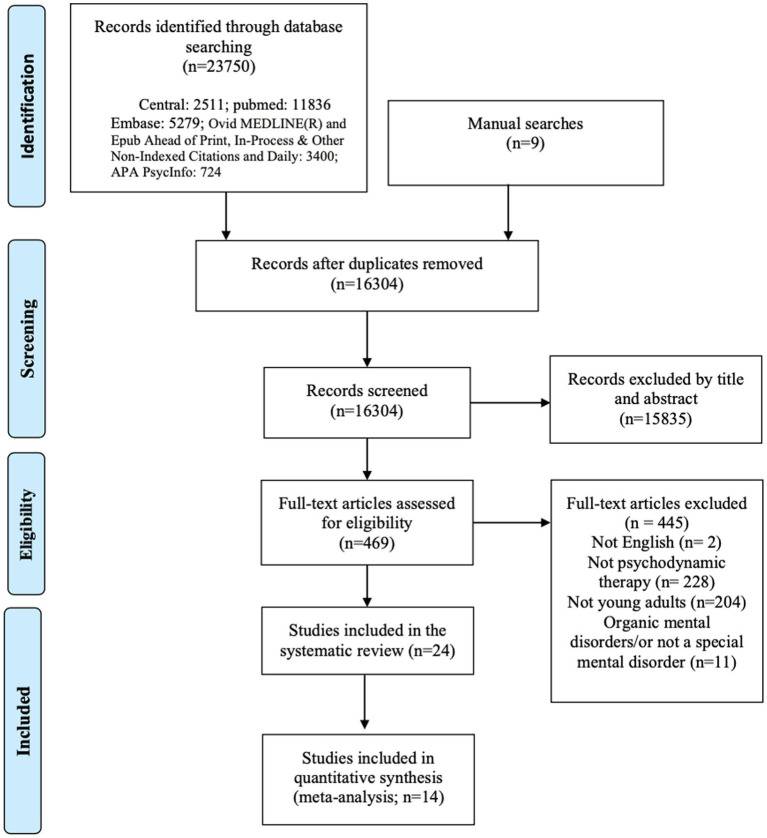
We searched the PsycInfo, PubMed, Embase, and Cochrane databases to identify all the published randomized controlled trials (RCT), and naturalistic and observational studies of psychodynamic or psychoanalytic psychotherapies. We calculated the standardized mean difference in scores of psychodynamic interventions versus control conditions, adopting a random effects model (Hedges' ).
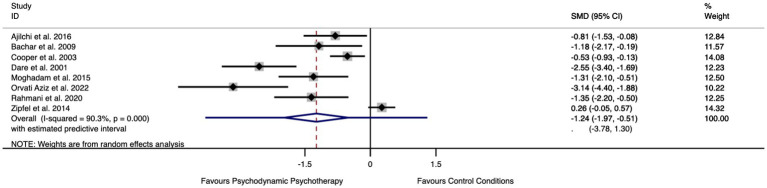
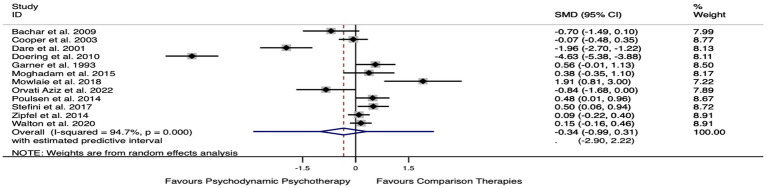
We identified 22 eligible studies, including 14 RCTs, and 8 naturalistic studies. Statistical analyses showed no significant difference between psychodynamic psychotherapy and other comparison treatments (psychotherapy or pharmacological interventions) for young adults (Hedges' - 0.34 [95% CI: -0.991;-0.309], = 0.304). Nevertheless, there was a significant effect of psychodynamic psychotherapy when compared with control conditions (waiting list or treatment as usual) for target symptoms (Hedges' - 1.24 [95% CI: -1.97;-0.51], < 0.001).
Our systematic review highlights important clinical implications in identifying the efficacy of psychoanalytic interventions for specific at-risk groups and suggests developing prevention strategies for mental health problems in young adulthood across cultures and context.
每六名年轻人中就有一人至少存在一种心理健康问题。然而,到目前为止,很少有人关注年轻人的心理健康需求以及治疗干预措施的效果。我们对针对年轻人的精神分析心理治疗的类型、质量和效果进行了系统评价和荟萃分析。
我们检索了PsycInfo、PubMed、Embase和Cochrane数据库,以识别所有已发表的随机对照试验(RCT)以及心理动力学或精神分析心理治疗的自然主义和观察性研究。我们采用随机效应模型(Hedges')计算了心理动力学干预与对照条件下得分的标准化平均差异。
我们确定了22项符合条件的研究,包括14项随机对照试验和8项自然主义研究。统计分析表明,对于年轻人,精神分析心理治疗与其他对照治疗(心理治疗或药物干预)之间没有显著差异(Hedges' -0.34 [95%CI:-0.991;-0.309],P = 0.304)。然而,与对照条件(等待名单或常规治疗)相比,精神分析心理治疗对目标症状有显著效果(Hedges' -1.24 [95%CI:-1.97;-0.51],P < 0.001)。
我们的系统评价突出了确定精神分析干预对特定高危人群疗效的重要临床意义,并建议针对不同文化和背景下的青年心理健康问题制定预防策略。