Du Peizhao, Xu Linghao, Wang Yuanqi, Jiao Tiantian, Cheng Jing, Zhang Chunsheng, Tapu Md Sakibur Rahman, Dai Jian, Li Jiming
Department of Cardiology, Baoshan District Hospital of Integrated Traditional Chinese and Western Medicine of Shanghai, Shanghai University of Traditional Chinese Medicine, Shanghai, 201999, China.
Department of Endocrinology and Metabolism, The Affiliated Hospital of Southwest Medical University, Luzhou, Sichuan 646000, China.
Heliyon. 2024 Sep 1;10(17):e37019. doi: 10.1016/j.heliyon.2024.e37019. eCollection 2024 Sep 15.
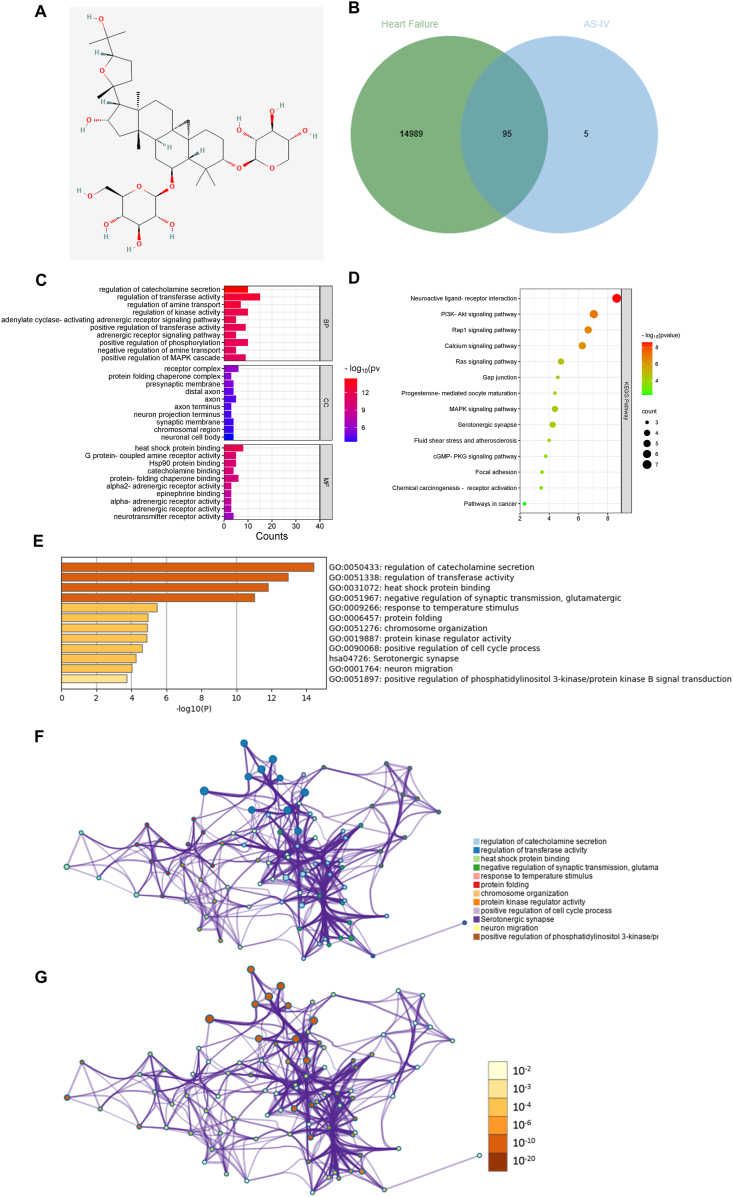
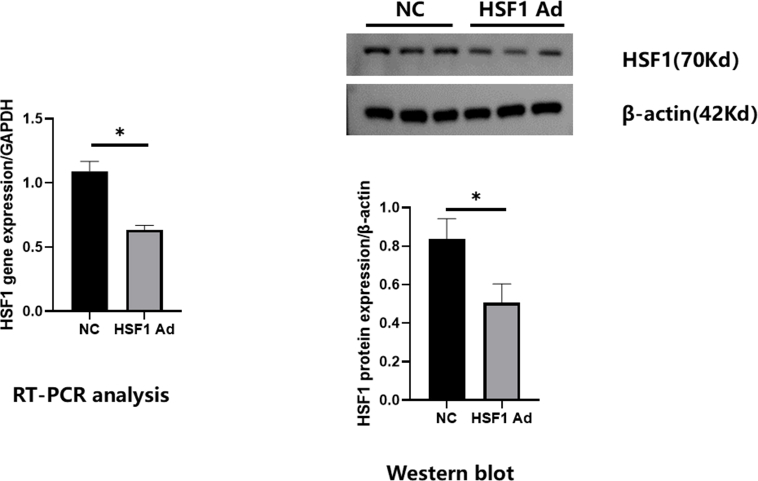
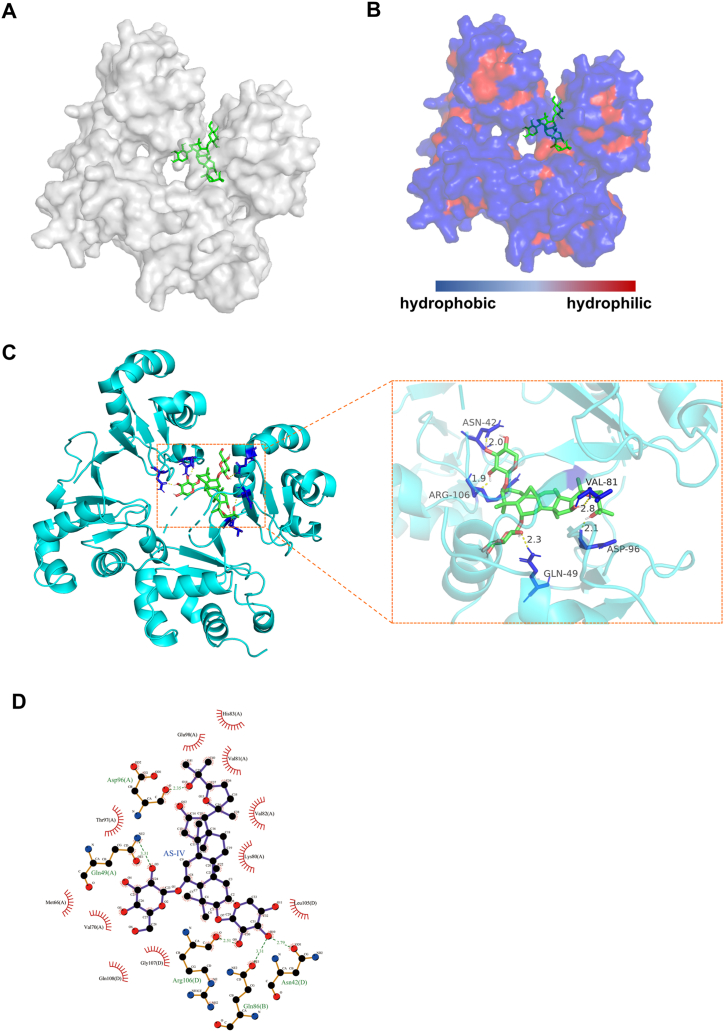
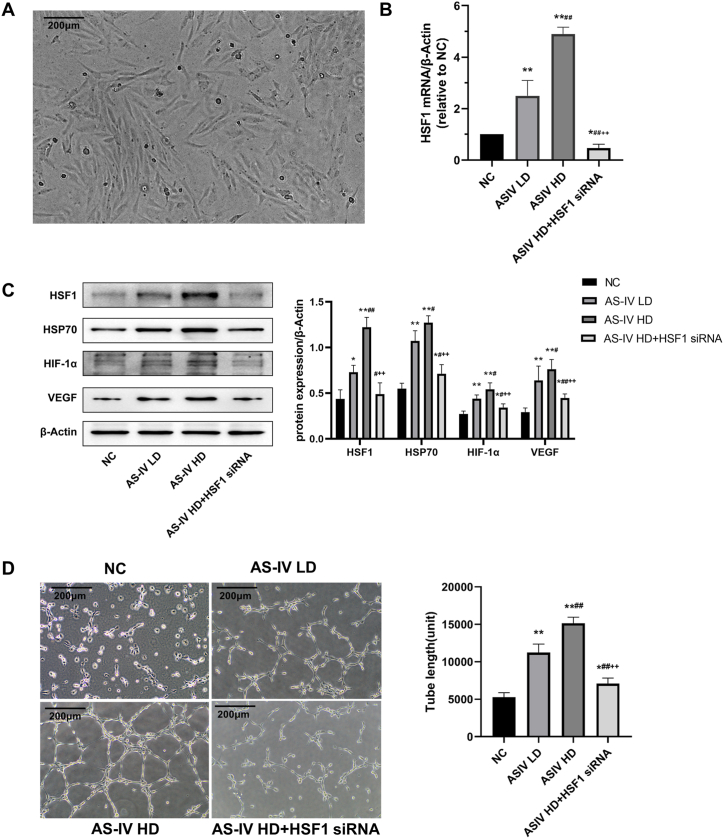
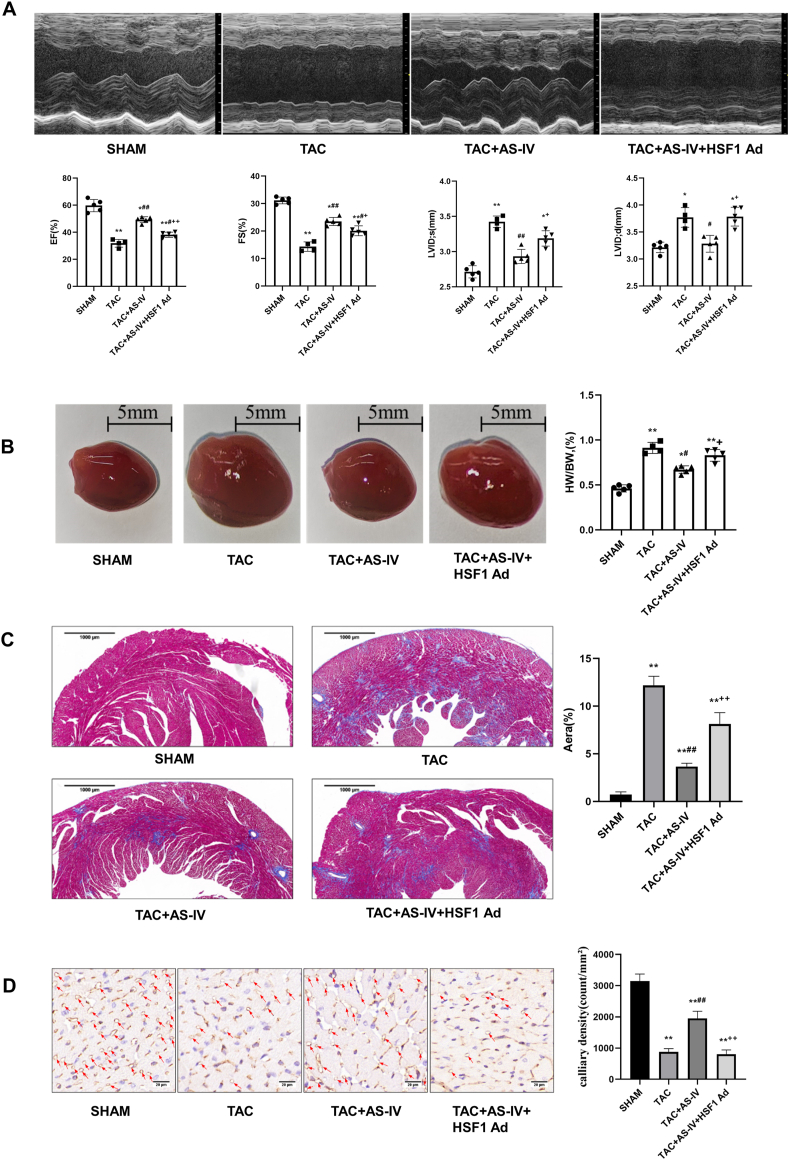
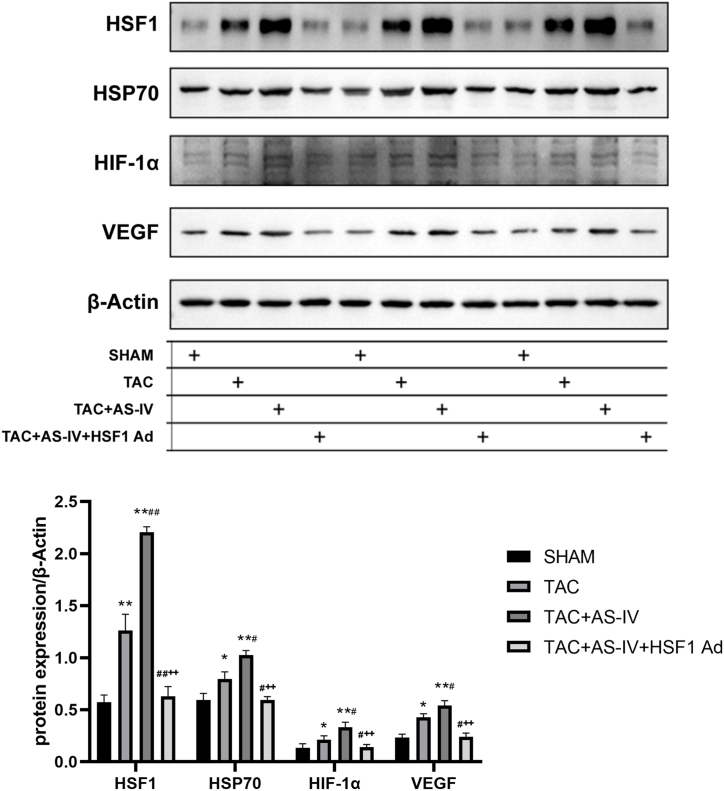
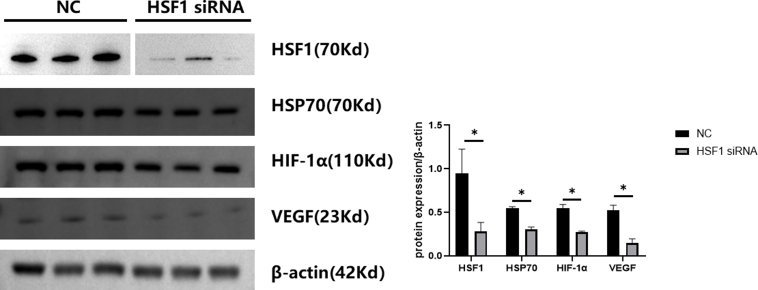
Astragaloside IV(AS-IV), the main active ingredient of Astragalus, has been used as a treatment for heart failure with favorable effects, but its molecular mechanism has not been fully elucidated. Network pharmacological analysis and molecular docking revealed that Heat shock transcription factor 1 (HSF1) is a potential target of AS-IV. We designed cellular and animal experiments to investigate the role and intrinsic molecular mechanisms of AS-IV in ameliorating pressure overload-induced heart failure. In cellular experiments, Myocardial microvascular endothelial cells (MMVECs) were cultured in isolation and stimulated by adding high and low concentrations of AS-IV, and a cell model with down-regulation of HSF1 expression was constructed by using siRNA technology. Changes in the expression of key molecules of HSF1/VEGF signaling pathway and differences in tube-forming ability were detected in different groups of cells using PCR, WB and tube-forming assay. In animal experiments, TAC technology was applied to establish a pressure overload-induced heart failure model in C57 mice, postoperative mice were ingested AS-IV by gavage, and adenoviral transfection technology was applied to construct a mouse model with down-regulation of HSF1 expression.Small animal ultrasound for cardiac function assessment, MASSON staining, CD31 immunohistochemistry, and Western blotting (WB) were performed on the mice. The results showed that AS-IV could promote the expression of key molecules of HSF1/VEGF signaling pathway, enhance the tube-forming ability of MMVECs, increase the density of myocardial capillaries, reduce myocardial fibrosis, and improve the cardiac function of mice with TAC.AS-IV could modulate the HSF1/VEGF signaling pathway to promote the angiogenesis and improve the pressure overload-induced heart failure.
黄芪甲苷IV(AS-IV)是黄芪的主要活性成分,已被用于治疗心力衰竭且效果良好,但其分子机制尚未完全阐明。网络药理学分析和分子对接显示,热休克转录因子1(HSF1)是AS-IV的潜在靶点。我们设计了细胞和动物实验,以研究AS-IV在改善压力超负荷诱导的心力衰竭中的作用和内在分子机制。在细胞实验中,分离培养心肌微血管内皮细胞(MMVECs),添加高、低浓度的AS-IV进行刺激,并利用siRNA技术构建HSF1表达下调的细胞模型。采用PCR、WB和管腔形成实验检测不同组细胞中HSF1/VEGF信号通路关键分子的表达变化及管腔形成能力的差异。在动物实验中,应用TAC技术在C57小鼠中建立压力超负荷诱导的心力衰竭模型,术后小鼠通过灌胃摄入AS-IV,并应用腺病毒转染技术构建HSF1表达下调的小鼠模型。对小鼠进行小动物超声心动图评估心功能、MASSON染色、CD31免疫组化和蛋白质免疫印迹(WB)检测。结果表明,AS-IV可促进HSF1/VEGF信号通路关键分子的表达,增强MMVECs的管腔形成能力,增加心肌毛细血管密度,减轻心肌纤维化,并改善TAC小鼠的心功能。AS-IV可调节HSF1/VEGF信号通路,促进血管生成,改善压力超负荷诱导的心力衰竭。