Aghigh Arash, Cardot Jysiane, Mohammadi Melika Saadat, Jargot Gaëtan, Ibrahim Heide, Plante Isabelle, Légaré François
Centre Énergie Matériaux Télécommunications, Institut National de la Recherche Scientifique, Varennes, Québec, Canada.
Centre Armand-Frappier Santé Biotechnologie, Institut National de la Recherche Scientifique, Laval, Québec, Canada.
Biomed Opt Express. 2024 Aug 15;15(9):5251-5271. doi: 10.1364/BOE.529779. eCollection 2024 Sep 1.
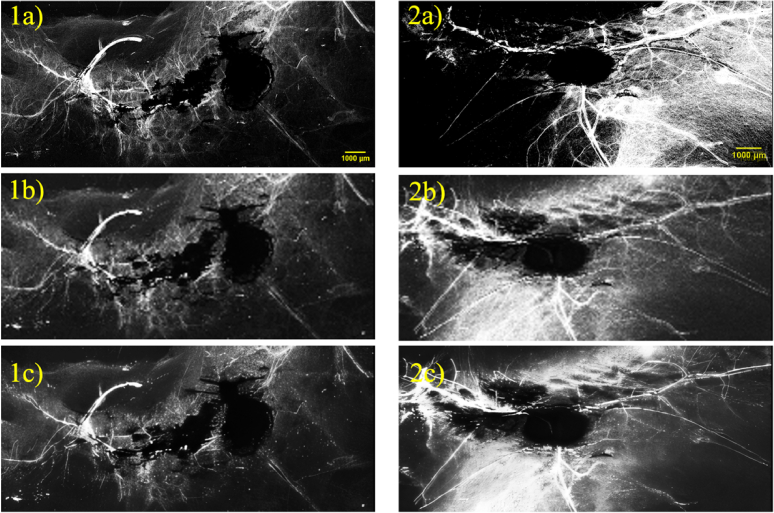
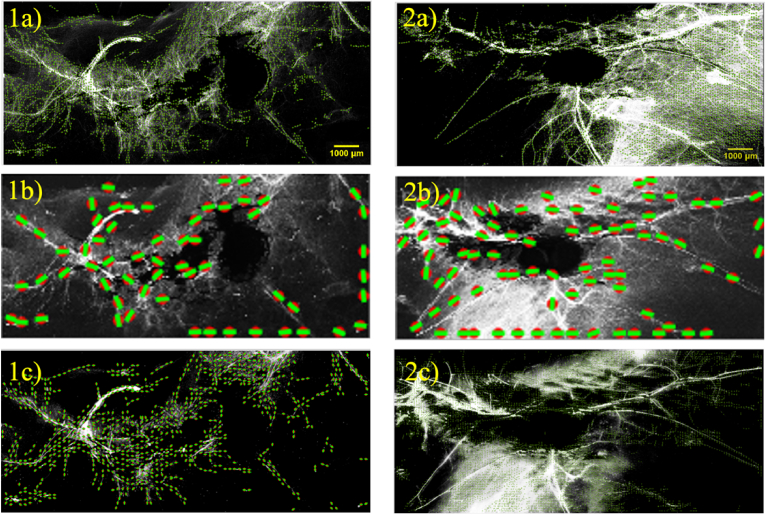
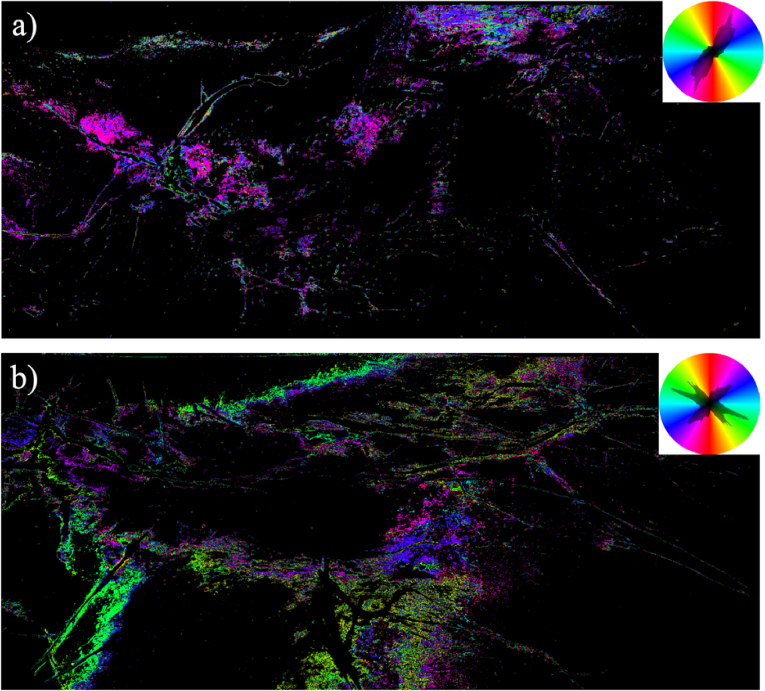
Polarization second harmonic generation (P-SHG) imaging is a powerful technique for studying the structure and properties of biological and material samples. However, conventional whole-sample P-SHG imaging is time consuming and requires expensive equipment. This paper introduces a novel approach that significantly improves imaging resolution under conditions of reduced imaging time and resolution, utilizing enhanced super-resolution generative adversarial networks (ESRGAN) to upscale low-resolution images. We demonstrate that this innovative approach maintains high image quality and analytical accuracy, while reducing the imaging time by more than 95%. We also discuss the benefits of the proposed method for reducing laser-induced photodamage, lowering the cost of optical components, and increasing the accessibility and applicability of P-SHG imaging in various fields. Our work significantly advances whole-sample mammary gland P-SHG imaging and opens new possibilities for scientific discovery and innovation.
偏振二次谐波产生(P-SHG)成像是研究生物和材料样品结构与特性的强大技术。然而,传统的全样本P-SHG成像耗时且需要昂贵的设备。本文介绍了一种新颖的方法,该方法在减少成像时间和分辨率的条件下显著提高成像分辨率,利用增强型超分辨率生成对抗网络(ESRGAN)对低分辨率图像进行超分辨率处理。我们证明,这种创新方法在保持高图像质量和分析准确性的同时,将成像时间减少了95%以上。我们还讨论了该方法在减少激光诱导的光损伤、降低光学元件成本以及提高P-SHG成像在各个领域的可及性和适用性方面的益处。我们的工作显著推进了全样本乳腺P-SHG成像,并为科学发现和创新开辟了新的可能性。