School of Nursing, Shanghai University of Traditional Chinese Medicine, 1200 Cailun Road, Pudong New Area, Shanghai, 201203, China.
School of Exercise and Health, Shanghai University of Sport, Shanghai, 200438, China.
J Neuroeng Rehabil. 2024 Sep 19;21(1):165. doi: 10.1186/s12984-024-01463-1.
Robot-Assisted Gait Training (RAGT) is a novel technology widely employed in the field of neurological rehabilitation for patients with subacute stroke. However, the effectiveness of RAGT compared to conventional gait training (CGT) in improving lower extremity function remains a topic of debate. This study aimed to investigate and compare the effects of RAGT and CGT on lower extremity movement in patients with subacute stroke.
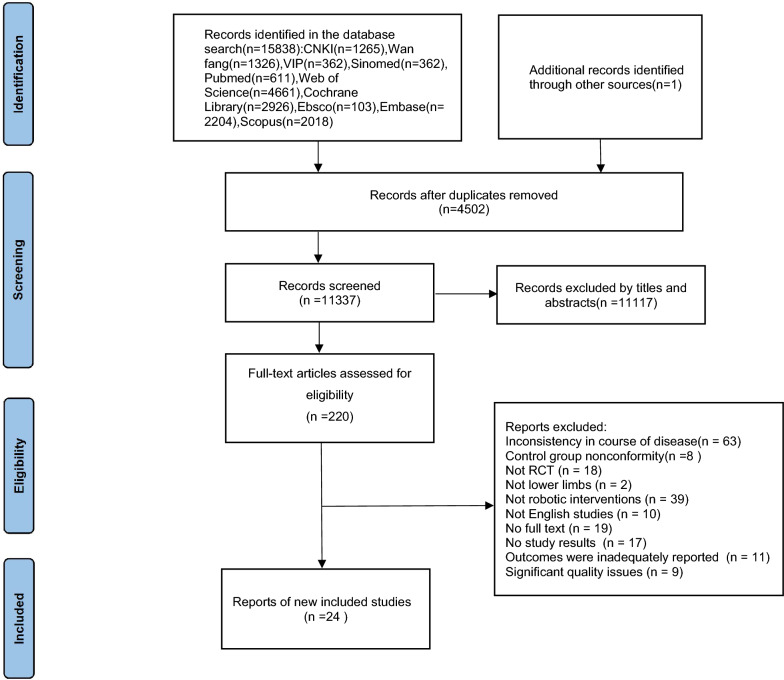
Comprehensive search was conducted across multiple databases, including PubMed, Web of Science, Cochrane Library, EBSCO, Embase, Scopus, China National Knowledge Infrastructure, Wan Fang, SinoMed and Vip Journal Integration Platform. The database retrieval was performed up until July 9, 2024. Meta-analysis was conducted using RevMan 5.4 software.
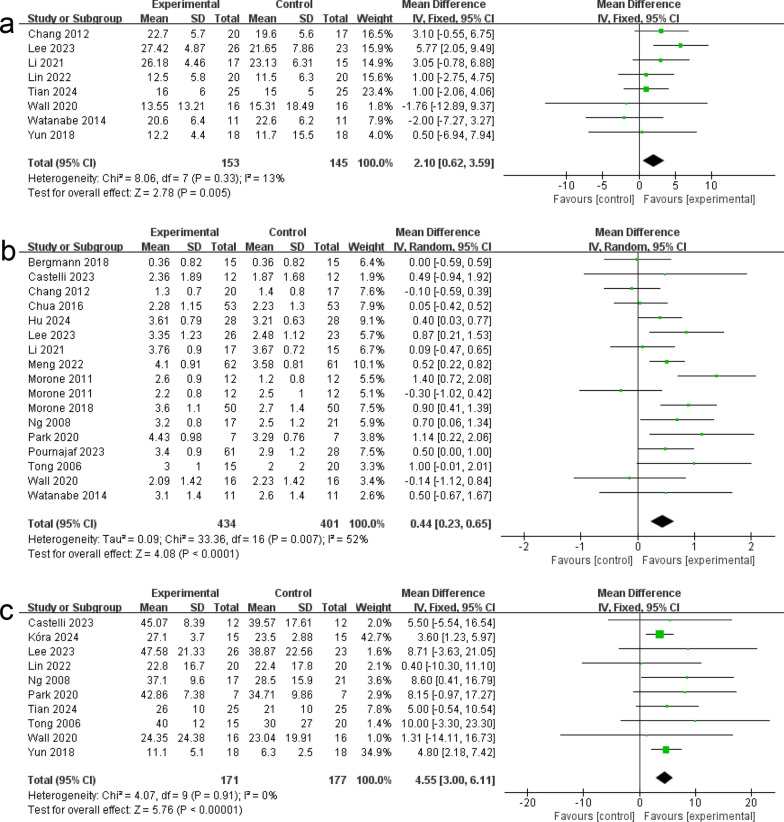
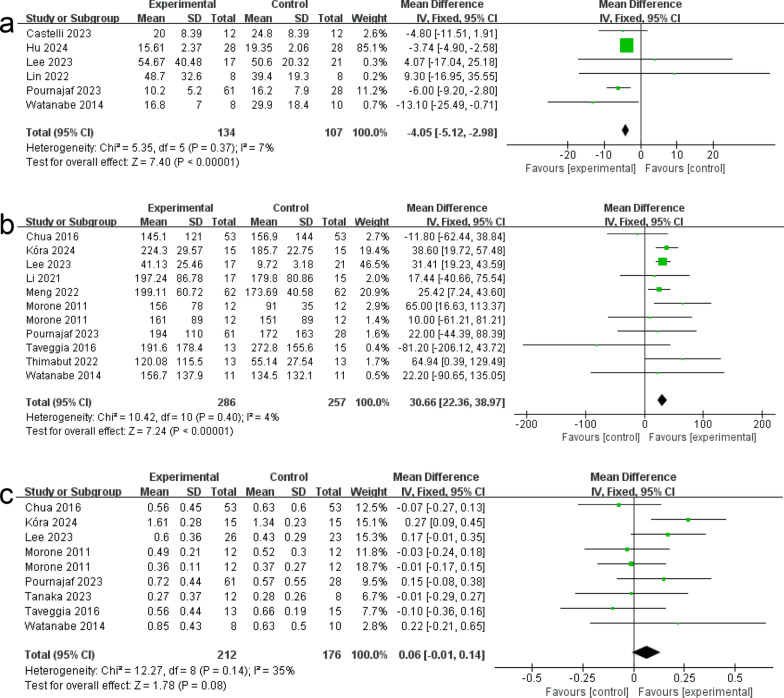
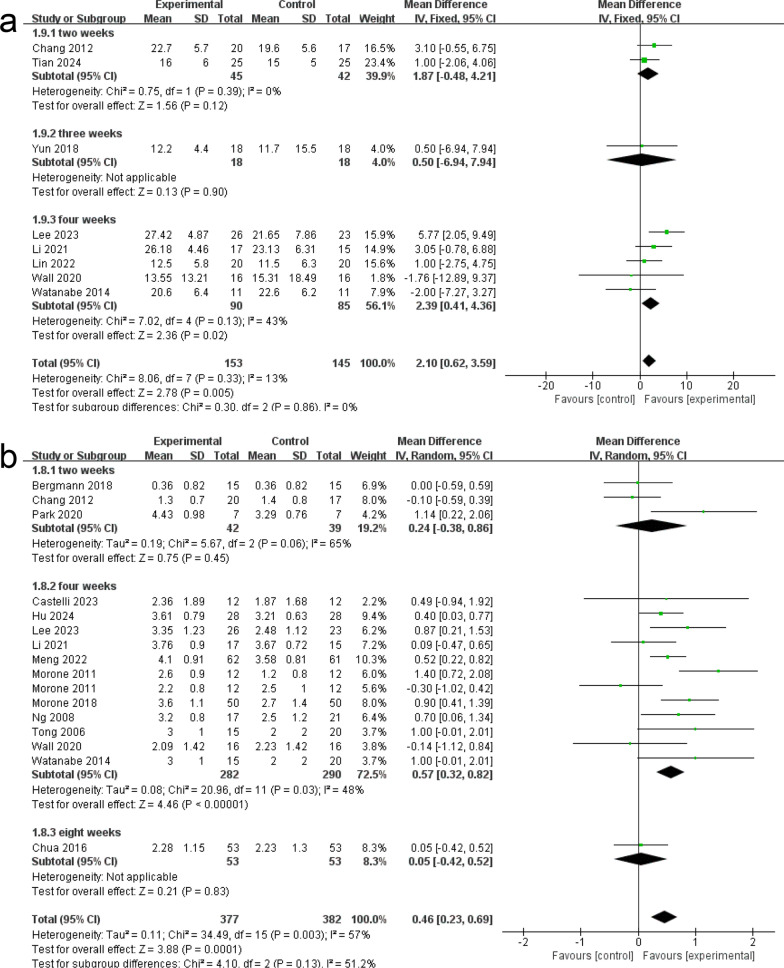
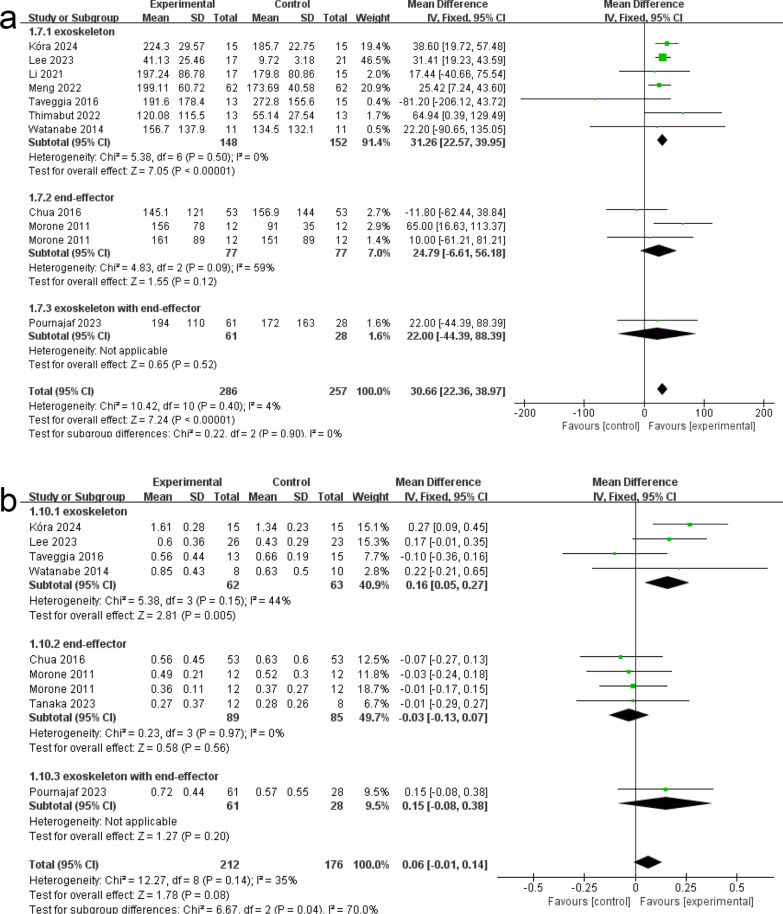
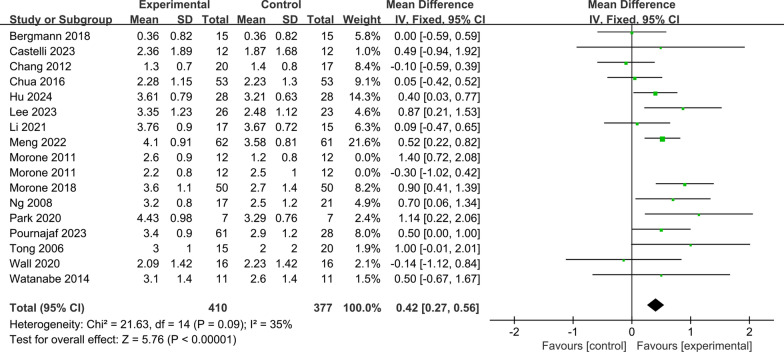
A total of 24 RCTs were included in the analysis. The results indicate that, compared with CGT, RAGT led to significant improvements in the Fugl-Meyer Assessment for Lower Extremity [MD = 2.10, 95%CI (0.62, 3.59), P = 0.005], Functional Ambulation Category[MD = 0.44, 95%CI (0.23, 0.65), P < 0.001], Berg Balance Scale [MD = 4.55, 95%CI (3.00, 6.11), P < 0.001], Timed Up and Go test [MD = -4.05, 95%CI (-5.12, -2.98), P < 0.001], and 6-Minute Walk Test [MD = 30.66, 95%CI (22.36, 38.97), P < 0.001] for patients with subacute stroke. However, it did not show a significant effect on the 10-Meter Walk Test [MD = 0.06, 95%CI (-0.01, 0.14), P = 0.08].
This study provides evidence that RAGT can enhance lower extremity function, balance function, walking ability, and endurance levels compared to CGT. However, the quality of evidence for improvements in gait speed remains low.
机器人辅助步态训练(RAGT)是一种广泛应用于亚急性脑卒中患者神经康复领域的新技术。然而,RAGT 与传统步态训练(CGT)在改善下肢功能方面的效果仍存在争议。本研究旨在探讨和比较 RAGT 与 CGT 对亚急性脑卒中患者下肢运动的影响。
全面检索了多个数据库,包括 PubMed、Web of Science、Cochrane 图书馆、EBSCO、Embase、Scopus、中国知网、万方、中国生物医学文献服务系统和维普期刊整合服务平台。数据库检索截至 2024 年 7 月 9 日。使用 RevMan 5.4 软件进行荟萃分析。
共纳入 24 项 RCT 进行分析。结果表明,与 CGT 相比,RAGT 可显著改善下肢 Fugl-Meyer 评估[MD=2.10,95%CI(0.62,3.59),P=0.005]、功能性步行分类[MD=0.44,95%CI(0.23,0.65),P<0.001]、Berg 平衡量表[MD=4.55,95%CI(3.00,6.11),P<0.001]、计时起立行走测试[MD=-4.05,95%CI(-5.12,-2.98),P<0.001]和 6 分钟步行测试[MD=30.66,95%CI(22.36,38.97),P<0.001],但对 10 米步行测试[MD=0.06,95%CI(-0.01,0.14),P=0.08]无显著影响。
本研究提供的证据表明,与 CGT 相比,RAGT 可增强亚急性脑卒中患者的下肢功能、平衡功能、步行能力和耐力水平,但改善步态速度的证据质量仍较低。