DogStudies, Max Planck Institute for Geoanthropology, Kahlaische Strasse 10, 07745, Jena, Germany.
Department for General Psychology and Cognitive Neuroscience, Friedrich Schiller University of Jena, Am Steiger 3, 07743, Jena, Germany.
Anim Cogn. 2024 Sep 21;27(1):60. doi: 10.1007/s10071-024-01899-x.
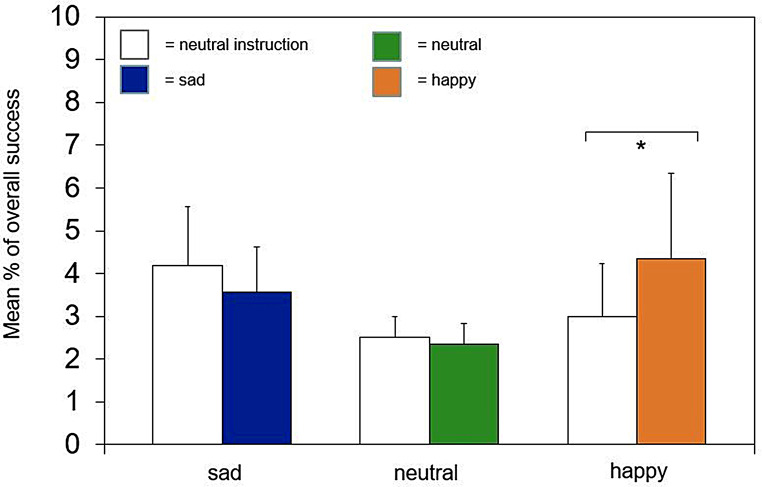
Several recent studies have investigated how dogs perceive human emotional expressions. They have measured the reactions of dogs when exposed to stimuli presented in different modalities, such as photographs, audio recordings or odor samples, or to humans simulating various emotional situations. In the current study, dog owners were manipulated to genuinely experience emotions of happiness, sadness, and neutrality. We measured how dogs responded to their owners' authentic emotions in two different natural situations: induction of the emotion through a video clip and training of a new task. Through a detailed analysis of dog behavior in these naturalistic settings, we investigated whether dogs show behavioral responses to genuine human emotions. We found that dogs behaved differently depending on the owner's emotional state: they gazed and jumped less at owners when they were sad, and their compliance with the 'sit' command was also diminished. When owners were happy, dogs performed better in the trained task. These results are discussed in light of how dogs perceive human emotional expressions and the adaptive value of this skill.
几项最近的研究调查了狗如何感知人类的情感表达。他们测量了狗在接触不同模态呈现的刺激时的反应,例如照片、录音或气味样本,或者接触模拟各种情绪情境的人类。在当前的研究中,狗主人被操纵来真实体验快乐、悲伤和中性的情绪。我们测量了狗在两种不同的自然情境中对主人真实情绪的反应:通过视频片段诱导情绪和训练新任务。通过对这些自然情境中狗行为的详细分析,我们调查了狗是否对人类真实情绪表现出行为反应。我们发现,狗的行为取决于主人的情绪状态:当主人悲伤时,它们注视和跳跃的次数减少,对“坐下”命令的服从性也降低。当主人高兴时,狗在训练任务中的表现更好。这些结果在讨论中考虑了狗如何感知人类的情感表达以及这种技能的适应价值。