Lee Jaeok, Kumar Pavitra, Natarajan Suganya, Park So Hyeon, Majumder Syamantak, Sundaresan Lakshmikirupa, Muralidhar Kambadur, Choi Jong-Soon, Lee Hwa Jeong, Chatterjee Suvro
Pharmaceutical Laboratory, College of Pharmacy and Graduate School of Pharmaceutical Sciences, Ewha Womans University, Seoul, Korea.
Vascular Biology Laboratory, AU-KBS Research Centre, Anna University, M.I.T. Campus, Chennai, India.
FEBS Open Bio. 2024 Dec;14(12):2072-2085. doi: 10.1002/2211-5463.13895. Epub 2024 Sep 23.
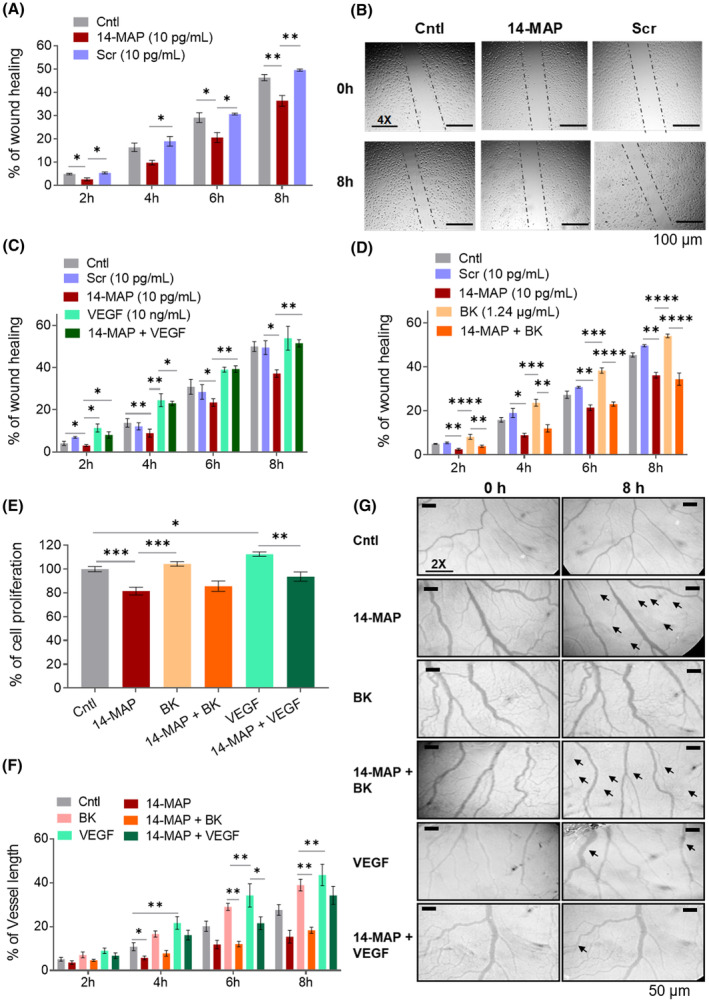
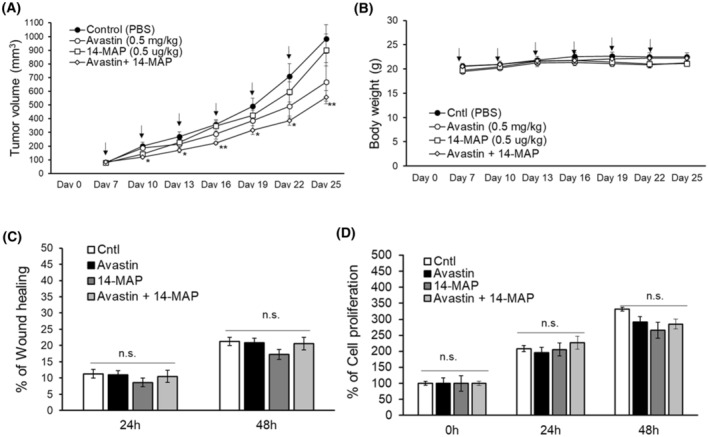
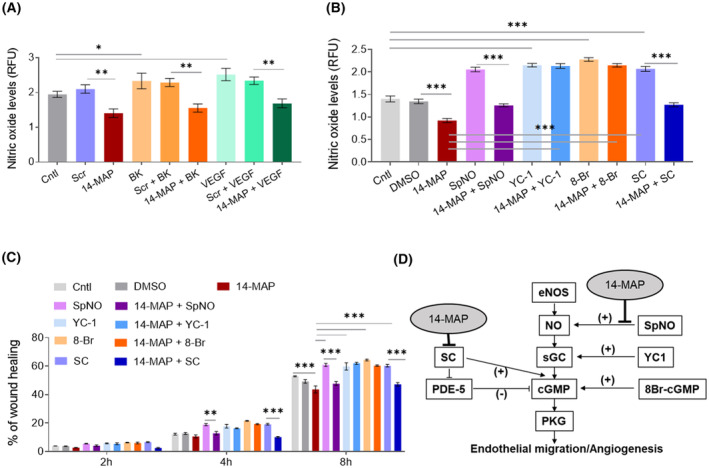
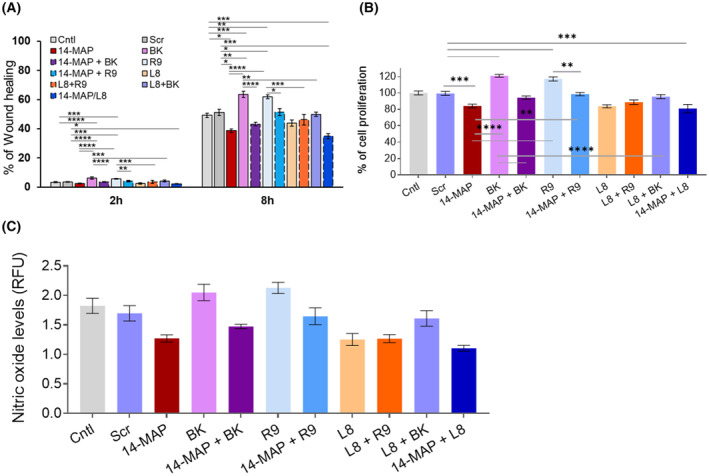
Over the past few decades, VEGF-targeted antiangiogenic therapy for cancers has gained increasing attention. Nevertheless, there are still several limitations such as the potential resistance mechanisms arising in cancer cells against these therapies and their potential adverse effects. These limitations highlight the need for novel anti-angiogenesis molecules and better understanding of the mechanisms of tumor angiogenesis. In the present study, we investigated the antiangiogenic properties of a novel 14-mer antiangiogenic peptide (14-MAP) derived from N-terminal 14 kDa buffalo prolactin and characterized its mode of action. 14-MAP at the picomolar concentration inhibited VEGF- and bradykinin (an autacoid peptide expressed in vascular tissues in pathophysiology, BK)-stimulated endothelial nitric oxide (eNO) production, cell migration, and proliferation in endothelial cells and vessel development in the chick embryo. Although this peptide inhibited both VEGF- and BK-dependent angiogenic processes, its action was more pronounced in the latter. Moreover, the interference of 14-MAP with the eNO synthase (eNOS)-cyclic GMP pathway was also identified. A combination of a low dose of Avastin, a widely used drug targeting VEGF-dependent angiogenesis, and 14-MAP significantly reduced tumor size in an in vivo model of human colon cancer. Taken together, our results suggest that 14-MAP, a BK- and eNOS-dependent antiangiogenic peptide, might be useful for overcoming the limitation of VEGF-targeted antiangiogenic therapy in cancer patients. However, further studies will be required to further characterize its mode of action and therapeutic potential.
在过去几十年中,针对癌症的血管内皮生长因子(VEGF)靶向抗血管生成疗法越来越受到关注。然而,仍然存在一些局限性,例如癌细胞对这些疗法产生的潜在耐药机制及其潜在的不良反应。这些局限性凸显了对新型抗血管生成分子的需求以及对肿瘤血管生成机制的更好理解。在本研究中,我们研究了一种源自水牛催乳素N端14 kDa的新型14肽抗血管生成肽(14-MAP)的抗血管生成特性,并对其作用模式进行了表征。皮摩尔浓度的14-MAP可抑制VEGF和缓激肽(一种在病理生理学中在血管组织中表达的自分泌肽,BK)刺激的内皮细胞一氧化氮(eNO)生成、细胞迁移和增殖,以及鸡胚中的血管发育。尽管该肽抑制了VEGF和BK依赖的血管生成过程,但其在后一种情况中的作用更为明显。此外,还确定了14-MAP对eNO合酶(eNOS)-环磷酸鸟苷途径的干扰。低剂量的阿瓦斯汀(一种广泛用于靶向VEGF依赖血管生成的药物)与14-MAP联合使用,可在人结肠癌体内模型中显著减小肿瘤大小。综上所述,我们的结果表明,14-MAP是一种BK和eNOS依赖的抗血管生成肽,可能有助于克服癌症患者中VEGF靶向抗血管生成疗法的局限性。然而,需要进一步研究以进一步表征其作用模式和治疗潜力。