Instituto de Neurobiología, Universidad Nacional Autónoma de México (UNAM), Querétaro, México.
Instituto de Fisiología Celular, Universidad Nacional Autónoma de México (UNAM), México City, México.
Angiogenesis. 2022 Feb;25(1):57-70. doi: 10.1007/s10456-021-09800-x. Epub 2021 Jun 7.
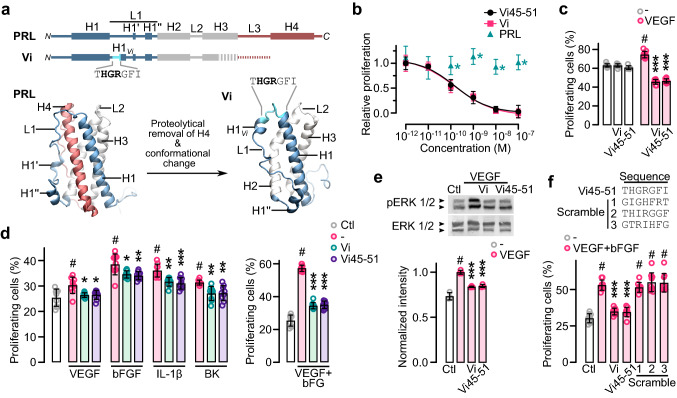
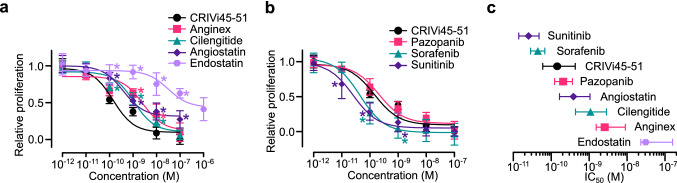
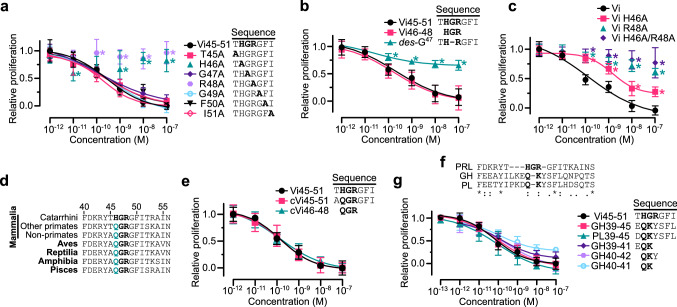
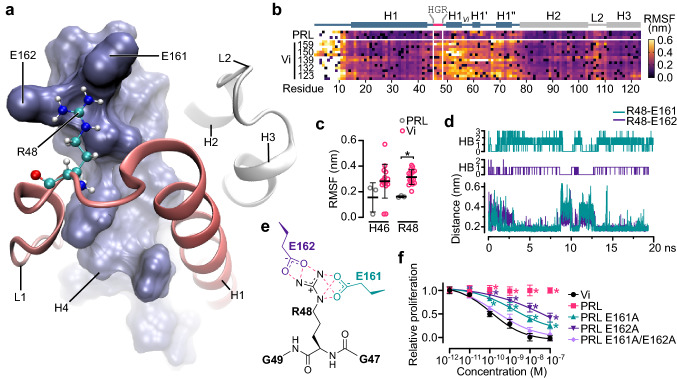
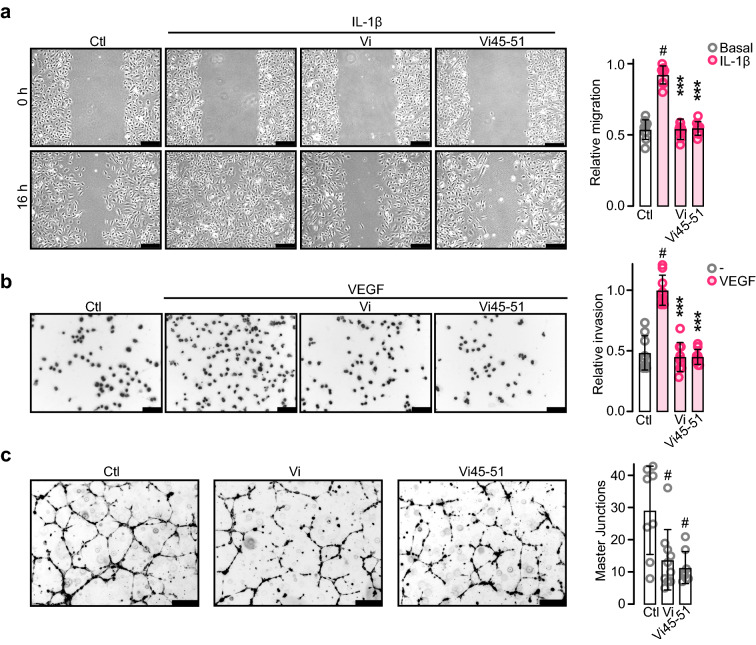
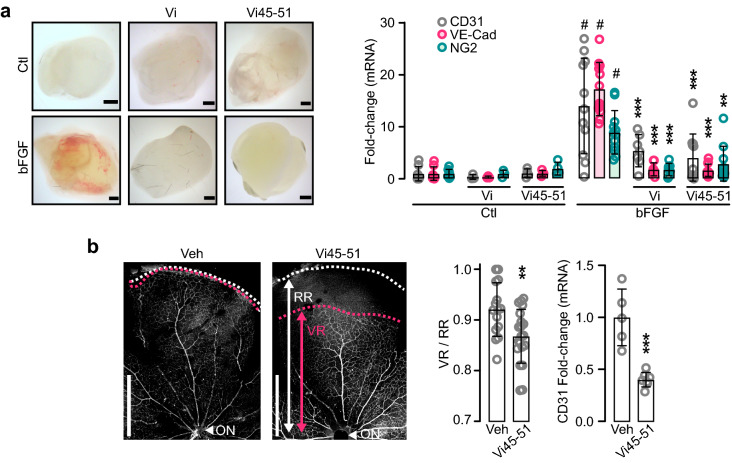
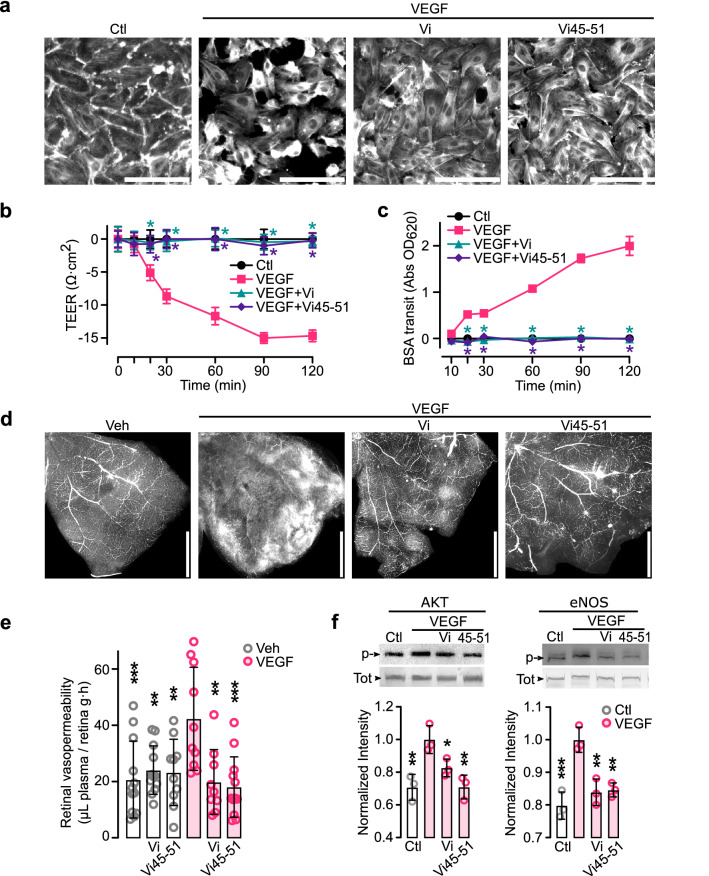
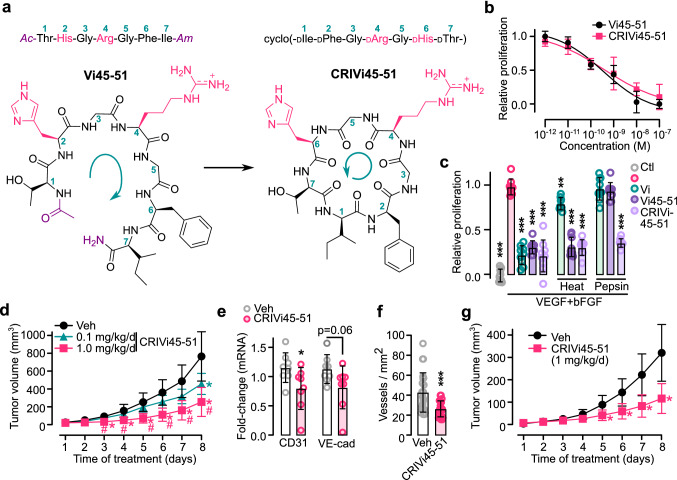
The hormone prolactin acquires antiangiogenic and antivasopermeability properties after undergoing proteolytic cleavage to vasoinhibin, an endogenous prolactin fragment of 123 or more amino acids that inhibits the action of multiple proangiogenic factors. Preclinical and clinical evidence supports the therapeutic potential of vasoinhibin against angiogenesis-related diseases including diabetic retinopathy, peripartum cardiomyopathy, rheumatoid arthritis, and cancer. However, the use of vasoinhibin in the clinic has been limited by difficulties in its production. Here, we removed this barrier to using vasoinhibin as a therapeutic agent by showing that a short linear motif of just three residues (His46-Gly47-Arg48) (HGR) is the functional determinant of vasoinhibin. The HGR motif is conserved throughout evolution, its mutation led to vasoinhibin loss of function, and oligopeptides containing this sequence inhibited angiogenesis and vasopermeability with the same potency as whole vasoinhibin. Furthermore, the oral administration of an optimized cyclic retro-inverse vasoinhibin heptapeptide containing HGR inhibited melanoma tumor growth and vascularization in mice and exhibited equal or higher antiangiogenic potency than other antiangiogenic molecules currently used as anti-cancer drugs in the clinic. Finally, by unveiling the mechanism that obscures the HGR motif in prolactin, we anticipate the development of vasoinhibin-specific antibodies to solve the on-going challenge of measuring endogenous vasoinhibin levels for diagnostic and interventional purposes, the design of vasoinhibin antagonists for managing insufficient angiogenesis, and the identification of putative therapeutic proteins containing HGR.
催乳素在经过蛋白水解裂解为血管抑制素后获得抗血管生成和抗血管通透性的特性,血管抑制素是一种 123 个或更多氨基酸的内源性催乳素片段,可抑制多种促血管生成因子的作用。临床前和临床证据支持血管抑制素治疗与血管生成相关疾病的潜力,包括糖尿病视网膜病变、围产期心肌病、类风湿性关节炎和癌症。然而,血管抑制素在临床上的应用受到其生产困难的限制。在这里,我们通过证明仅由三个残基(His46-Gly47-Arg48)(HGR)组成的短线性基序是血管抑制素的功能决定因素,消除了将血管抑制素用作治疗剂的这一障碍。HGR 基序在整个进化过程中是保守的,其突变导致血管抑制素失去功能,并且含有该序列的寡肽与完整血管抑制素一样具有抑制血管生成和血管通透性的作用。此外,口服含有 HGR 的优化环状反式血管抑制素七肽可抑制小鼠黑色素瘤肿瘤生长和血管生成,并表现出与目前临床上用作抗癌药物的其他抗血管生成分子相同或更高的抗血管生成效力。最后,通过揭示隐藏在催乳素中的 HGR 基序的机制,我们预计将开发出针对血管抑制素的特异性抗体,以解决目前在诊断和干预目的方面测量内源性血管抑制素水平的持续挑战,设计用于管理血管生成不足的血管抑制素拮抗剂,以及鉴定含有 HGR 的潜在治疗性蛋白质。