Wellcome Sanger Institute, Wellcome Genome Campus, Hinxton, UK.
Department of Clinical and Biomedical Sciences, University of Exeter Medical School, Royal Devon and Exeter Hospital, Exeter, UK.
Nat Genet. 2024 Oct;56(10):2046-2053. doi: 10.1038/s41588-024-01910-8. Epub 2024 Sep 23.
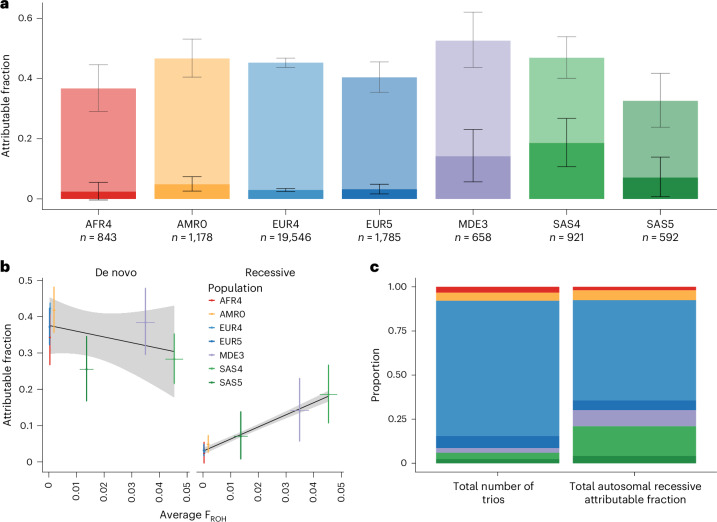
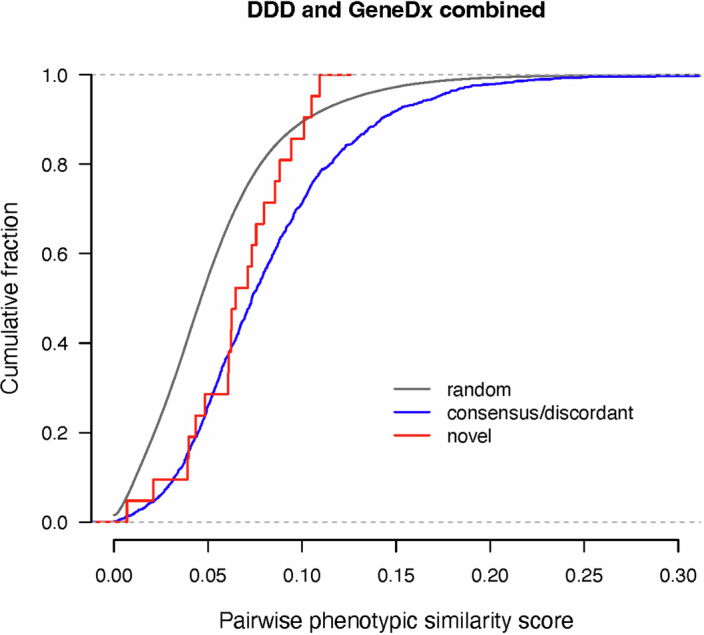
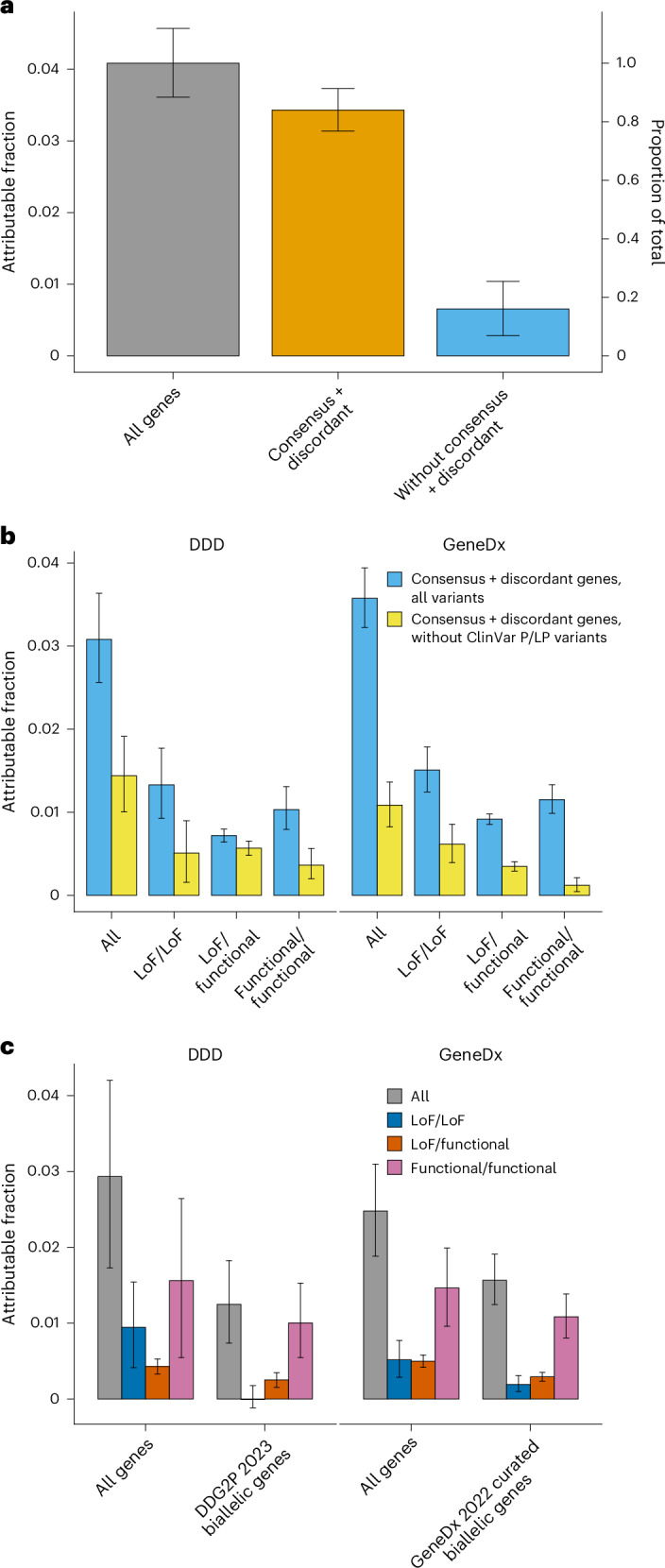
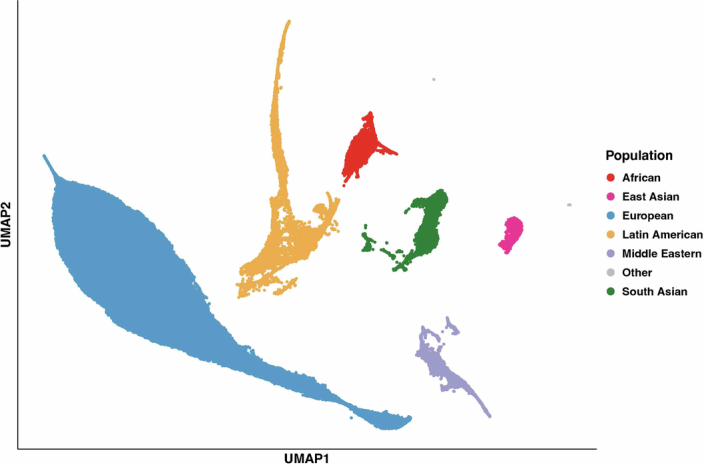
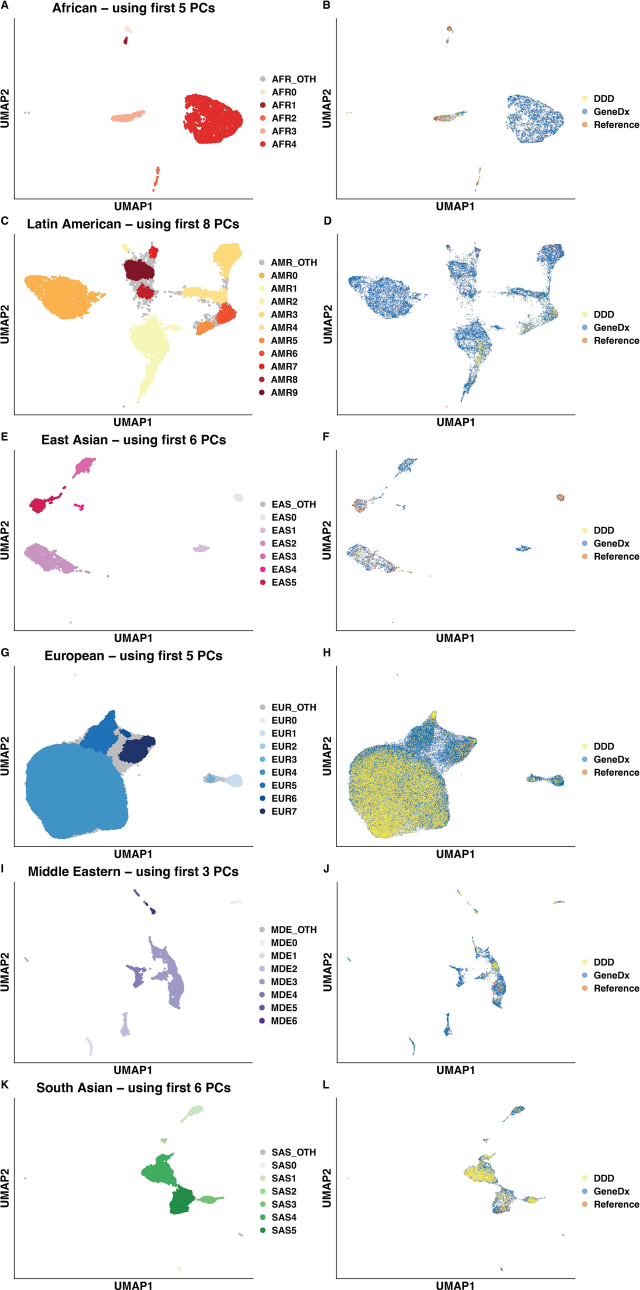
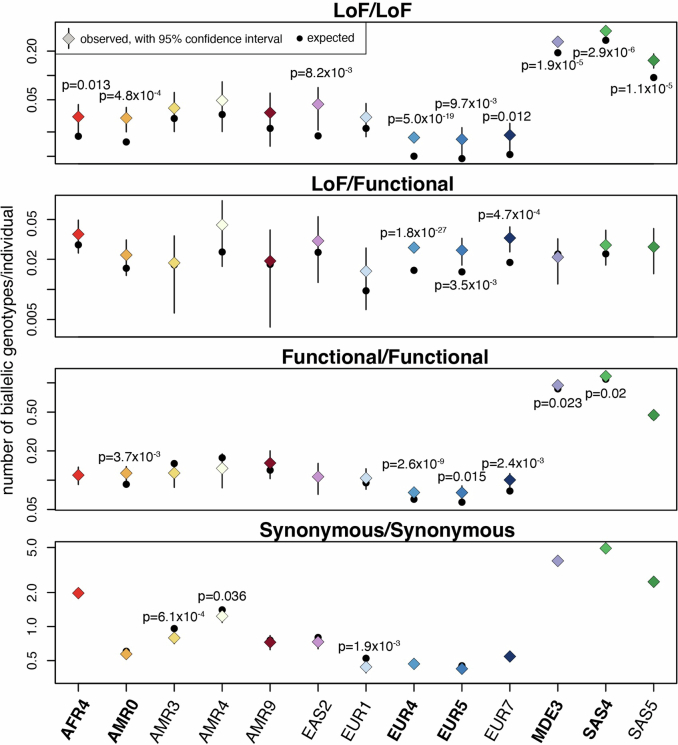
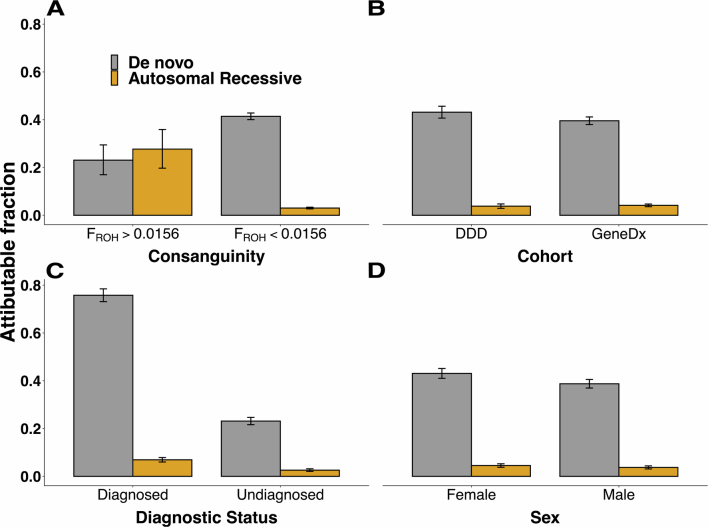
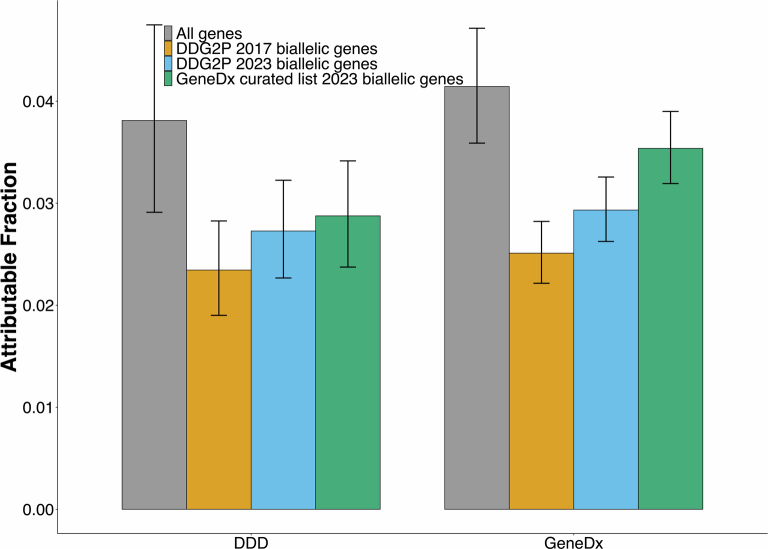
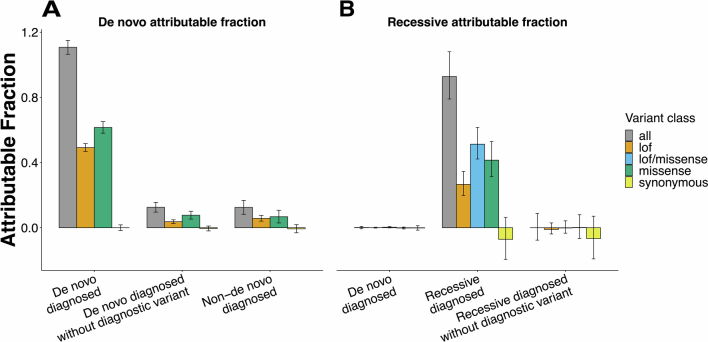
Autosomal recessive coding variants are well-known causes of rare disorders. We quantified the contribution of these variants to developmental disorders in a large, ancestrally diverse cohort comprising 29,745 trios, of whom 20.4% had genetically inferred non-European ancestries. The estimated fraction of patients attributable to exome-wide autosomal recessive coding variants ranged from ~2-19% across genetically inferred ancestry groups and was significantly correlated with average autozygosity. Established autosomal recessive developmental disorder-associated (ARDD) genes explained 84.0% of the total autosomal recessive coding burden, and 34.4% of the burden in these established genes was explained by variants not already reported as pathogenic in ClinVar. Statistical analyses identified two novel ARDD genes: KBTBD2 and ZDHHC16. This study expands our understanding of the genetic architecture of developmental disorders across diverse genetically inferred ancestry groups and suggests that improving strategies for interpreting missense variants in known ARDD genes may help diagnose more patients than discovering the remaining genes.
常染色体隐性编码变异是罕见疾病的已知病因。我们在一个包含 29745 个三核苷酸的大型、遗传背景多样的队列中,量化了这些变异对发育障碍的贡献,其中 20.4%的人具有遗传推断的非欧洲血统。根据遗传推断的祖先群体,可归因于外显子组范围内常染色体隐性编码变异的患者比例在~2-19%之间,与平均自交率显著相关。已确立的常染色体隐性发育障碍相关(ARDD)基因解释了总常染色体隐性编码负担的 84.0%,而这些已确立基因中的 34.4%的负担可由 ClinVar 中尚未报告为致病性的变异来解释。统计分析确定了两个新的 ARDD 基因:KBTBD2 和 ZDHHC16。这项研究扩展了我们对不同遗传推断的祖先群体中发育障碍遗传结构的理解,并表明改进已知 ARDD 基因中错义变异的解释策略可能有助于诊断更多的患者,而不仅仅是发现其余的基因。