Ain Quratul, Hwang Ye Hyun, Yeung Daryl, Panpaprai Pacharee, Iamurairat Wiwat, Chutimongkonkul Wiboon, Trachoo Objoon, Tassone Flora, Jiraanont Poonnada
Department of Biochemistry and Molecular Medicine, School of Medicine, University of California Davis, Davis, CA, USA.
Department of Obstetrics and Gynecology, Medical Service Department, Sirindhorn Hospital, Bangkok, Thailand.
J Assist Reprod Genet. 2024 Nov;41(11):3237-3243. doi: 10.1007/s10815-024-03242-2. Epub 2024 Sep 25.
Fragile X syndrome (FXS) is a neurodevelopmental disorder, caused by an CGG repeat expansion (FM, > 200 CGG) in the fragile X messenger ribonucleoprotein 1 (FMR1) gene. Female carriers of a premutation (PM; 55-200 CGG) can transmit the PM allele, which, depending on the CGG allele size, can expand to an allele in the FM range in the offspring.
Carrier screening for FMR1 PM is not available in Thailand. This study aimed to investigate the prevalence of PM carriers among Thai reproductive women at the tertiary hospital. A total of 1250 females participated in this study; ages ranged from 20 to 45 years, mean of 30 years (S.D. = 6.27).
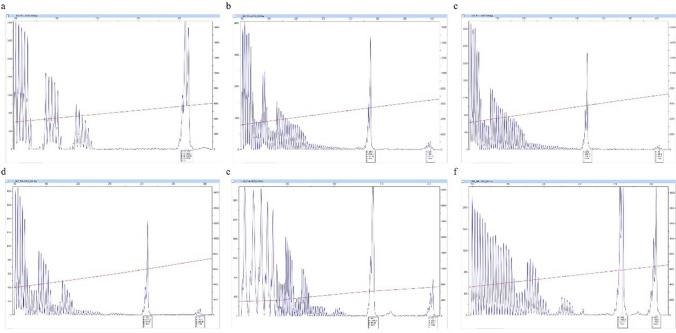
Two carriers of a premutation allele, with 32,62 and 32,69 CGG repeats respectively, were identified. This corresponds to 1 in 600 women or 0.17% of the population. Further, three women carrying a gray zone allele (45-54 CGG repeats) were identified (29,51; 29,49; and 30,47 CGG repeats) which equals to 1:400 women or 0.25% of the population. No FM case was detected.
This study heightens the importance of PM carrier screening of women of reproductive age, particularly for the higher risk of developing fragile X-associated primary ovarian insufficiency (FXPOI). Early identification of PM carrier status enhances family planning and fecundity alternatives and improves reproductive health outcomes leading to a better life.
脆性X综合征(FXS)是一种神经发育障碍,由脆性X信使核糖核蛋白1(FMR1)基因中的CGG重复序列扩增(前突变,>200个CGG)引起。前突变(PM;55 - 200个CGG)的女性携带者可传递该PM等位基因,根据CGG等位基因大小,其在后代中可扩增为全突变范围内的等位基因。
泰国尚无针对FMR1前突变的携带者筛查。本研究旨在调查一家三级医院中泰国育龄女性前突变携带者的患病率。共有1250名女性参与本研究;年龄范围为20至45岁,平均年龄30岁(标准差=6.27)。
鉴定出两名前突变等位基因携带者,其CGG重复序列分别为32、62和32、69。这相当于每600名女性中有1例,占总人口的0.17%。此外,还鉴定出三名携带灰色区域等位基因(45 - 54个CGG重复序列)的女性(29、51;29、49;以及30、47个CGG重复序列),相当于每400名女性中有1例,占总人口的0.25%。未检测到全突变病例。
本研究凸显了对育龄女性进行前突变携带者筛查的重要性,尤其是鉴于其发生脆性X相关原发性卵巢功能不全(FXPOI)的较高风险。早期识别前突变携带者状态可优化计划生育和生育选择,并改善生殖健康结局,从而带来更好的生活。