
通过先进的数据驱动方法加强洪水风险缓解。
Enhancing flood risk mitigation by advanced data-driven approach.
作者信息
Chafjiri Ali S, Gheibi Mohammad, Chahkandi Benyamin, Eghbalian Hamid, Waclawek Stanislaw, Fathollahi-Fard Amir M, Behzadian Kourosh
机构信息
School of Civil Engineering, University of Tehran, Tehran, Iran.
Institute for Nanomaterials, Advanced Technologies and Innovation, Technical University of Liberec, Studentská 1402/2, 461 17, Liberec, Czech Republic.
出版信息
Heliyon. 2024 Sep 14;10(18):e37758. doi: 10.1016/j.heliyon.2024.e37758. eCollection 2024 Sep 30.
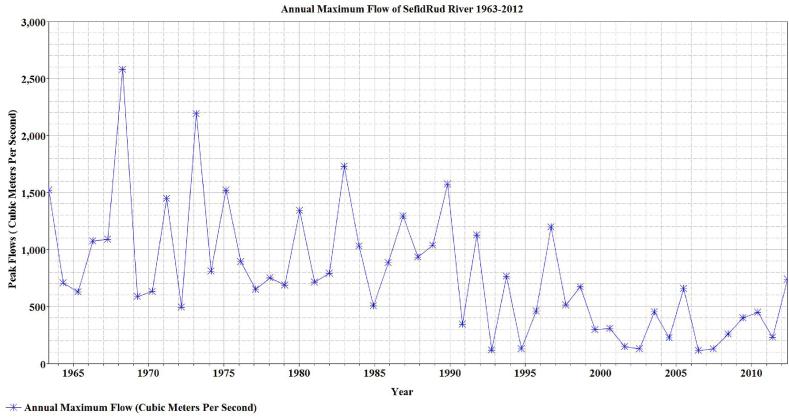
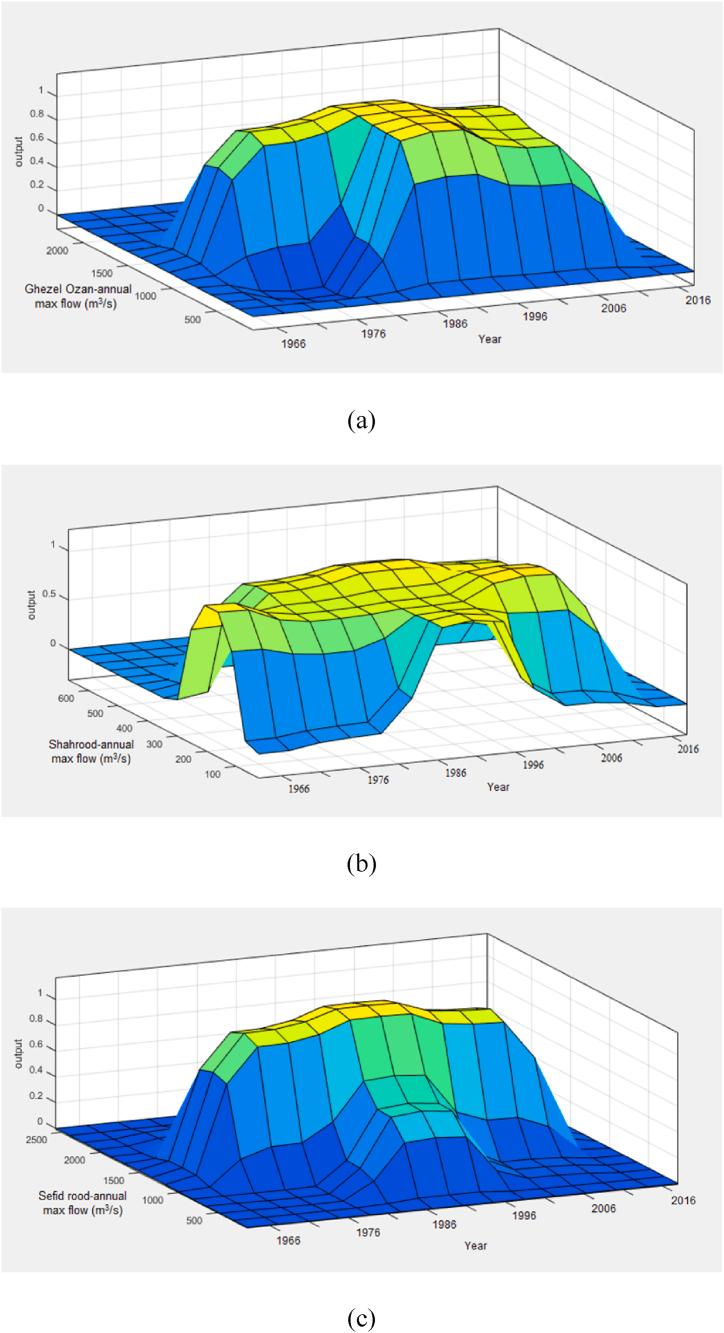
Flood events in the Sefidrud River basin have historically caused significant damage to infrastructure, agriculture, and human settlements, highlighting the urgent need for improved flood prediction capabilities. Traditional hydrological models have shown limitations in capturing the complex, non-linear relationships inherent in flood dynamics. This study addresses these challenges by leveraging advanced machine learning techniques to develop more accurate and reliable flood estimation models for the region. The study applied Random Forest (RF), Bagging, SMOreg, Multilayer Perceptron (MLP), and Adaptive Neuro-Fuzzy Inference System (ANFIS) models using historical hydrological data spanning 50 years. The methods involved splitting the data into training (50-70 %) and validation sets, processed using WEKA 3.9 software. The evaluation revealed that the nonlinear ensemble RF model achieved the highest accuracy with a correlation of 0.868 and an root mean squared error (RMSE) of 0.104. Both RF and MLP significantly outperformed the linear SMOreg approach, demonstrating the suitability of modern machine learning techniques. Additionally, the ANFIS model achieved an exceptional R-squared accuracy of 0.99. The findings underscore the potential of data-driven models for accurate flood estimating, providing a valuable benchmark for algorithm selection in flood risk management.
历史上,塞菲德鲁德河流域的洪水事件对基础设施、农业和人类住区造成了重大破坏,凸显了提高洪水预测能力的迫切需求。传统水文模型在捕捉洪水动力学中固有的复杂非线性关系方面存在局限性。本研究通过利用先进的机器学习技术来应对这些挑战,为该地区开发更准确、可靠的洪水估计模型。该研究使用了跨越50年的历史水文数据,应用了随机森林(RF)、装袋法、SMOreg、多层感知器(MLP)和自适应神经模糊推理系统(ANFIS)模型。这些方法包括将数据分为训练集(50%-70%)和验证集,并使用WEKA 3.9软件进行处理。评估结果显示,非线性集成RF模型的相关性为0.868,均方根误差(RMSE)为0.104,达到了最高精度。RF和MLP均显著优于线性SMOreg方法,证明了现代机器学习技术的适用性。此外,ANFIS模型的决定系数精度高达0.99。研究结果强调了数据驱动模型在准确洪水估计方面的潜力,为洪水风险管理中的算法选择提供了有价值的基准。





 Zotero 插件