Department of Molecular Biology and Laboratory for Molecular Infection Medicine Sweden, Umeå Centre for Microbial Research, SciLifeLab, Umeå University, Umeå, Sweden.
Biochem Soc Trans. 2024 Oct 30;52(5):1981-1993. doi: 10.1042/BST20230027.
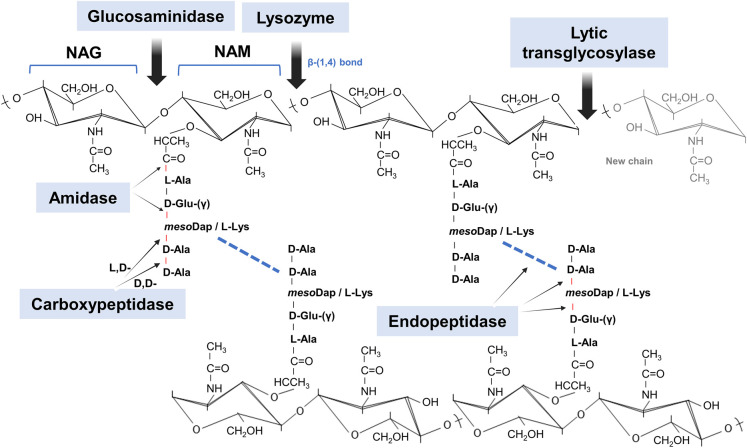
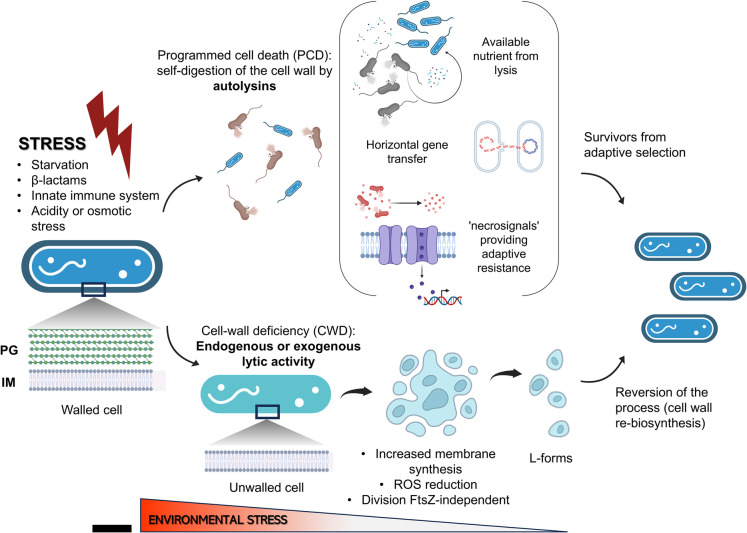
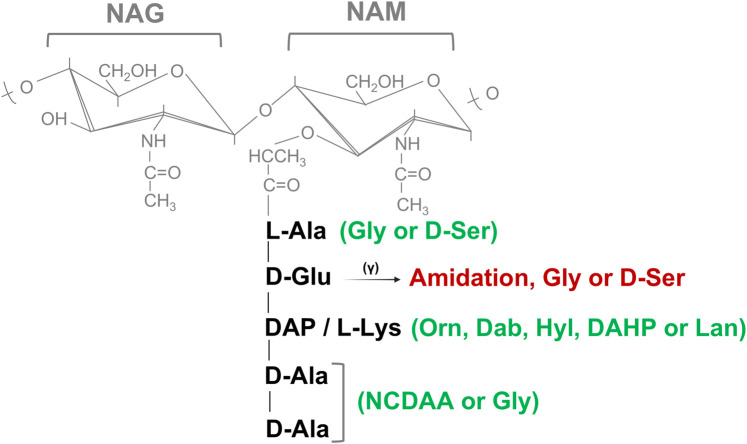
The bacterial cell wall, a sophisticated and dynamic structure predominantly composed of peptidoglycan (PG), plays a pivotal role in bacterial survival and adaptation. Bacteria actively modify their cell walls by editing PG components in response to environmental challenges. Diverse variations in peptide composition, cross-linking patterns, and glycan strand structures empower bacteria to resist antibiotics, evade host immune detection, and adapt to dynamic environments. This review comprehensively summarizes the most common modifications reported to date and their associated adaptive role and further highlights how regulation of PG synthesis and turnover provides resilience to cell lysis.
细菌细胞壁是一种复杂而动态的结构,主要由肽聚糖(PG)组成,在细菌的生存和适应中起着关键作用。细菌通过编辑 PG 成分来积极地改变细胞壁,以应对环境挑战。肽组成、交联模式和聚糖链结构的多样性使细菌能够抵抗抗生素、逃避宿主免疫检测,并适应动态环境。这篇综述全面总结了迄今为止报道的最常见的修饰及其相关的适应作用,并进一步强调了 PG 合成和周转的调节如何为细胞裂解提供弹性。