Maternal, Child and Reproductive Health Initiative, Barcelona Institute for Global Health (ISGlobal), Hospital Clínic - Universitat de Barcelona, Barcelona, Spain.
Department of Epidemiology, Harvard T.H. Chan School of Public Health, Boston, MA, USA.
Cochrane Database Syst Rev. 2024 Sep 26;9(9):CD006689. doi: 10.1002/14651858.CD006689.pub3.
Malaria and HIV infection overlap geographically in sub-Saharan Africa and share risk factors. HIV infection increases malaria's severity, especially in pregnant women. The World Health Organization (WHO) recommends intermittent preventive treatment in pregnancy (IPTp) with sulphadoxine-pyrimethamine (SP) for pregnant women living in areas of stable malaria transmission. However, HIV-positive women on daily cotrimoxazole prophylaxis (recommended for prevention of opportunistic infections in people with HIV) cannot receive SP due to adverse drug interactions, so malaria prevention in this vulnerable population currently relies on daily cotrimoxazole prophylaxis alone. This review is based on a new protocol and provides an update to the 2011 Cochrane Review that evaluated alternative drugs for IPTp to prevent malaria in HIV-positive women.
To compare the safety and efficacy of intermittent preventive treatment regimens for malaria prevention in HIV-positive pregnant women.
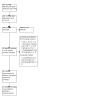
We searched CENTRAL, MEDLINE, Embase, three other databases, and two trial registries to 31 January 2024. To identify relevant additional studies or unpublished work, we checked references and contacted study authors and other researchers working on malaria and HIV.
We included randomized controlled trials (RCTs) comparing any intermittent preventive treatment regimen for preventing malaria in HIV-positive pregnant women against daily cotrimoxazole prophylaxis alone, placebo, current or previous standard of care, or combinations of these options. By 'standard of care' we refer to the country's recommended drug regimen to prevent malaria in pregnancy among HIV-positive women, or the treatment that a trial's research team considered to be the standard of care.
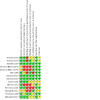
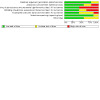
Review authors, in pairs, independently screened all records identified by the search strategy, applied inclusion criteria, assessed risk of bias in included trials, and extracted data. We contacted trial authors when additional information was required. We presented dichotomous outcomes using risk ratios (RRs), count outcomes as incidence rate ratios (IRRs), and continuous outcomes as mean differences (MDs). We presented all measures of effect with 95% confidence intervals (CIs). We assessed the certainty of the evidence using the GRADE approach for what we considered to be the main comparisons and outcomes.
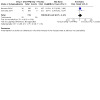
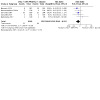
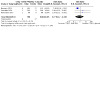
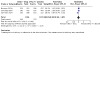
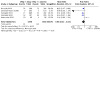
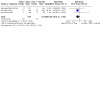
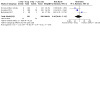
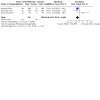
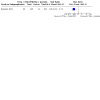
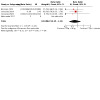
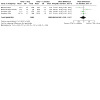
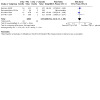
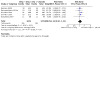
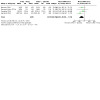
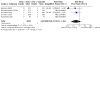
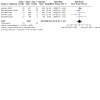
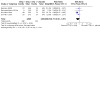
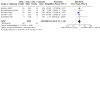
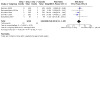
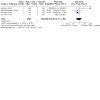
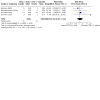
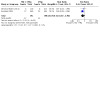
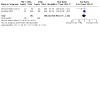
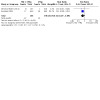
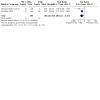
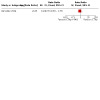
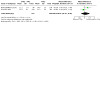
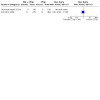
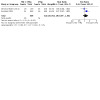
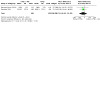
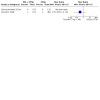
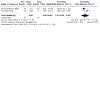
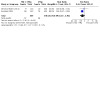
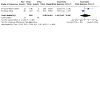
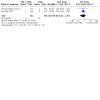
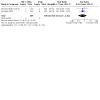
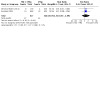
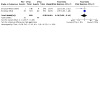
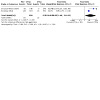
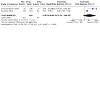
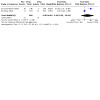
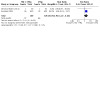
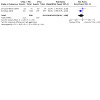
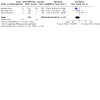
We included 14 RCTs, with a total of 4976 HIV-positive pregnant women initially randomized. All trials assessed the efficacy and safety of one antimalarial used as IPTp (mefloquine, dihydroartemisinin/piperaquine, SP, or azithromycin) with or without daily cotrimoxazole, compared to daily cotrimoxazole alone, placebo, or a standard of care regimen. We grouped the trials into nine comparisons. Our main comparison evaluated the current standard of care (daily cotrimoxazole) with another drug regimen (mefloquine or dihydroartemisinin/piperaquine) versus daily cotrimoxazole with or without placebo. In this comparison, two trials evaluated mefloquine and three evaluated dihydroartemisinin/piperaquine. We conducted meta-analyses that included trials evaluating dihydroartemisinin/piperaquine plus cotrimoxazole, and trials that evaluated mefloquine plus cotrimoxazole, as we considered there to be no qualitative or quantitative heterogeneity among trials for most outcomes. We considered drug-related adverse events and HIV-related outcomes to be drug-specific. Daily cotrimoxazole prophylaxis plus another drug regimen (mefloquine or dihydroartemisinin/piperaquine) probably results in lower risk of maternal peripheral parasitaemia at delivery (RR 0.62, 95% CI 0.41 to 0.95; 2406 participants, 5 trials; moderate-certainty evidence). It results in little or no difference in maternal anaemia cases at delivery (RR 0.98, 95% CI 0.90 to 1.07; 2417 participants, 3 trials; high-certainty evidence). It probably results in a decrease in placental malaria measured by blood smear (RR 0.54, 95% CI 0.31 to 0.93; 1337 participants, 3 trials; moderate-certainty evidence), and probably results in little or no difference in low birth weight (RR 1.16, 95% CI 0.95 to 1.41; 2915 participants, 5 trials; moderate-certainty evidence). There is insufficient evidence to ascertain whether daily cotrimoxazole prophylaxis plus another drug regimen affects the risk of cord blood parasitaemia (RR 0.27, 95% CI 0.04 to 1.64; 2696 participants, 5 trials; very low-certainty evidence). Daily cotrimoxazole prophylaxis plus another drug regimen probably results in little or no difference in foetal loss (RR 1.03, 95% CI 0.73 to 1.46; 2957 participants, 5 trials; moderate-certainty evidence), and may result in little or no difference in neonatal mortality (RR 1.21, 95% CI 0.68 to 2.14; 2706 participants, 4 trials; low-certainty evidence). Due to the probability of an increased risk of mother-to-child HIV transmission and some adverse drug effects noted with mefloquine, we also looked at the results for dihydroartemisinin/piperaquine specifically. Dihydroartemisinin/piperaquine plus daily contrimoxazole probably results in little to no difference in maternal peripheral parasitaemia (RR 0.59, 95% CI 0.31 to 1.11; 1517 participants, 3 trials; moderate-certainty evidence) or anaemia at delivery (RR 0.95, 95% CI 0.82 to 1.10; 1454 participants, 2 trials; moderate-certainty evidence), but leads to fewer women having placental malaria when measured by histopathologic analysis (RR 0.67, 95% CI 0.50 to 0.90; 1570 participants, 3 trials; high-certainty evidence). The addition of dihydroartemisinin/piperaquine to daily cotrimoxazole probably made little to no difference to rates of low birth weight (RR 1.13, 95% CI 0.87 to 1.48; 1695 participants, 3 trials), foetal loss (RR 1.14, 95% CI 0.68 to 1.90; 1610 participants, 3 trials), or neonatal mortality (RR 1.03, 95% CI 0.39 to 2.72; 1467 participants, 2 trials) (all moderate-certainty evidence). We found low-certainty evidence of no increased risk of gastrointestinal drug-related adverse events (RR 1.42, 95% CI 0.51 to 3.98; 1447 participants, 2 trials) or mother-to-child HIV transmission (RR 1.54, 95% CI 0.26 to 9.19; 1063 participants, 2 trials).
AUTHORS' CONCLUSIONS: Dihydroartemisinin/piperaquine and mefloquine added to daily cotrimoxazole seem to be efficacious in preventing malaria infection in HIV-positive pregnant women compared to daily cotrimoxazole alone. However, increased risk of HIV transmission to the foetus and poor drug tolerability may be barriers to implementation of mefloquine in practice. In contrast, the evidence suggests that dihydroartemisinin/piperaquine does not increase the risk of HIV mother-to-child transmission and is well tolerated.
在撒哈拉以南非洲,疟疾和艾滋病毒感染在地理上重叠,且具有共同的风险因素。艾滋病毒感染会增加疟疾的严重程度,尤其是对孕妇而言。世界卫生组织(WHO)建议在疟疾稳定传播地区,对感染艾滋病毒的孕妇使用磺胺多辛-乙胺嘧啶(SP)进行间歇性预防治疗(IPTp)。然而,正在接受每日复方磺胺甲噁唑预防(推荐用于预防艾滋病毒感染者的机会性感染)的艾滋病毒阳性妇女由于药物相互作用而不能使用 SP,因此目前在这一脆弱人群中,疟疾预防只能单独依赖每日复方磺胺甲噁唑预防。本综述是基于一项新的方案,并对 2011 年评估用于艾滋病毒阳性孕妇的 IPTp 替代药物以预防疟疾的 Cochrane 综述进行了更新。
比较预防艾滋病毒阳性孕妇疟疾的间歇性预防治疗方案的安全性和疗效。
我们检索了 CENTRAL、MEDLINE、Embase、其他三个数据库和两个试验注册库,检索截至 2024 年 1 月 31 日。为了确定相关的额外研究或未发表的工作,我们检查了参考文献,并联系了研究作者和其他从事疟疾和艾滋病毒研究的人员。
我们纳入了比较任何间歇性预防治疗方案与单独使用每日复方磺胺甲噁唑预防(或安慰剂、当前或以前的标准治疗或这些方案的组合)预防艾滋病毒阳性孕妇疟疾的随机对照试验(RCTs)。通过“标准治疗”,我们指的是国家推荐用于预防艾滋病毒阳性孕妇疟疾的药物方案,或试验研究团队认为是标准治疗的方案。
两名综述作者独立筛选了搜索策略确定的所有记录,应用纳入标准,评估了纳入试验的偏倚风险,并提取了数据。当需要额外的信息时,我们会联系试验作者。我们以风险比(RR)表示二分类结局,以发生率比(IRR)表示计数结局,以均数差(MD)表示连续结局。我们以 95%置信区间(CI)表示所有措施的效果。我们使用 GRADE 方法评估了我们认为主要比较和结局的证据确定性。
我们纳入了 14 项 RCT,共纳入了最初随机分组的 4976 名艾滋病毒阳性孕妇。所有试验都评估了一种抗疟药物(甲氟喹、二氢青蒿素/哌喹、SP 或阿奇霉素)作为 IPTp 的疗效和安全性,与单独使用每日复方磺胺甲噁唑、安慰剂或标准治疗方案进行了比较。我们将试验分为九个比较。我们的主要比较评估了当前的标准治疗(每日复方磺胺甲噁唑)与另一种药物方案(甲氟喹或二氢青蒿素/哌喹)与每日复方磺胺甲噁唑加安慰剂或标准治疗方案的比较。在这个比较中,两项试验评估了甲氟喹,三项试验评估了二氢青蒿素/哌喹。我们对评估二氢青蒿素/哌喹加复方磺胺甲噁唑和评估甲氟喹加复方磺胺甲噁唑的试验进行了荟萃分析,因为我们认为在大多数结局方面,这些试验没有定性或定量的异质性。我们认为药物相关不良事件和艾滋病毒相关结局是药物特异性的。每日复方磺胺甲噁唑加另一种药物方案(甲氟喹或二氢青蒿素/哌喹)可能会降低分娩时母亲外周血寄生虫血症的风险(RR 0.62,95%CI 0.41 至 0.95;2406 名参与者,5 项试验;中等确定性证据)。它可能导致分娩时母亲贫血病例的差异较小或无差异(RR 0.98,95%CI 0.90 至 1.07;2417 名参与者,3 项试验;高确定性证据)。它可能会降低胎盘疟疾的发生率(RR 0.54,95%CI 0.31 至 0.93;1337 名参与者,3 项试验;中等确定性证据),并且可能会降低低出生体重的发生率(RR 1.16,95%CI 0.95 至 1.41;2915 名参与者,5 项试验;中等确定性证据)。目前尚无足够的证据确定每日复方磺胺甲噁唑加另一种药物方案是否会影响脐血寄生虫血症的风险(RR 0.27,95%CI 0.04 至 1.64;2696 名参与者,5 项试验;非常低确定性证据)。每日复方磺胺甲噁唑加另一种药物方案可能会导致胎儿丢失的差异较小或无差异(RR 1.03,95%CI 0.73 至 1.46;2957 名参与者,5 项试验;中等确定性证据),并且可能会导致新生儿死亡率的差异较小或无差异(RR 1.21,95%CI 0.68 至 2.14;2706 名参与者,4 项试验;低确定性证据)。由于甲氟喹可能会增加母婴传播 HIV 的风险和一些药物不良反应,我们还专门研究了二氢青蒿素/哌喹的结果。二氢青蒿素/哌喹加每日复方磺胺甲噁唑可能会导致母亲外周寄生虫血症(RR 0.59,95%CI 0.31 至 1.11;1517 名参与者,3 项试验;中等确定性证据)或分娩时贫血的差异较小或无差异(RR 0.95,95%CI 0.82 至 1.10;1454 名参与者,2 项试验;中等确定性证据),但通过组织病理学分析测量时,它可能会减少患有胎盘疟疾的妇女人数(RR 0.67,95%CI 0.50 至 0.90;1570 名参与者,3 项试验;高确定性证据)。二氢青蒿素/哌喹加每日复方磺胺甲噁唑可能会导致低出生体重的发生率差异较小或无差异(RR 1.13,95%CI 0.87 至 1.48;1695 名参与者,3 项试验)、胎儿丢失(RR 1.14,95%CI 0.68 至 1.90;1610 名参与者,3 项试验)或新生儿死亡率(RR 1.03,95%CI 0.39 至 2.72;1467 名参与者,2 项试验)(所有中等确定性证据)。我们发现没有增加胃肠道药物相关不良事件(RR 1.42,95%CI 0.51 至 3.98;1447 名参与者,2 项试验)或母婴传播 HIV(RR 1.54,95%CI 0.26 至 9.19;1063 名参与者,2 项试验)的低确定性证据。
与单独使用每日复方磺胺甲噁唑相比,二氢青蒿素/哌喹和甲氟喹加每日复方磺胺甲噁唑似乎对预防艾滋病毒阳性孕妇疟疾有效。然而,增加母婴 HIV 传播的风险和较差的药物耐受性可能是在实践中实施甲氟喹的障碍。相比之下,证据表明二氢青蒿素/哌喹不会增加母婴 HIV 传播的风险,且耐受性良好。