Department of Chemistry, McGill University, 801 Sherbrooke St. West, Montreal, QC H3A 0B8, Canada.
Biosensors (Basel). 2024 Aug 23;14(9):409. doi: 10.3390/bios14090409.
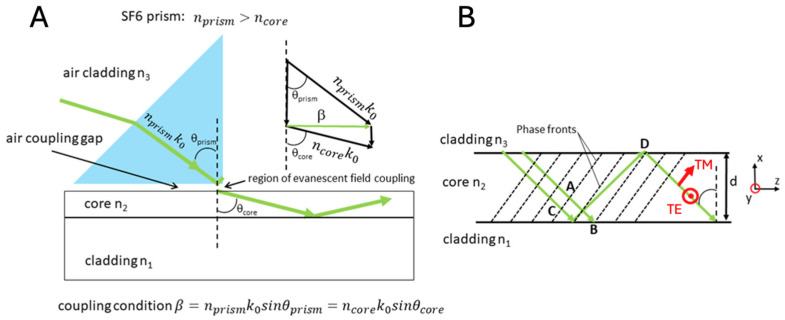
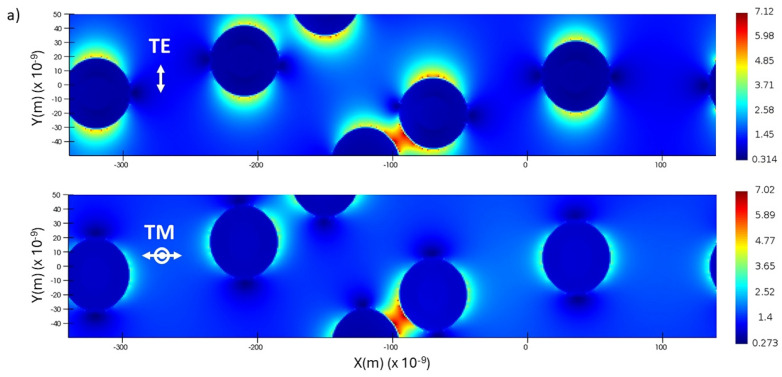
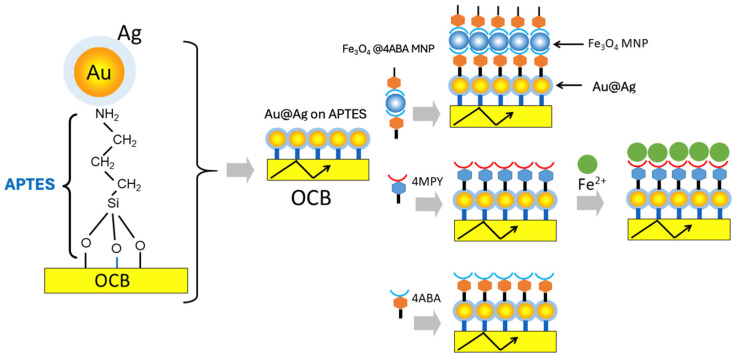
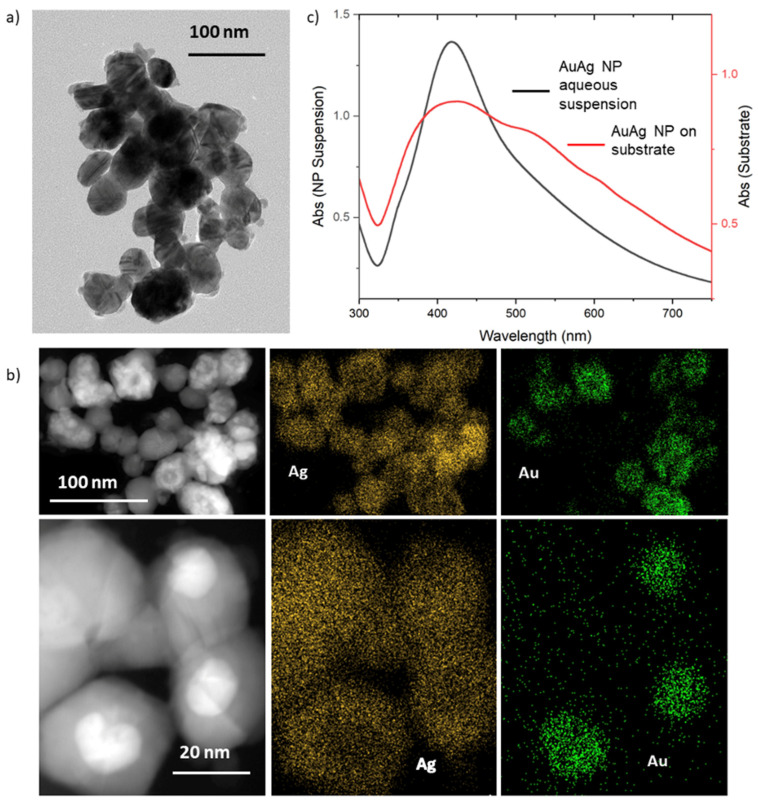
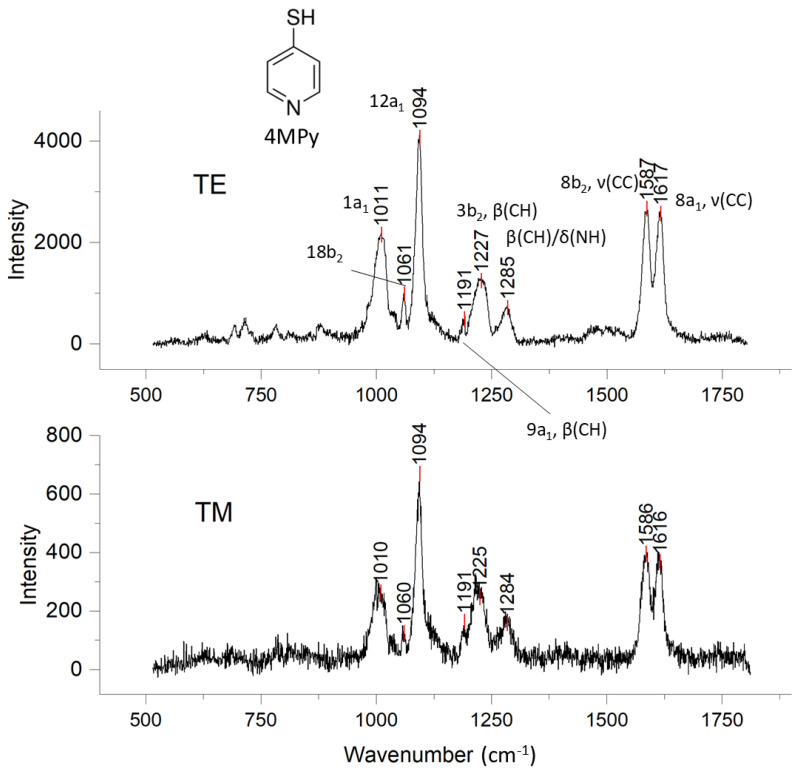
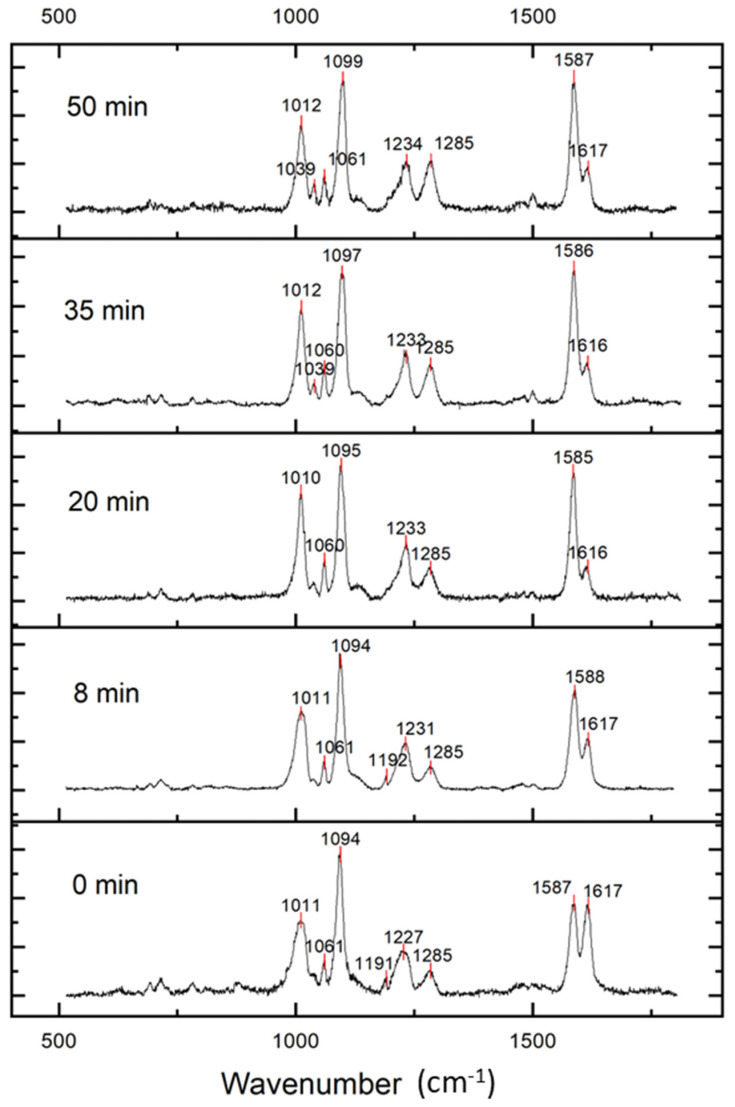
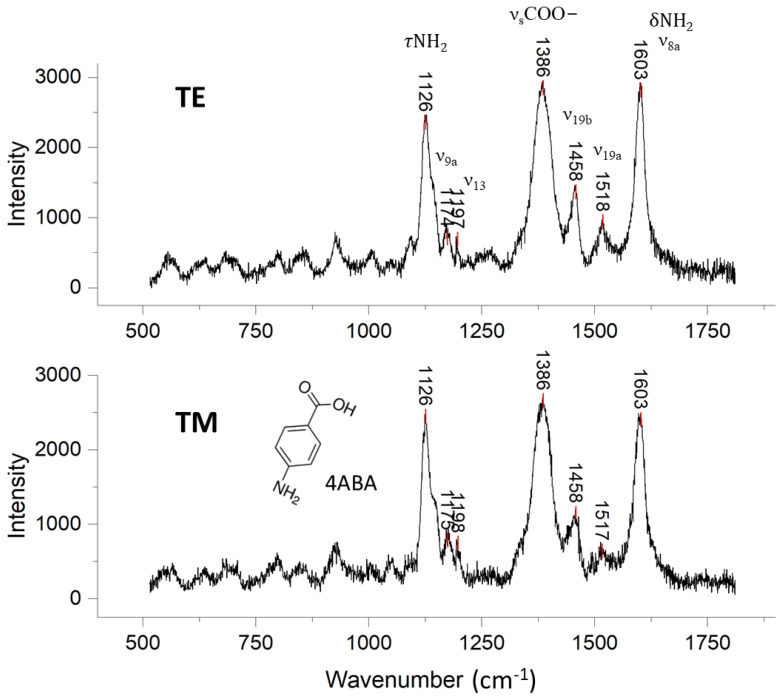
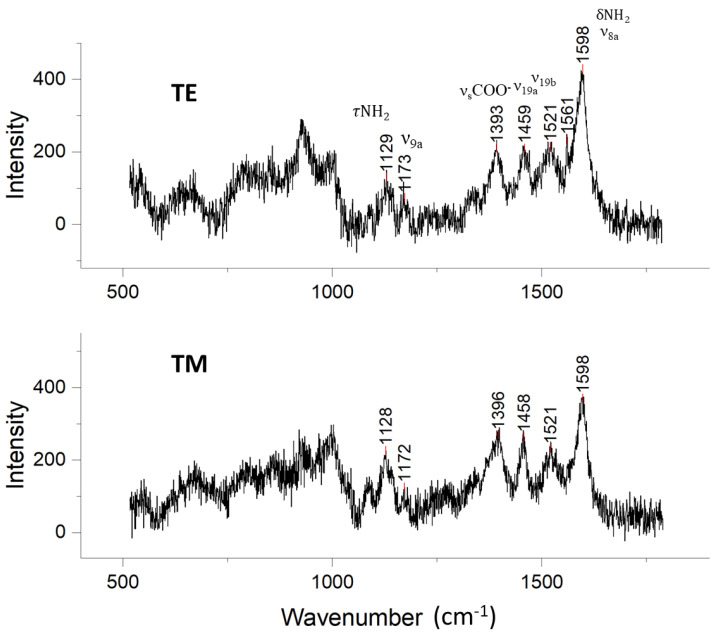
This study examined applications of polarized evanescent guided wave surface-enhanced Raman spectroscopy to determine the binding and orientation of small molecules and ligand-modified nanoparticles, and the relevance of this technique to lab-on-a-chip, surface plasmon polariton and other types of field enhancement techniques relevant to Raman biosensing. A simplified tutorial on guided-wave Raman spectroscopy is provided that introduces the notion of plasmonic nanoparticle field enhancements to magnify the otherwise weak TE- and TM-polarized evanescent fields for Raman scattering on a simple plasmonic nanoparticle slab waveguide substrate. The waveguide construct is called an optical chemical bench (OCB) to emphasize its adaptability to different kinds of surface chemistries that can be envisaged to prepare optical biosensors. The OCB forms a complete spectroscopy platform when integrated into a custom-built Raman spectrograph. Plasmonic enhancement of the evanescent field is achieved by attaching porous carpets of Au@Ag core shell nanoparticles to the surface of a multi-mode glass waveguide substrate. We calibrated the OCB by establishing the dependence of SER spectra of adsorbed 4-mercaptopyridine and 4-aminobenzoic acid on the TE/TM polarization state of the evanescent field. We contrasted the OCB construct with more elaborate photonic chip devices that also benefit from enhanced evanescent fields, but without the use of plasmonics. We assemble hierarchies of matter to show that the OCB can resolve the binding of Fe ions from water at the nanoscale interface of the OCB by following the changes in the SER spectra of 4MPy as it coordinates the cation. A brief introduction to magnetoplasmonics sets the stage for a study that resolves the 4ABA ligand interface between guest magnetite nanoparticles adsorbed onto host plasmonic Au@Ag nanoparticles bound to the OCB. In some cases, the evanescent wave TM polarization was strongly attenuated, most likely due to damping by inertial charge carriers that favor optical loss for this polarization state in the presence of dense assemblies of plasmonic nanoparticles. The OCB offers an approach that provides vibrational and orientational information for (bio)sensing at interfaces that may supplement the information content of evanescent wave methods that rely on perturbations in the refractive index in the region of the evanescent wave.
本研究考察了偏振消逝波导表面增强拉曼光谱在确定小分子和配体修饰纳米粒子的结合和取向方面的应用,以及该技术与片上实验室、表面等离子体激元和其他类型与拉曼生物传感相关的场增强技术的相关性。提供了一个简化的导波拉曼光谱教程,介绍了等离子体纳米粒子场增强的概念,以放大在简单的等离子体纳米粒子平板波导衬底上的瑞利散射的原本微弱的 TE 和 TM 偏振消逝场。该波导结构被称为光学化学台(OCB),以强调其适应不同种类表面化学的适应性,这些表面化学可用于制备光学生物传感器。当与定制构建的拉曼光谱仪集成时,OCB 形成完整的光谱平台。通过将多孔 Au@Ag 核壳纳米粒子地毯附着在多模玻璃波导衬底的表面上,实现了消逝场的等离子体增强。我们通过建立吸附在 4-巯基吡啶和 4-氨基苯甲酸上的 SER 光谱与消逝场的 TE/TM 偏振状态的依赖关系,对 OCB 进行了校准。我们将 OCB 结构与更复杂的光子芯片器件进行了对比,这些器件也受益于增强的消逝场,但不使用等离子体。我们组装了物质的层次结构,以表明 OCB 可以通过观察 4MPy 的 SER 光谱的变化来分辨在 OCB 的纳米级界面处来自水的 Fe 离子的结合,因为它与阳离子配位。磁等离子体学的简要介绍为一项研究奠定了基础,该研究解决了吸附在 OCB 上的主体等离子体 Au@Ag 纳米粒子上的客体磁铁矿纳米粒子之间的 4ABA 配体界面。在某些情况下,消逝波 TM 偏振强烈衰减,这很可能是由于惯性电荷载流子的阻尼所致,在密集的等离子体纳米粒子组装中,这种偏振状态的光损耗更大。OCB 提供了一种在界面处进行(生物)传感的方法,该方法可以补充依赖于消逝波区域折射率扰动的消逝波方法的信息含量。