Neelakandan Sivasubramaniyan, Srither S R, Dhineshbabu N R, Maloji Suman, Dahlsten Oscar, Balaji Ramachandran, Singh Ragini
Department of Chemistry, Sri Sai Ram Institute of Technology, West Tambaram, Chennai 600044, Tamil Nadu, India.
Centre of Excellence for Nanotechnology, Department of Electronics and Communication Engineering, Koneru Lakshmaiah Education Foundation, Vaddeswaram 522302, Andhra Pradesh, India.
Nanomaterials (Basel). 2024 Sep 15;14(18):1500. doi: 10.3390/nano14181500.
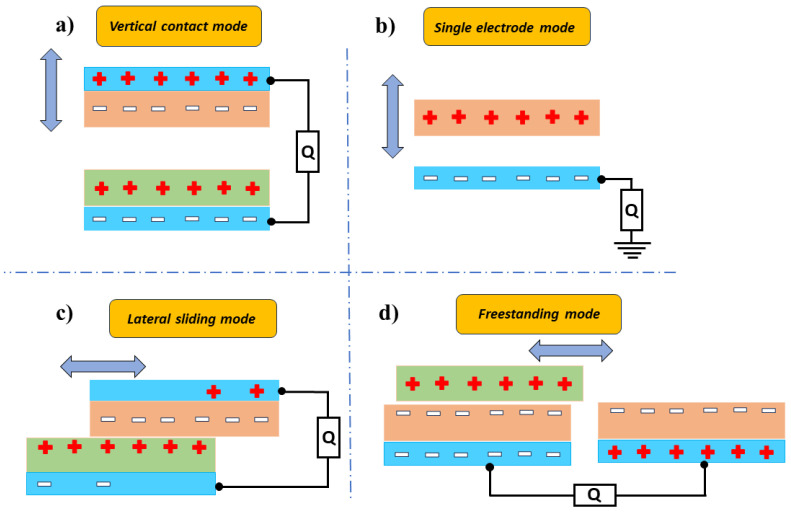
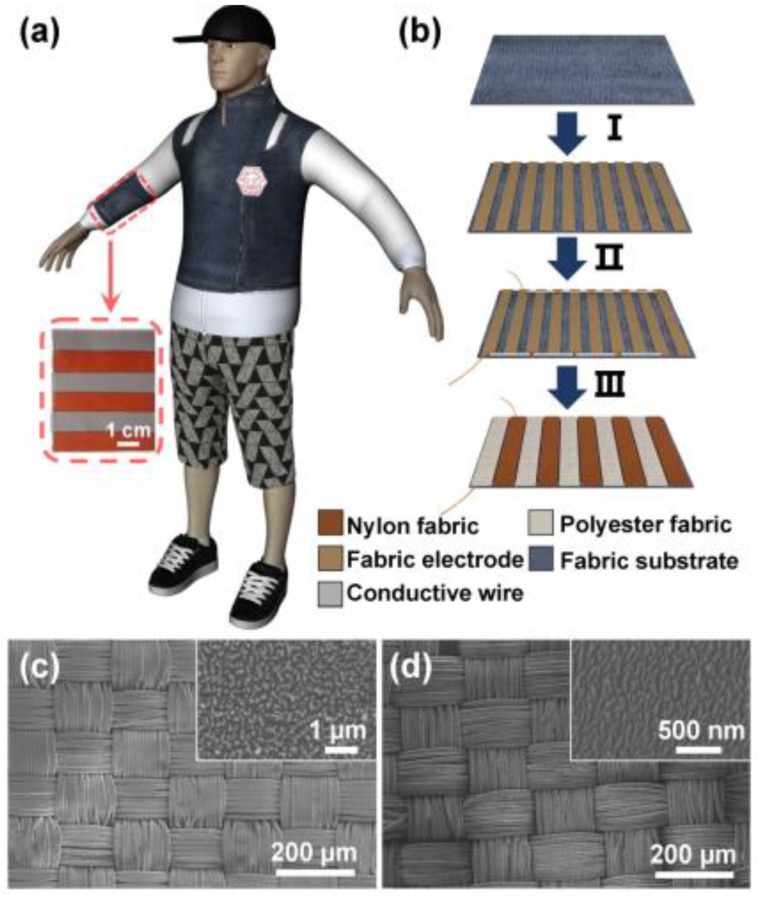
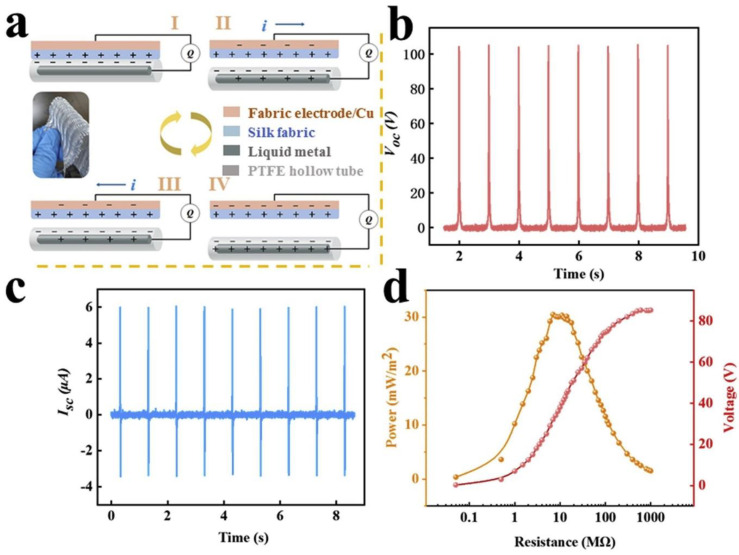
We review recent results on textile triboelectric nanogenerators (T-TENGs), which function both as harvesters of mechanical energy and self-powered motion sensors. T-TENGs can be flexible, breathable, and lightweight. With a combination of traditional and novel manufacturing methods, including nanofibers, T-TENGs can deliver promising power output. We review the evolution of T-TENG device structures based on various textile material configurations and fabrication methods, along with demonstrations of self-powered systems. We also provide a detailed analysis of different textile materials and approaches used to enhance output. Additionally, we discuss integration capabilities with supercapacitors and potential applications across various fields such as health monitoring, human activity monitoring, human-machine interaction applications, etc. This review concludes by addressing the challenges and key research questions that remain for developing viable T-TENG technology.
我们回顾了关于纺织摩擦纳米发电机(T-TENG)的近期研究成果,该发电机兼具机械能收集器和自供电运动传感器的功能。T-TENG可以是柔性的、透气的且重量轻的。通过结合包括纳米纤维在内的传统和新颖制造方法,T-TENG能够实现可观的功率输出。我们基于各种纺织材料配置和制造方法回顾了T-TENG器件结构的演变,以及自供电系统的演示。我们还详细分析了用于提高输出的不同纺织材料和方法。此外,我们讨论了与超级电容器的集成能力以及在健康监测、人体活动监测、人机交互应用等各个领域的潜在应用。本综述通过阐述开发可行的T-TENG技术仍面临的挑战和关键研究问题来作总结。