Research Faculty of Agriculture, Hokkaido University, Sapporo, Japan.
Advanced Genomics Center, National Institute of Genetics, Mishima, Japan.
PLoS One. 2024 Sep 27;19(9):e0308551. doi: 10.1371/journal.pone.0308551. eCollection 2024.
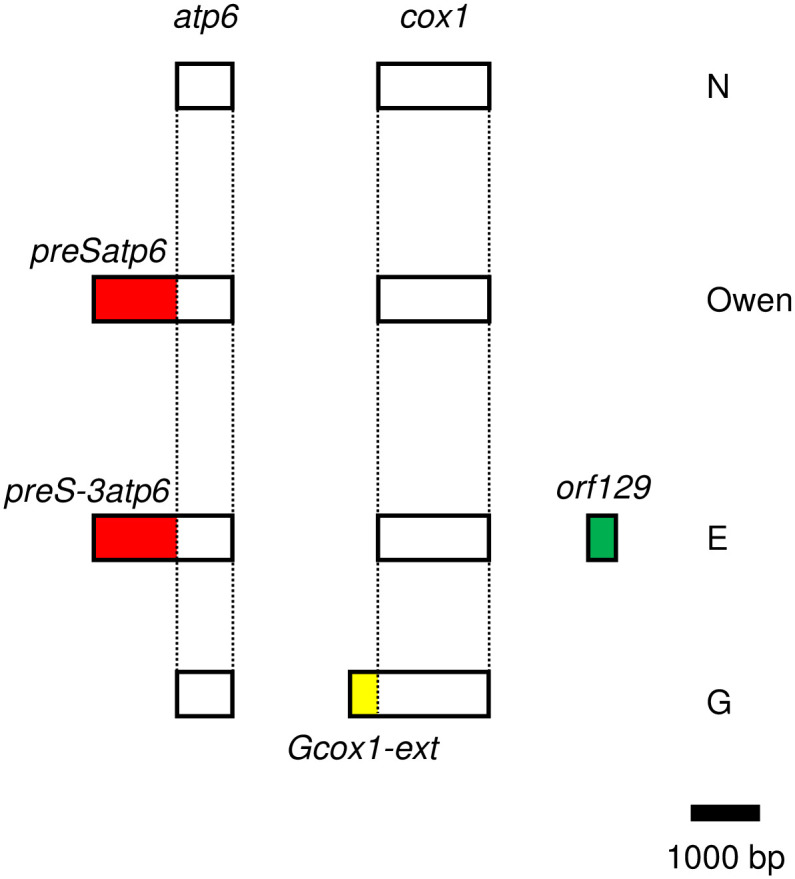
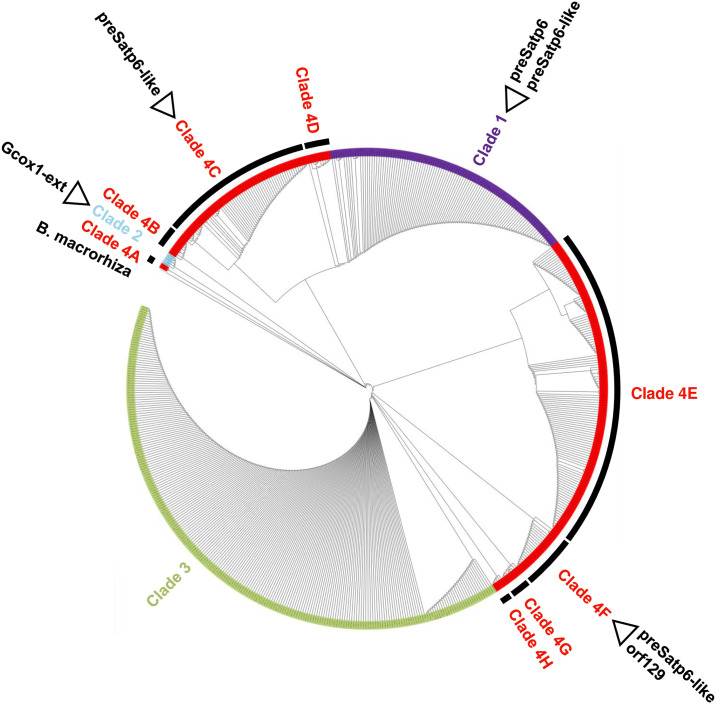
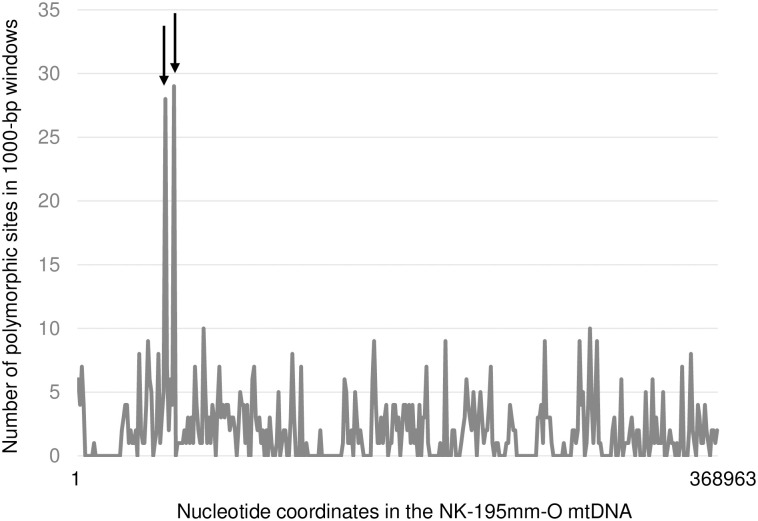
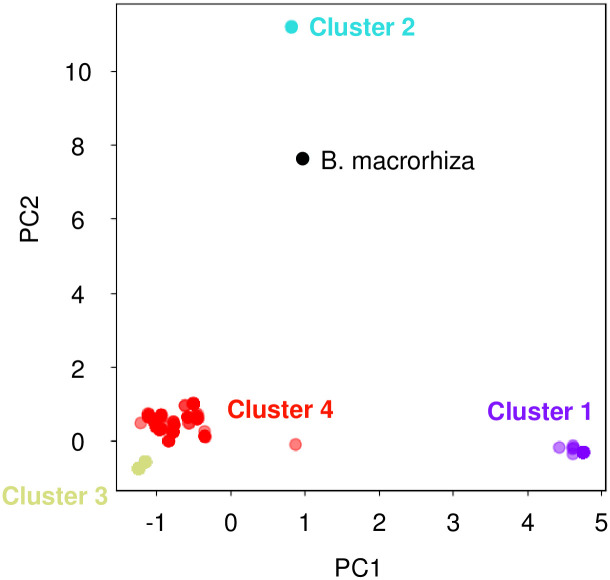
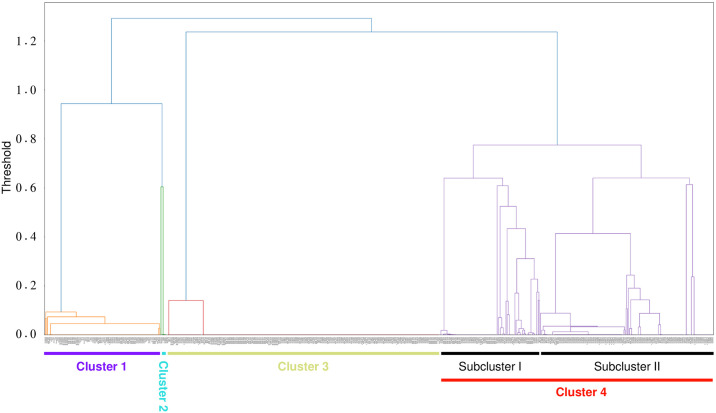
Cytoplasmic male sterility (CMS) is a mitochondrial-encoded trait that confers reproductive defects in males but not in females or any vegetative function. Why CMS is so often found in plants should be investigated from the viewpoint of mitochondrial phylogeny. Beta vulgaris, including the wild subspecies maritima and cultivated subspecies vulgaris (e.g., sugar beet), is known to be mitochondrially polymorphic, from which multiple CMS mitochondria have been found, but their evolutionary relationship has been obscure. We first refined the B. vulgaris reference mitochondrial genome to conduct a more accurate phylogenetic study. We identified mitochondrial single-nucleotide polymorphic sites from 600 B. vulgaris accessions. Principal component analysis, hierarchical clustering analysis, and creation of a phylogenetic tree consistently suggested that B. vulgaris mitochondria can be classified into several groups whose geographical distribution tends to be biased toward either the Atlantic or Mediterranean coasts. We examined the distribution of CMS-associated mitochondrial genes from Owen, E- and G-type CMS mitochondria. About one-third of cultivated beets had Owen-type CMS, which reflects the prevalence of using Owen-type CMS in hybrid breeding. Occurrence frequencies for each of the three CMS genes in wild beet were less than 4%. CMS genes were tightly associated with specific mitochondrial groups that are phylogenetically distinct, suggesting their independent origin. However, homologous sequences of the Owen type CMS gene occurred in several different mitochondrial groups, for which an intricate explanation is necessary. Whereas the origin of cultivated beet had been presumed to be Greece, we found an absence of Owen-type mitochondria in Greek accessions.
细胞质雄性不育(CMS)是一种线粒体编码的特征,它导致雄性生殖缺陷,但不影响雌性或任何营养器官的功能。为什么 CMS 在植物中如此常见,应该从线粒体系统发育的角度进行研究。众所周知,包括野生亚种 maritima 和栽培亚种 vulgaris(例如,甜菜)的糖用甜菜是线粒体多态性的,从中发现了多种 CMS 线粒体,但它们的进化关系尚不清楚。我们首先对 B. vulgaris 参考线粒体基因组进行了细化,以进行更准确的系统发育研究。我们从 600 个 B. vulgaris 样本中鉴定出了线粒体单核苷酸多态性位点。主成分分析、层次聚类分析和系统发育树的构建均表明,B. vulgaris 线粒体可分为几个组,其地理分布倾向于大西洋或地中海沿岸。我们检查了 Owen、E-和 G 型 CMS 线粒体中与 CMS 相关的线粒体基因的分布。大约三分之一的栽培甜菜具有 Owen 型 CMS,这反映了在杂种选育中广泛使用 Owen 型 CMS 的情况。野生甜菜中三种 CMS 基因的每个基因的出现频率都小于 4%。CMS 基因与在系统发育上明显不同的特定线粒体群紧密相关,这表明它们的独立起源。然而,Owen 型 CMS 基因的同源序列出现在几个不同的线粒体群中,这需要进行复杂的解释。尽管栽培甜菜的起源被认为是希腊,但我们在希腊样本中发现没有 Owen 型线粒体。