Center for iPS Cell Research and Application, Kyoto University, Kyoto 606-8507, Japan; Department of Cardiovascular Medicine, Graduate School of Medicine, Kyoto University, Kyoto 606-8507, Japan.
Center for iPS Cell Research and Application, Kyoto University, Kyoto 606-8507, Japan.
Stem Cell Reports. 2024 Oct 8;19(10):1399-1416. doi: 10.1016/j.stemcr.2024.08.008. Epub 2024 Sep 26.
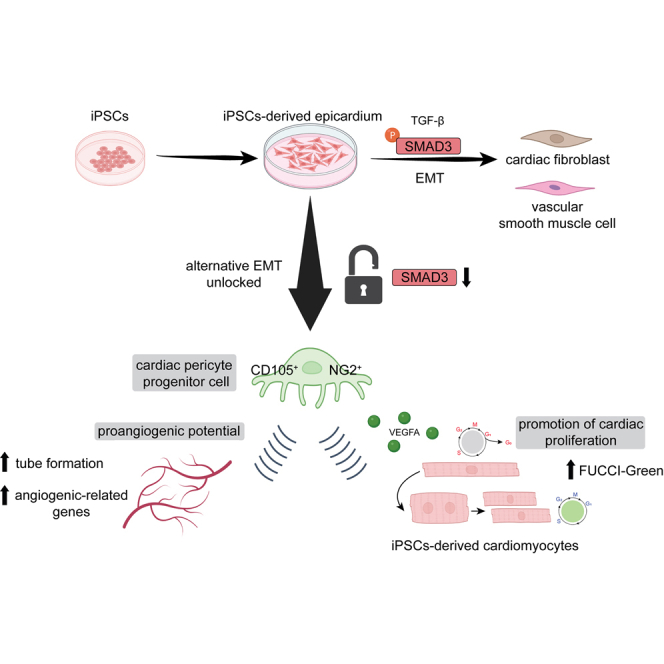
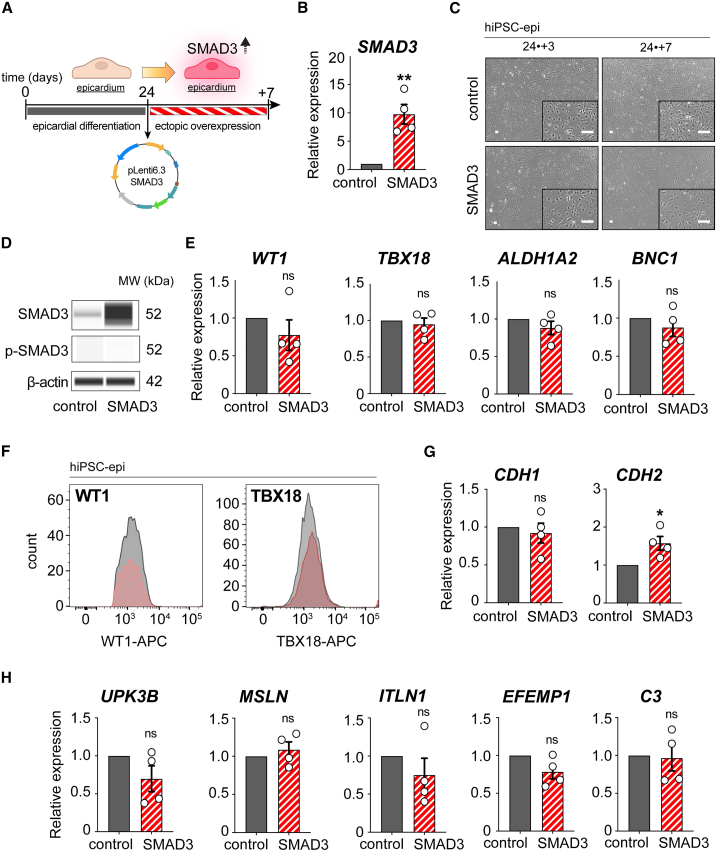
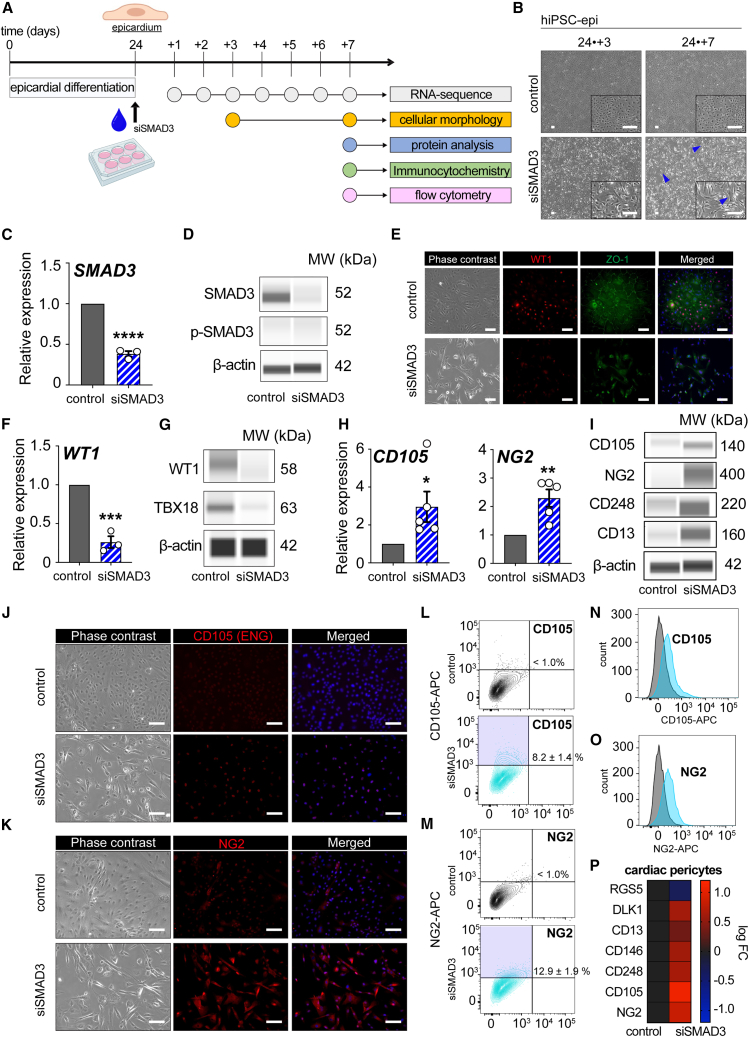
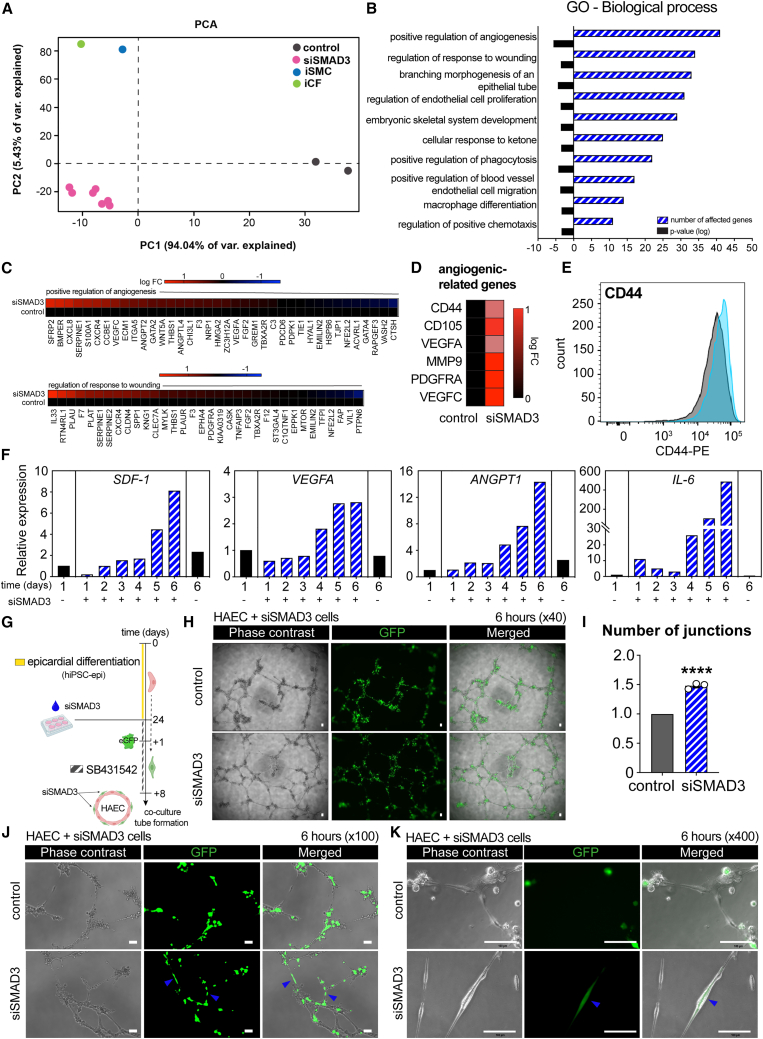
Understanding the molecular mechanisms of epicardial epithelial-to-mesenchymal transition (EMT), particularly in directing cell fate toward epicardial derivatives, is crucial for regenerative medicine using human induced pluripotent stem cell (iPSC)-derived epicardium. Although transforming growth factor β (TGF-β) plays a pivotal role in epicardial biology, orchestrating EMT during embryonic development via downstream signaling through SMAD proteins, the function of SMAD proteins in the epicardium in maintaining vascular homeostasis or mediating the differentiation of various epicardial-derived cells (EPDCs) is not yet well understood. Our study reveals that TGF-β-independent SMAD3 expression autonomously predicts epicardial cell specification and lineage maintenance, acting as a key mediator in promoting the angiogenic-oriented specification of the epicardium into cardiac pericyte progenitors. This finding uncovers a novel role for SMAD3 in the human epicardium, particularly in generating cardiac pericyte progenitors that enhance cardiac microvasculature angiogenesis. This insight opens new avenues for leveraging epicardial biology in developing more effective cardiac regeneration strategies.
理解心外膜上皮-间充质转化(EMT)的分子机制,特别是在指导细胞命运朝向心外膜衍生物方面,对于使用人类诱导多能干细胞(iPSC)衍生的心外膜进行再生医学至关重要。尽管转化生长因子β(TGF-β)在心脏外膜生物学中发挥着关键作用,通过 SMAD 蛋白下游信号传导在胚胎发育过程中协调 EMT,但 SMAD 蛋白在维持血管稳态或介导各种心外膜衍生细胞(EPDC)分化方面的功能尚不清楚。我们的研究表明,TGF-β 非依赖性 SMAD3 表达自主预测心外膜细胞的特化和谱系维持,作为促进心外膜向心脏周细胞祖细胞的血管生成定向特化的关键介质。这一发现揭示了 SMAD3 在人类心外膜中的新作用,特别是在心外膜中产生增强心脏微血管血管生成的心脏周细胞祖细胞。这一见解为利用心外膜生物学开发更有效的心脏再生策略开辟了新途径。