Saraya Jagandeep S, Sammons Scott R, O'Flaherty Derek K
Department of Chemistry, University of Guelph, 50 Stone Rd E, Guelph ON, N1G 2 W1, Canada.
Chembiochem. 2025 Jan 2;26(1):e202400643. doi: 10.1002/cbic.202400643. Epub 2024 Nov 13.
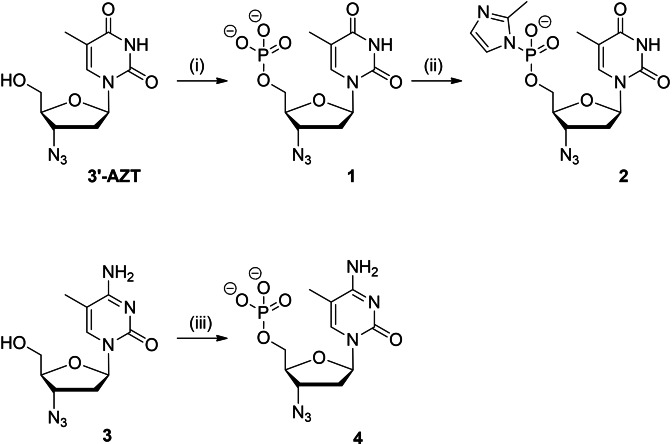
Nucleic acid conjugation methodologies involve linking the nucleic acid sequence to other (bio)molecules covalently. This typically allows for nucleic acid property enhancement whether it be for therapeutic purposes, biosensing, etc. Here, we report a streamlined, aqueous compatible, on-column conjugation methodology using nucleic acids containing a site-specific amino-modifier. Both monophosphates and carboxylates were amenable to the conjugation strategy, allowing for the introduction of a variety of useful handles including azide, aryl, and hydrophobic groups in DNA. We find that an on-column approach is superior to post-synthetic template-directed synthesis, mainly with respect to product purification and recovery.
核酸偶联方法涉及将核酸序列与其他(生物)分子共价连接。这通常能够增强核酸的性质,无论是用于治疗目的、生物传感等。在此,我们报告了一种简化的、与水兼容的柱上偶联方法,该方法使用含有位点特异性氨基修饰剂的核酸。单磷酸盐和羧酸盐都适用于这种偶联策略,从而能够在DNA中引入各种有用的官能团,包括叠氮化物、芳基和疏水基团。我们发现柱上方法优于合成后模板导向合成,主要在产物纯化和回收方面。