Aquatic Ecology Group, Federal University of Pará (UFPA), Belém, PA, Brazil.
Department of Fish Ecology and Evolution, Swiss Federal Institute of Aquatic Science and Technology-Eawag, Kastanienbaum, Switzerland.
Sci Rep. 2024 Sep 27;14(1):22366. doi: 10.1038/s41598-024-70636-8.
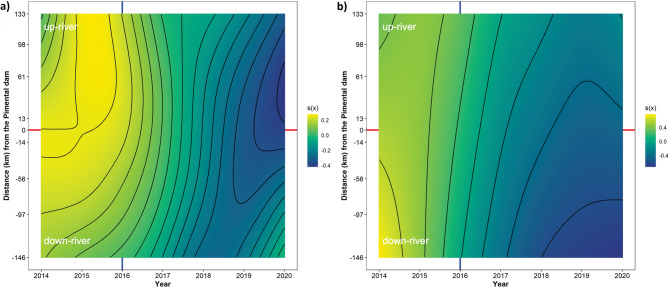
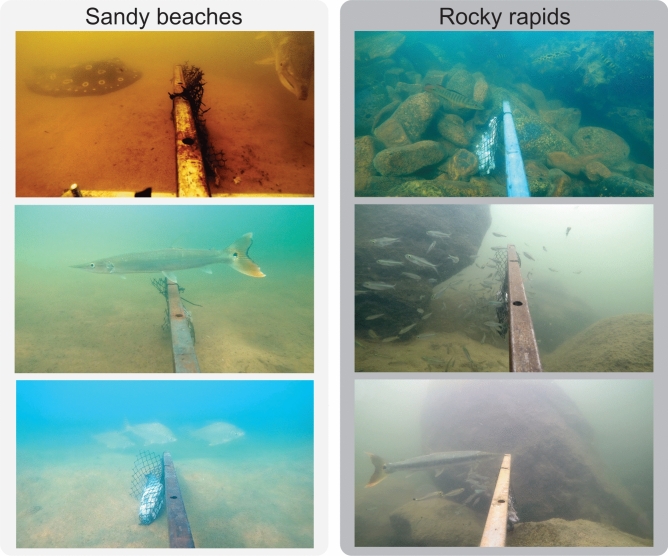
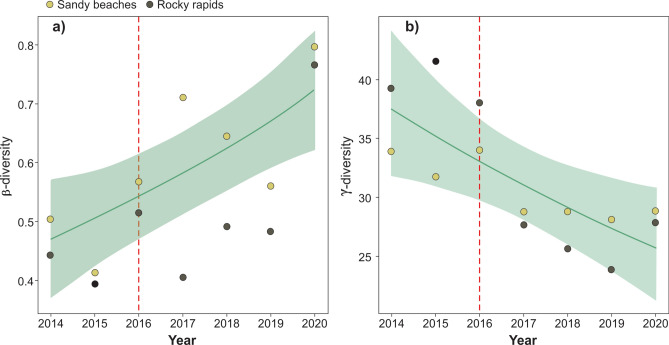
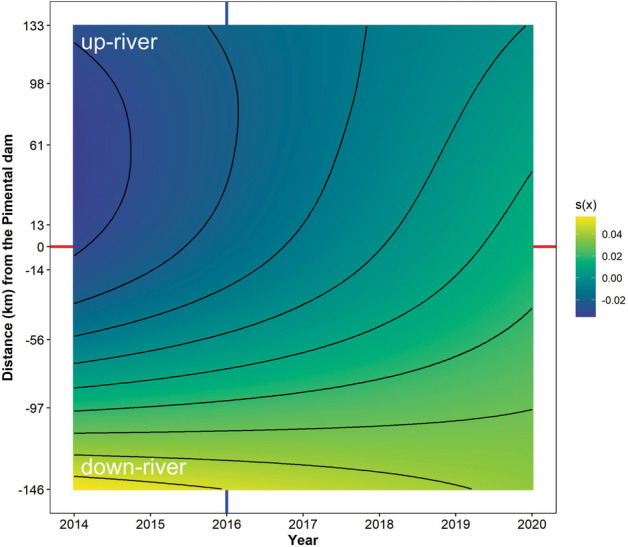
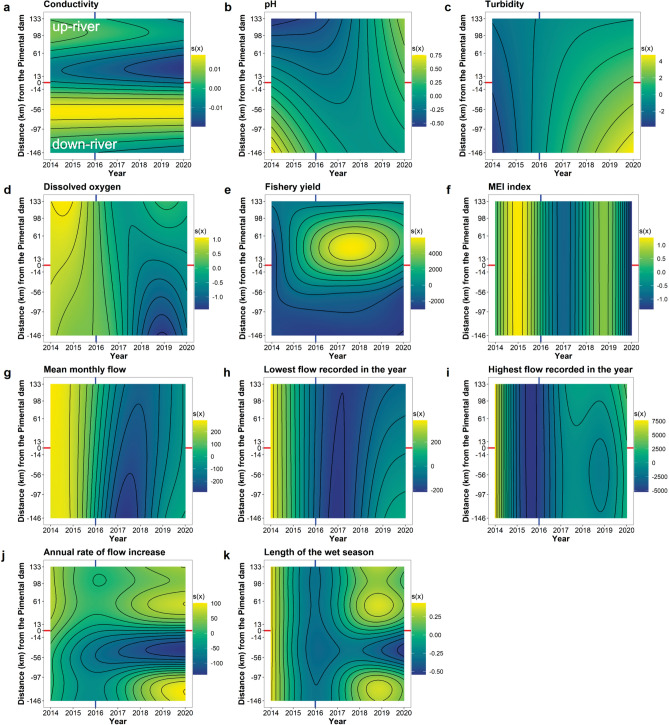
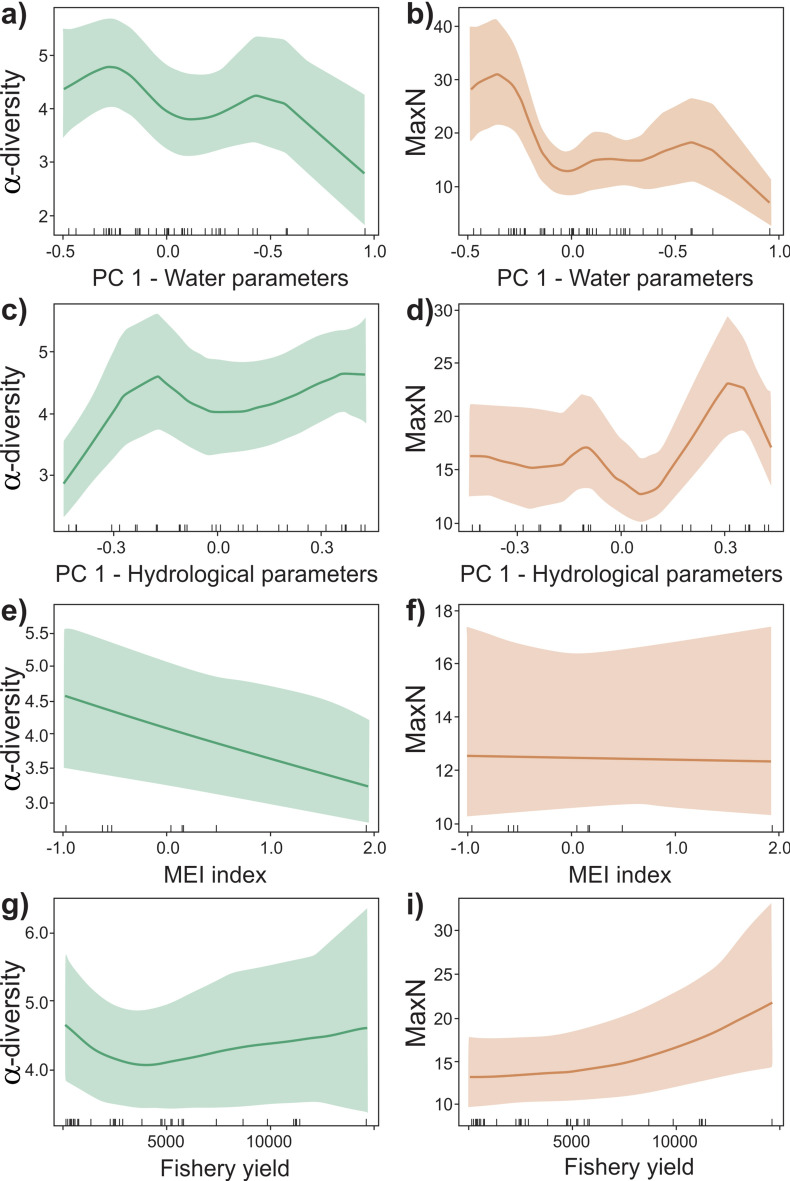
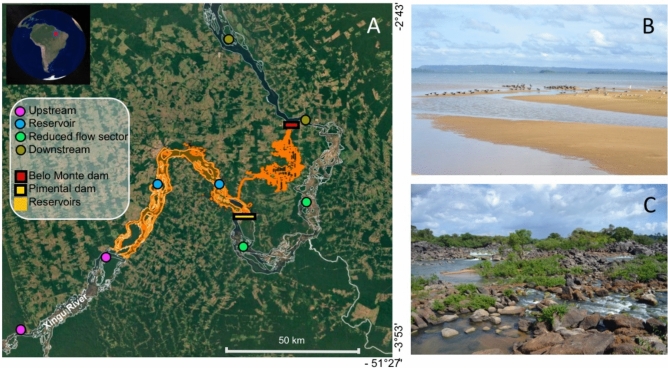
The increase in the construction of mega dams in tropical basins is considered a threat to freshwater fish diversity. Although difficult to detect in conventional monitoring programs, rheophilic species and those reliant on shallow habitats comprise a large proportion of fish diversity in tropical basins and are among the most sensitive species to hydropower impacts. We used Baited Remote Underwater Video (BRUV), an innovative, non-invasive sampling technique, to record the impacts caused by Belo Monte, the third largest hydropower project in the world, on fishes inhabiting fast waters in the Xingu River. BRUV were set in a river stretch of ~ 240 km for 7 years, 2 before and 5 after the Belo Monte operation. We explored the spatial and temporal variation in fish diversity (α, β, and γ) and abundance (MaxN) using generalized additive models. We also investigated the variation of environmental variables and tested how much information we gained by including them in the diversity and abundance models. Belo Monte altered the flow regime, water characteristics, and fishery yield in the Xingu, resulting in changes in the fish community structure. Temporally, we observed sharp declines in α diversity and abundance, far exceeding those from a previous study conducted with more conventional sampling methods (i.e., catch-based) in the region. γ-diversity was also significantly reduced, but we observed a non-expected increase in β diversity over time. The latter may be associated with a reduction in river connectivity and an increase in environmental heterogeneity among river sectors. Unexpected signs of recovery in diversity metrics were observed in the last years of monitoring, which may be associated with the maintenance of flow levels higher than those previously planned. These results showed that BRUV can be a useful and sensitive tool to monitor the impacts of dams and other enterprises on fish fauna from clear-water rivers. Moreover, this study enhances our comprehension of the temporal variations in freshwater fish diversity metrics and discusses the prevalent assumption that a linear continuum in fish-structure damage associated with dam impoundments may exhibit temporal non-linearity.
在热带流域建造大型水坝被认为是对淡水鱼类多样性的威胁。尽管在传统监测计划中难以察觉,但洄游性物种和依赖浅水区栖息的物种构成了热带流域鱼类多样性的很大一部分,是对水电影响最敏感的物种之一。我们使用 Baited Remote Underwater Video (BRUV),一种创新的、非侵入性的采样技术,来记录世界第三大水电项目——贝罗蒙特大坝对兴古河急流区鱼类的影响。BRUV 在贝罗蒙特大坝运行前后的 7 年间(2 年前和 5 年后),在一段长约 240 公里的河流上设置了 BRUV。我们使用广义加性模型探索了鱼类多样性(α、β和γ)和丰度(MaxN)的时空变化。我们还研究了环境变量的变化,并测试了通过将其纳入多样性和丰度模型来获得多少信息。贝罗蒙特大坝改变了兴古河的水流模式、水质和渔业产量,导致鱼类群落结构发生变化。从时间上看,我们观察到 α多样性和丰度急剧下降,远远超过了该地区以前用更传统的采样方法(即基于捕捞的方法)进行的研究。γ多样性也显著降低,但我们观察到随着时间的推移β多样性增加,这是出乎意料的。后者可能与河流连通性的降低和河流各区域之间环境异质性的增加有关。在监测的最后几年,多样性指标出现了出乎意料的恢复迹象,这可能与维持高于先前计划的流量水平有关。这些结果表明,BRUV 可以成为监测大坝和其他企业对清水河流鱼类群落影响的有用和敏感工具。此外,本研究增强了我们对淡水鱼类多样性指标时间变化的理解,并讨论了与大坝蓄水相关的鱼类结构破坏呈线性连续体的普遍假设可能具有时间非线性的观点。