Maurício Elisabete Muchagato, Branco Patrícia, Araújo Ana Luiza Barros, Roma-Rodrigues Catarina, Lima Katelene, Duarte Maria Paula, Fernandes Alexandra R, Albergaria Helena
BIORG-Bioengineering and Sustainability Research Group, Faculdade de Engenharia, Universidade Lusófona, Av. Campo Grande 376, 1749-024 Lisbon, Portugal.
CBIOS-Research Center for Biosciences & Health Technologies, Universidade Lusófona, Campo Grande 376, 1749-024 Lisbon, Portugal.
Antibiotics (Basel). 2024 Sep 13;13(9):881. doi: 10.3390/antibiotics13090881.
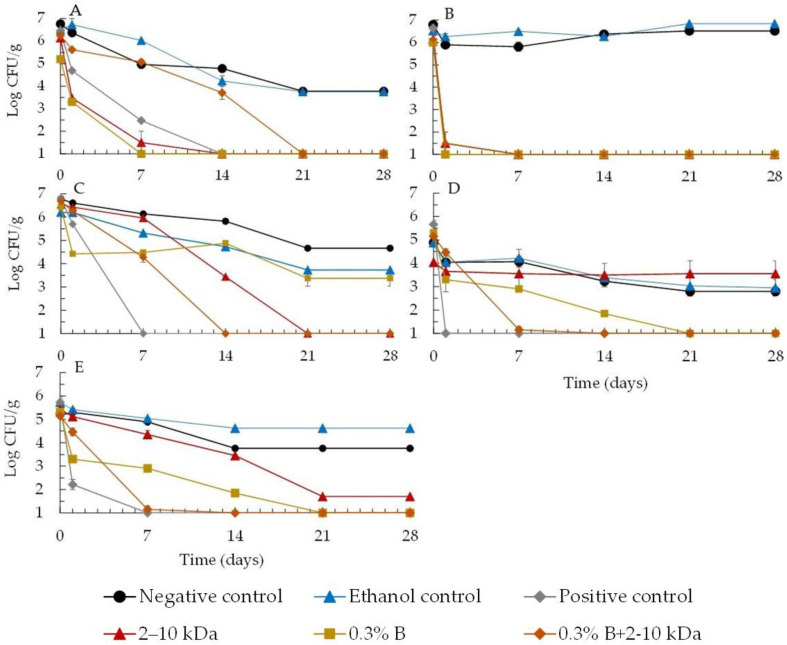
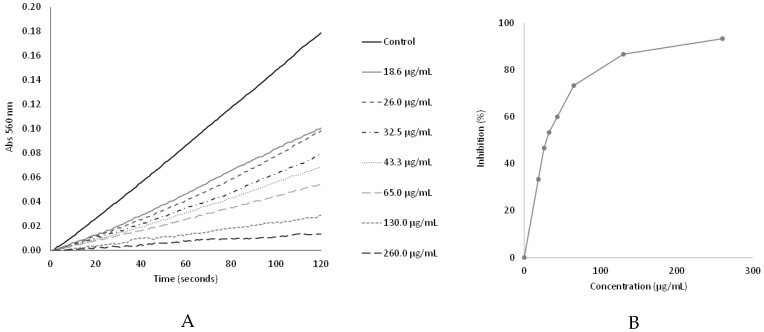
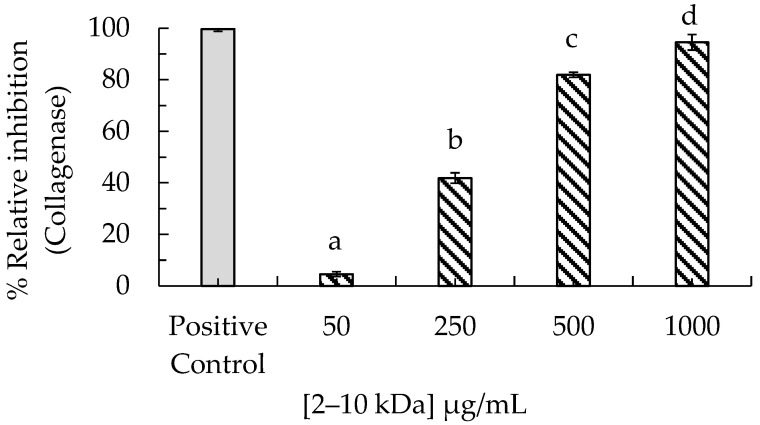
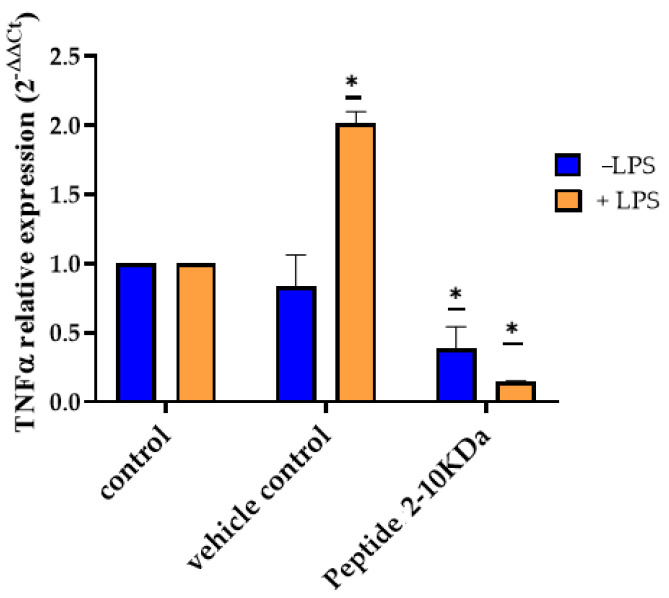
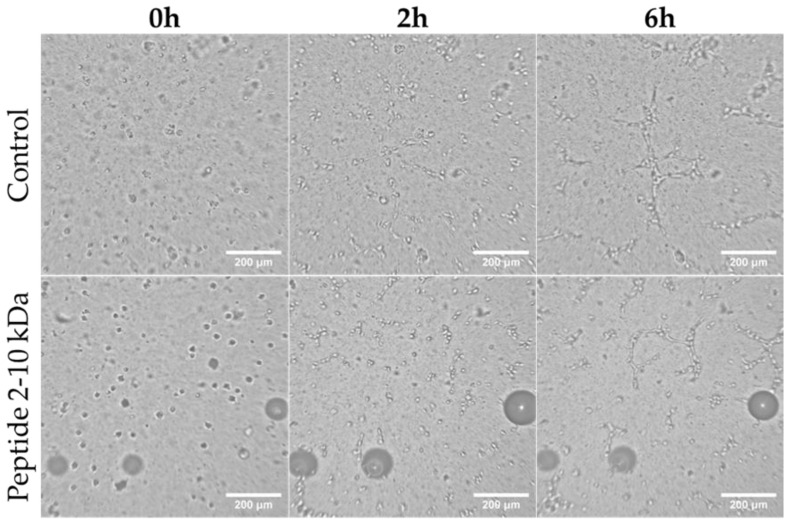
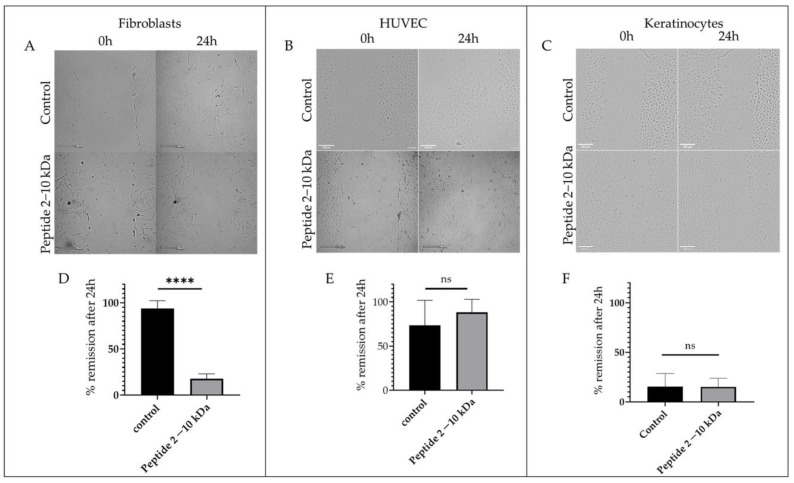
Biotechnological active peptides are gaining interest in the cosmetics industry due to their antimicrobial, anti-inflammatory, antioxidant, and anti-collagenase (ACE) effects, as well as wound healing properties, making them suitable for cosmetic formulations. The antimicrobial activity of peptides (2-10 kDa) secreted by Ethanol-Red was evaluated against dermal pathogens using broth microdilution and challenge tests. ACE was assessed using a collagenase activity colorimetric assay, antioxidant activity via spectrophotometric monitoring of nitrotetrazolium blue chloride (NBT) reduction, and anti-inflammatory effects by quantifying TNF-α mRNA in lipopolysaccharides (LPS)-exposed dermal fibroblasts. Wound healing assays involved human fibroblasts, endothelial cells, and dermal keratinocytes. The peptides (2-10 kDa) exhibited antimicrobial activity against 10 dermal pathogens, with the Minimum Inhibitory Concentrations (MICs) ranging from 125 µg/mL for to 1000 µg/mL for and . In the challenge test, peptides at their MICs reduced microbial counts significantly, fulfilling ISO 11930:2019 standards, except against . The peptides combined with Microcare SB showed synergy, particularly against and . In vitro, the peptides inhibited collagenase activity by 41.8% and 94.5% at 250 and 1000 µg/mL, respectively, and demonstrated antioxidant capacity. Pre-incubation with peptides decreased TNF-α expression in fibroblasts, indicating anti-inflammatory effects. The peptides do not show to promote or inhibit the angiogenesis of endothelial cells, but are able to attenuate fibrosis, scar formation, and chronic inflammation during the final phases of the wound healing process. The peptides showed antimicrobial, antioxidant, ACE, and anti-inflammatory properties, highlighting their potential as multifunctional bioactive ingredients in skincare, warranting further optimization and exploration in cosmetic applications.
由于其抗菌、抗炎、抗氧化和抗胶原酶(ACE)作用以及伤口愈合特性,生物技术活性肽在化妆品行业中越来越受到关注,使其适用于化妆品配方。使用肉汤微量稀释法和挑战试验评估了乙醇红分泌的肽(2-10 kDa)对皮肤病原体的抗菌活性。使用胶原酶活性比色法评估ACE,通过分光光度法监测氯化硝基四氮唑蓝(NBT)还原评估抗氧化活性,并通过定量脂多糖(LPS)刺激的皮肤成纤维细胞中的TNF-α mRNA评估抗炎作用。伤口愈合试验涉及人成纤维细胞、内皮细胞和皮肤角质形成细胞。这些肽(2-10 kDa)对10种皮肤病原体表现出抗菌活性,最低抑菌浓度(MIC)范围从对[具体病原体1]的125 µg/mL到对[具体病原体2]和[具体病原体3]的1000 µg/mL。在挑战试验中,处于MIC浓度的肽显著降低了微生物数量,符合ISO 11930:2019标准,但对[具体病原体4]除外。这些肽与Microcare SB联合显示出协同作用,特别是对[具体病原体5]和[具体病原体6]。在体外,这些肽在250和1000 µg/mL时分别抑制胶原酶活性41.8%和94.5%,并表现出抗氧化能力。与肽预孵育可降低成纤维细胞中TNF-α的表达,表明具有抗炎作用。这些肽未显示促进或抑制内皮细胞的血管生成,但能够在伤口愈合过程的最后阶段减轻纤维化、瘢痕形成和慢性炎症。这些肽表现出抗菌、抗氧化、ACE和抗炎特性,突出了它们作为护肤品中多功能生物活性成分的潜力,值得在化妆品应用中进一步优化和探索。