Zheng Wenxiong, Yang Ronglin, Shui Shanshan, Yan Hongbo, Song Jia, Ying Xiaoguo, Benjakul Soottawat, Zhang Bin
College of Food Science and Pharmacy, Zhejiang Ocean University, Zhoushan 316022, China.
Department of Food Science and Nutrition, College of Biosystems Engineering and Food Science, Zhejiang University, Hangzhou 310058, China.
Foods. 2024 Sep 22;13(18):3005. doi: 10.3390/foods13183005.
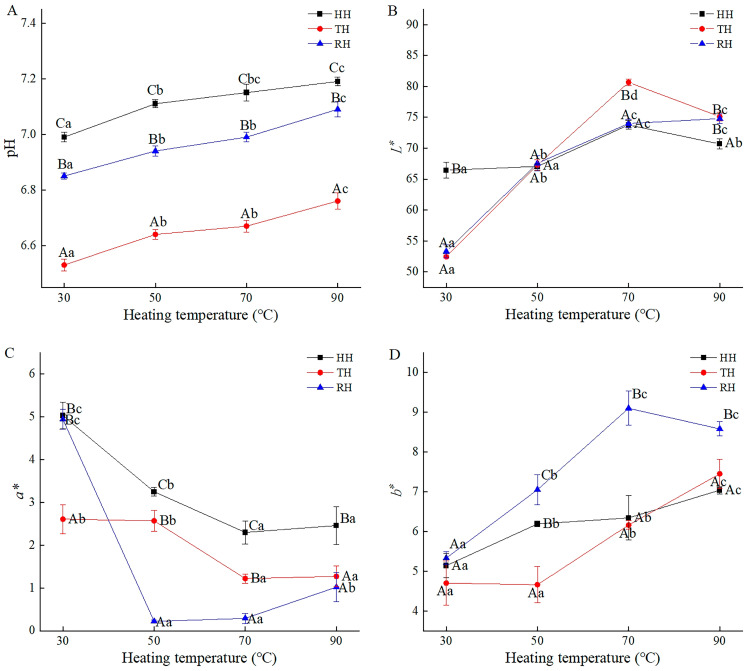
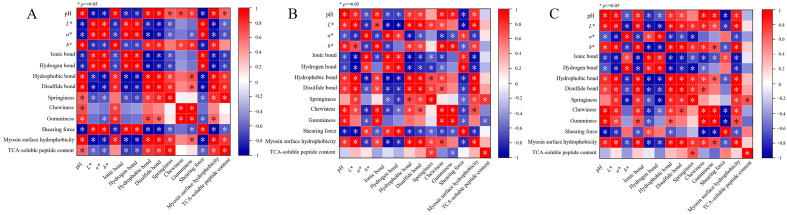
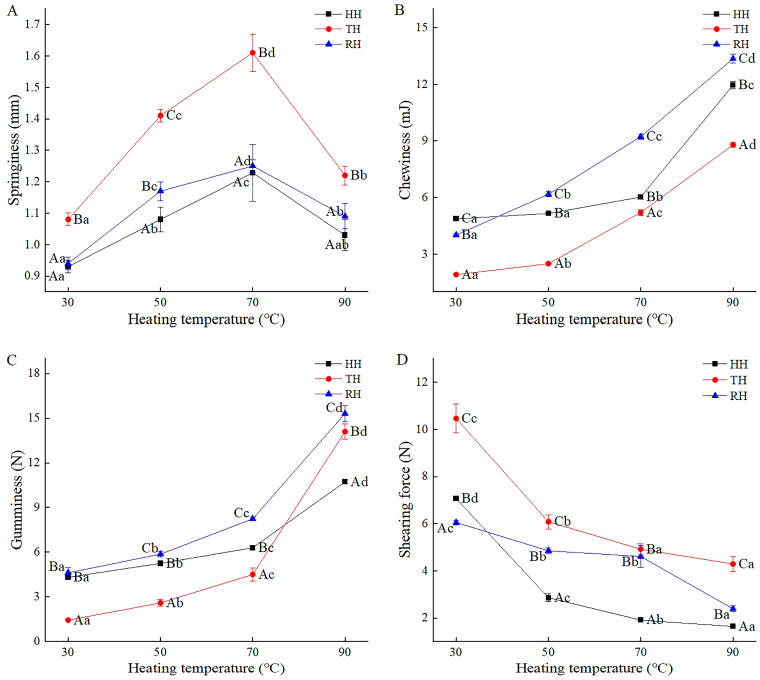
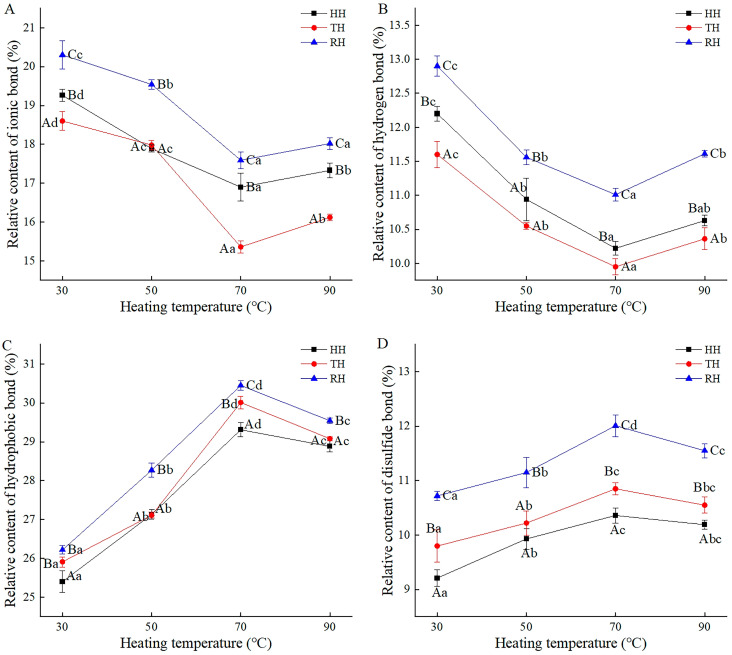
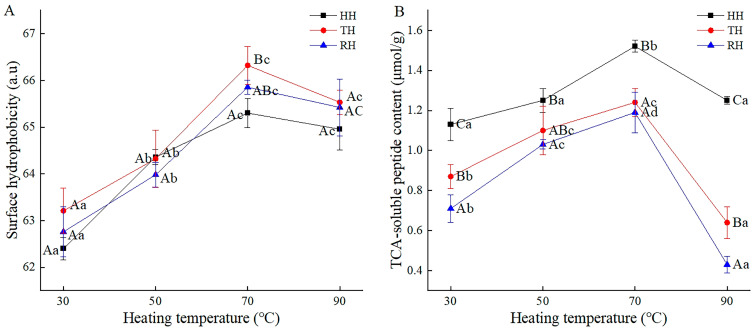
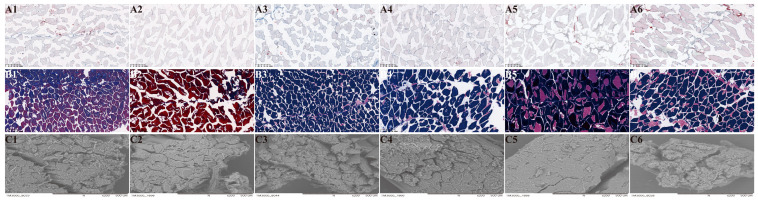
To investigate and compare the changes in muscle quality of hooked, trawl-net, and radar-net hairtail (, HH, TH, and RH) during thermal processing, the physicochemical properties of three kinds of hairtail were determined under heating at 30, 50, 70 and 90 °C for 10 min. Additionally, the muscle tissues were observed via Oil Red O (ORO) staining, Masson staining, and scanning electron microscopy (SEM). The results showed that with increased heating temperature, pH, , , chewiness, and gumminess in hairtail muscle increased, while and shearing force decreased. The springiness, relative contents of hydrophobic and disulfide bonds, myosin surface hydrophobicity, and TCA-soluble peptide content increased first and then decreased. However, the relative contents of ionic and hydrogen bonds showed an opposite trend. Histological observations revealed that heating disrupted hairtail muscle tissue, manifested by the blurriness and disorder of myofibrils and breakage of myofibrillar bundle membranes. The RH muscle exhibited the highest chewiness, gumminess, and chemical force levels, accompanied by the lowest content of TCA-soluble peptide. Furthermore, the RH muscle presented the greatest fat droplet content, diffusivity, and integrity of collagen and myofibers. Correlation analysis revealed a close correlation between muscle quality and protein function in HH, TH, and RH. This study provides a theoretical basis for the difference in muscle quality in three different types of hairtail.
为了研究和比较钩钓、拖网和雷达网捕捞的带鱼(HH、TH和RH)在热加工过程中肌肉品质的变化,测定了三种带鱼在30、50、70和90℃加热10分钟后的理化性质。此外,通过油红O(ORO)染色、Masson染色和扫描电子显微镜(SEM)观察肌肉组织。结果表明,随着加热温度的升高,带鱼肌肉的pH值、硬度、弹性、咀嚼性和胶黏性增加,而嫩度和剪切力降低。弹性、疏水键和二硫键的相对含量、肌球蛋白表面疏水性和三氯乙酸可溶性肽含量先增加后降低。然而,离子键和氢键的相对含量呈现相反的趋势。组织学观察表明,加热破坏了带鱼肌肉组织,表现为肌原纤维模糊、紊乱以及肌原纤维束膜破裂。RH肌肉的咀嚼性、胶黏性和化学力水平最高,同时三氯乙酸可溶性肽含量最低。此外,RH肌肉的脂肪滴含量、胶原蛋白和肌纤维的扩散性和完整性最大。相关性分析表明,HH、TH和RH的肌肉品质与蛋白质功能密切相关。本研究为三种不同类型带鱼肌肉品质的差异提供了理论依据。