Gruenberg Madeline G, Halvorson Jonathan J, Hagerman Ann E, Enoma Ikponmwosa G, Schmidt Michael A
Department of Biochemistry and Molecular Biology, Wright State University, Dayton, OH 45435, USA.
Northern Great Plains Research Laboratory, United States Department of Agriculture-Agricultural Research Service, Mandan, ND 58554, USA.
Molecules. 2024 Sep 12;29(18):4320. doi: 10.3390/molecules29184320.
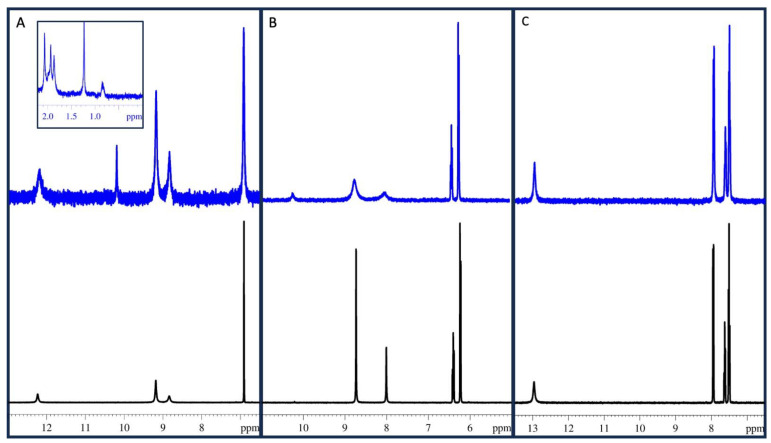
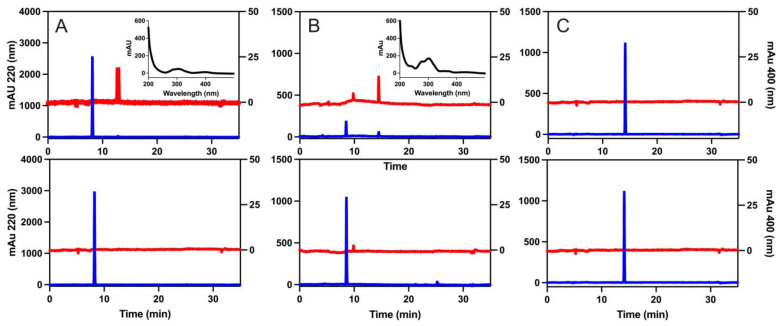
Plant secondary metabolites, including phenolics, represent a large quantity of organic material that enters soil and contributes to the formation of soil organic matter (SOM). The process of phenolics forming SOM remains poorly understood. One possible mechanism is oxidation of the phenolic compound catalyzed by redox active metals such as manganese (Mn) and iron (Fe) in soils. In this work, we report how three phenolic compounds react with a redox active environmentally relevant metal, Mn(IV). The reactions were monitored via nuclear magnetic resonance (NMR), high-performance liquid chromatography (HPLC), and direct CO measurements. Using these techniques, we demonstrate that gallic acid reacts with Mn(IV) less efficiently than pyrogallol. The products of the gallic acid:Mn(IV) reaction are more oxidized than the products of the pyrogallol reaction. Gallic acid produces small molecules and releases CO, while pyrogallol produces a less oxidized product, likely a quinone, and releases less CO. Benzoic acid did not react with Mn(IV). This work provides a framework for how different classes of plant secondary metabolites may be degraded abiotically by redox active metals in soil.
植物次生代谢产物,包括酚类物质,是进入土壤并有助于土壤有机质(SOM)形成的大量有机物质。酚类物质形成土壤有机质的过程仍知之甚少。一种可能的机制是土壤中氧化还原活性金属(如锰(Mn)和铁(Fe))催化酚类化合物的氧化。在这项工作中,我们报告了三种酚类化合物如何与一种氧化还原活性环境相关金属Mn(IV)发生反应。通过核磁共振(NMR)、高效液相色谱(HPLC)和直接CO测量对反应进行监测。使用这些技术,我们证明没食子酸与Mn(IV)的反应效率低于连苯三酚。没食子酸与Mn(IV)反应的产物比连苯三酚反应的产物氧化程度更高。没食子酸产生小分子并释放CO,而连苯三酚产生氧化程度较低的产物,可能是醌,并释放较少的CO。苯甲酸不与Mn(IV)反应。这项工作为不同类别的植物次生代谢产物如何被土壤中的氧化还原活性金属非生物降解提供了一个框架。