AIDS Institute, School of Clinical Medicine, Li Ka Shing Faculty of Medicine, The University of Hong Kong, Pokfulam, Hong Kong SAR, People's Republic of China; Department of Microbiology, School of Clinical Medicine, Li Ka Shing Faculty of Medicine, The University of Hong Kong, Pokfulam, Hong Kong SAR, People's Republic of China.
AIDS Institute, School of Clinical Medicine, Li Ka Shing Faculty of Medicine, The University of Hong Kong, Pokfulam, Hong Kong SAR, People's Republic of China; Department of Microbiology, School of Clinical Medicine, Li Ka Shing Faculty of Medicine, The University of Hong Kong, Pokfulam, Hong Kong SAR, People's Republic of China; Department of Clinical Microbiology and Infection Control, The University of Hong Kong-Shenzhen Hospital, Shenzhen, Guangdong, People's Republic of China.
EBioMedicine. 2024 Oct;108:105354. doi: 10.1016/j.ebiom.2024.105354. Epub 2024 Sep 27.
The spread of emerging SARS-CoV-2 immune escape sublineages, especially JN.1 and KP.2, has resulted in new waves of COVID-19 globally. The evolving memory B cell responses elicited by the parental Omicron variants to subvariants with substantial antigenic drift remain incompletely investigated.
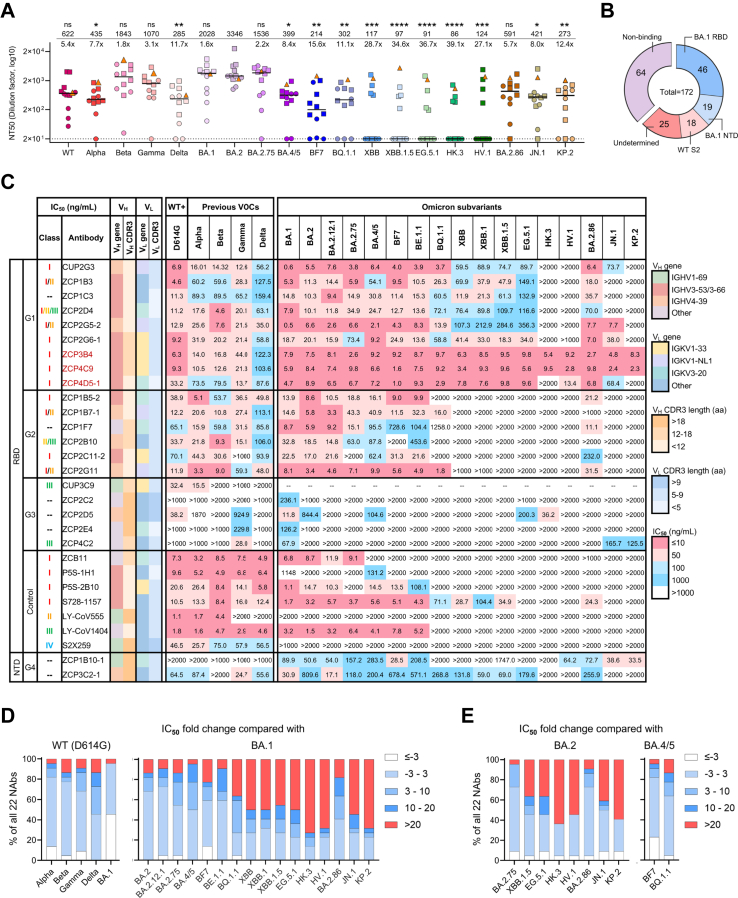
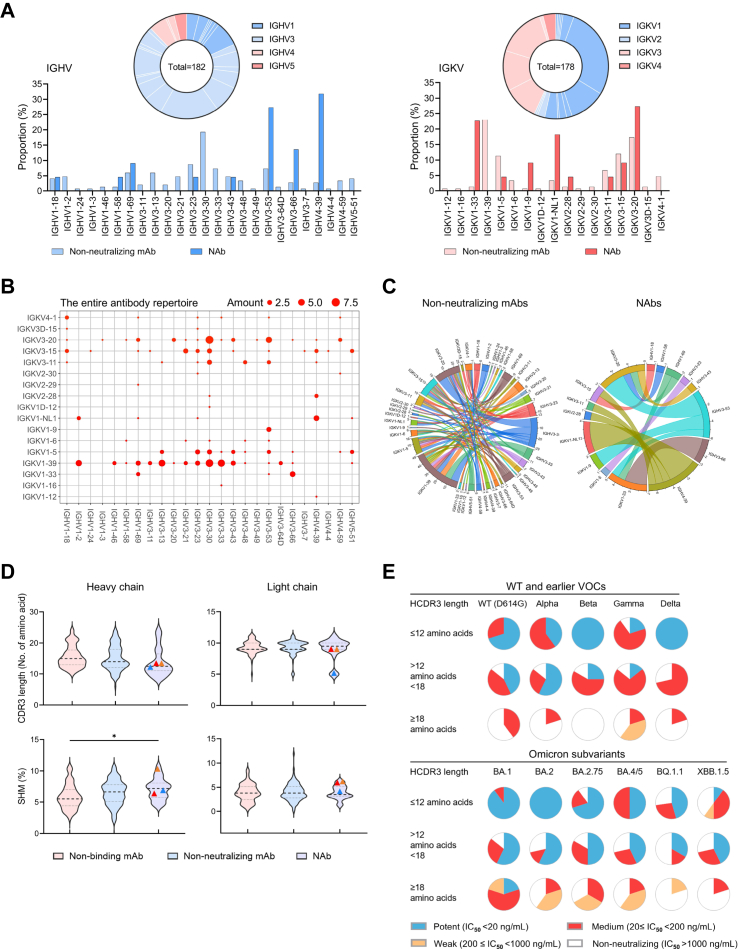
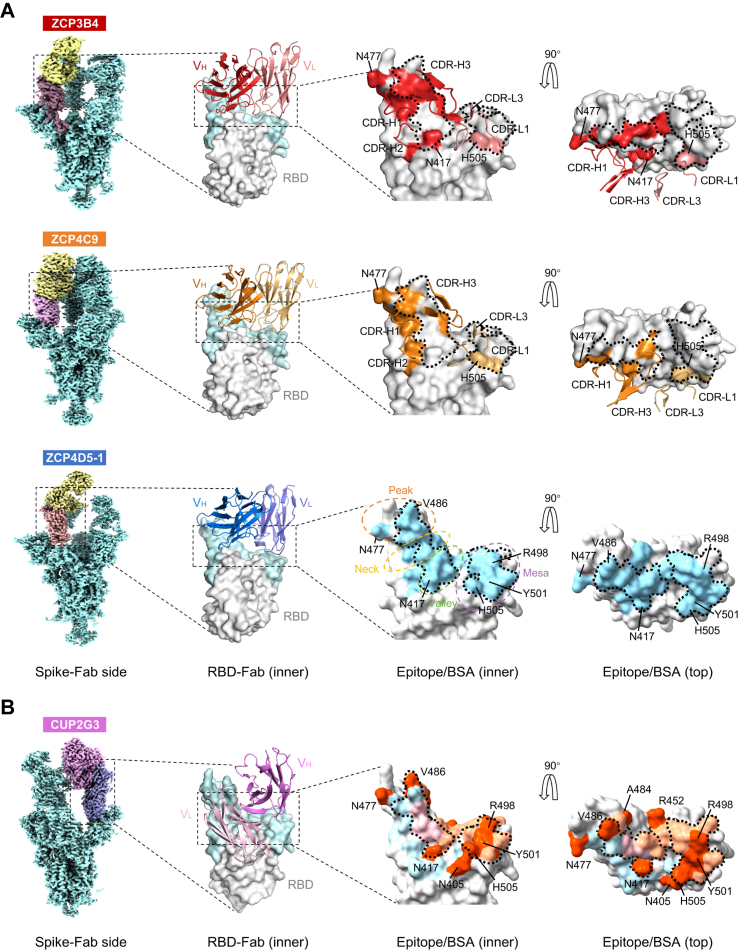
Using the single B cell antibody cloning technology, we isolated single memory B cells, delineated the B cell receptor repertoire and conducted the pseudovirus-based assay for recovered neutralizing antibodies (NAb) screening. We analyzed the cryo-EM structures of top broadly NAbs (bnAbs) and evaluated their in vivo efficacy (golden Syrian hamster model).
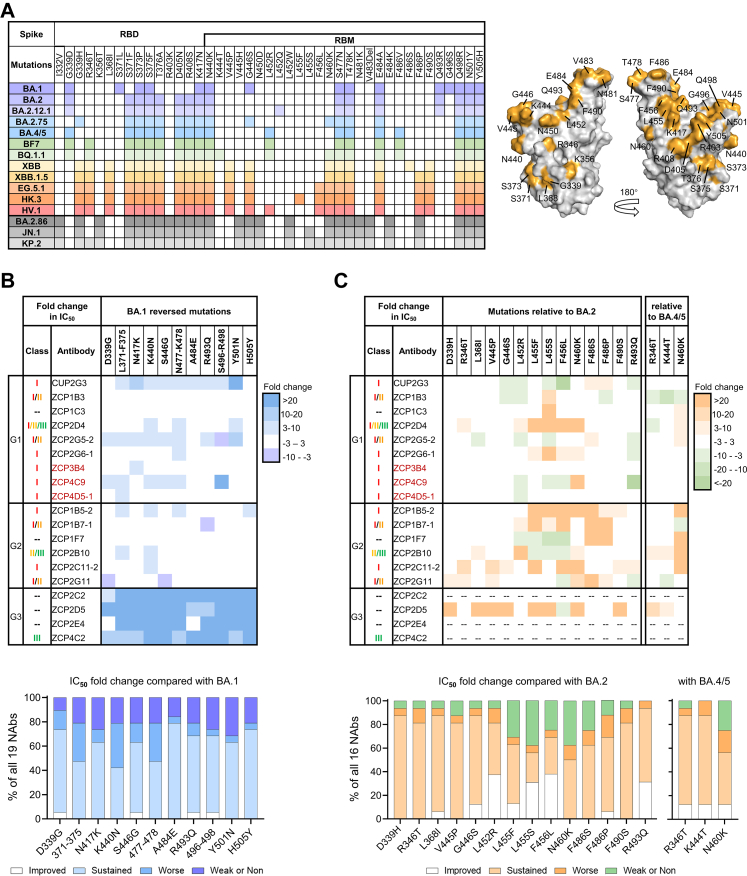
By investigating the evolution of human B cell immunity, we discovered a new panel of bnAbs arising from vaccinees after Omicron BA.2/BA.5 breakthrough infections. Two lead bnAbs neutralized major Omicron subvariants including JN.1 and KP.2 with IC values less than 10 ng/mL, representing ultrapotent receptor binding domain (RBD)-specific class I bnAbs. They belonged to the IGHV3-53/3-66 clonotypes instead of evolving from the pre-existing vaccine-induced IGHV1-58/IGKV3-20 bnAb ZCB11. Despite sequence diversity, they targeted previously unrecognized, highly conserved conformational epitopes in the receptor binding motif (RBM) for ultrapotent ACE2 blockade. The lead bnAb ZCP3B4 not only protected the lungs of hamsters intranasally challenged with BA.5.2, BQ.1.1 and XBB.1.5 but also prevented their contact transmission.
Our findings demonstrated that class I bnAbs have evolved an ultrapotent mode of action protecting against highly transmissible and broad Omicron escape variants, and their epitopes are potential targets for novel bnAbs and vaccine development.
A full list of funding bodies that contributed to this study can be found in the Acknowledgements section.
新兴的 SARS-CoV-2 免疫逃逸亚谱系,特别是 JN.1 和 KP.2 的传播,导致了全球范围内 COVID-19 的新一波浪潮。对具有大量抗原漂移的亚变体,奥密克戎亲本变体引起的记忆 B 细胞反应的演变仍未得到充分研究。
我们使用单个 B 细胞抗体克隆技术分离单个记忆 B 细胞,描绘 B 细胞受体库,并进行基于假病毒的恢复中和抗体 (NAb) 筛选。我们分析了顶级广谱 NAb(bnAb)的冷冻电镜结构,并评估了它们的体内疗效(金黄地鼠模型)。
通过研究人类 B 细胞免疫的进化,我们在奥密克戎 BA.2/BA.5 突破性感染后的疫苗接种者中发现了一组新的 bnAb。两种主要的 bnAb 能够中和主要的奥密克戎亚变体,包括 JN.1 和 KP.2,IC 值小于 10ng/ml,代表超效的受体结合域(RBD)特异性 I 类 bnAb。它们属于 IGHV3-53/3-66 克隆型,而不是从预先存在的疫苗诱导的 IGHV1-58/IGKV3-20 bnAb ZCB11 进化而来。尽管存在序列多样性,但它们针对受体结合基序 (RBM) 中以前未被识别的高度保守构象表位,实现超效 ACE2 阻断。主要的 bnAb ZCP3B4 不仅保护金黄地鼠免受 BA.5.2、BQ.1.1 和 XBB.1.5 的鼻腔挑战,还阻止了它们的接触传播。
我们的研究结果表明,I 类 bnAb 已经进化出一种超效作用模式,可以预防高传播性和广泛的奥密克戎逃逸变体,其表位是新型 bnAb 和疫苗开发的潜在靶点。
对这项研究做出贡献的资助机构的完整清单可在致谢部分找到。