State Key Laboratory of Frigid Zone Cardiovascular Diseases (SKLFZCD), Department of Pharmacology (State Key Labratoray-Province Key Laboratories of Biomedicine-Pharmaceutics of China, Key Laboratory of Cardiovascular Research, Ministry of Education), College of Pharmacy, Harbin Medical University, Harbin, P.R. China.
Department of Medical Imaging, The Sixth Affiliated Hospital of Harbin Medical University, Harbin, China.
Nat Commun. 2024 Sep 28;15(1):8425. doi: 10.1038/s41467-024-52739-y.
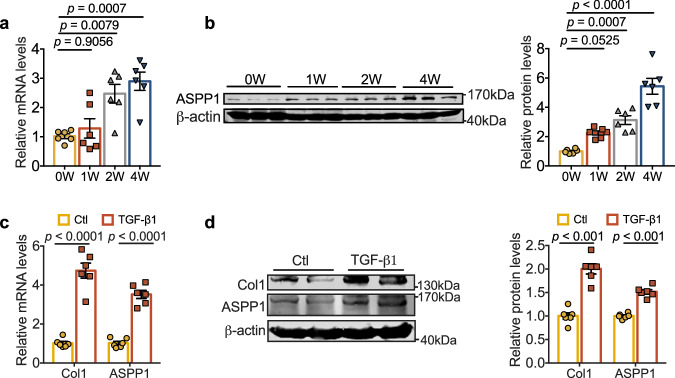
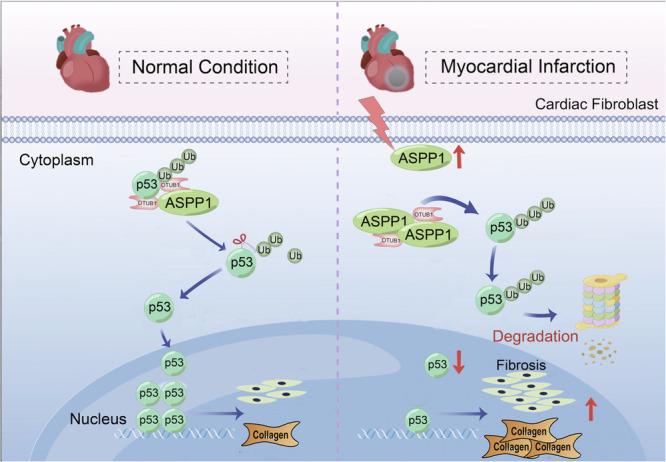
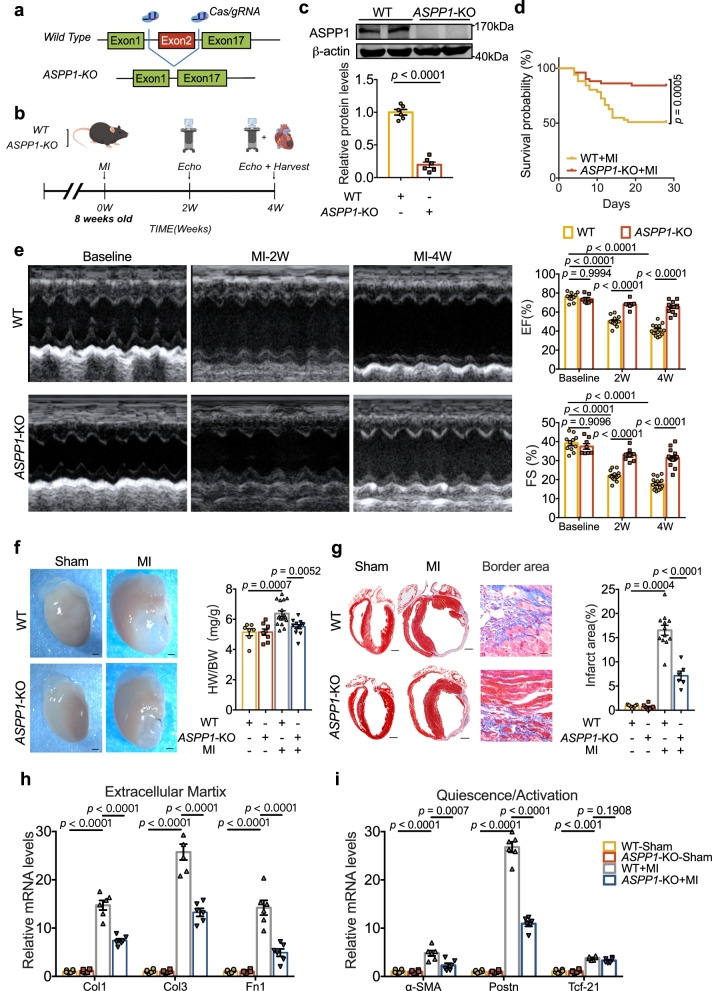
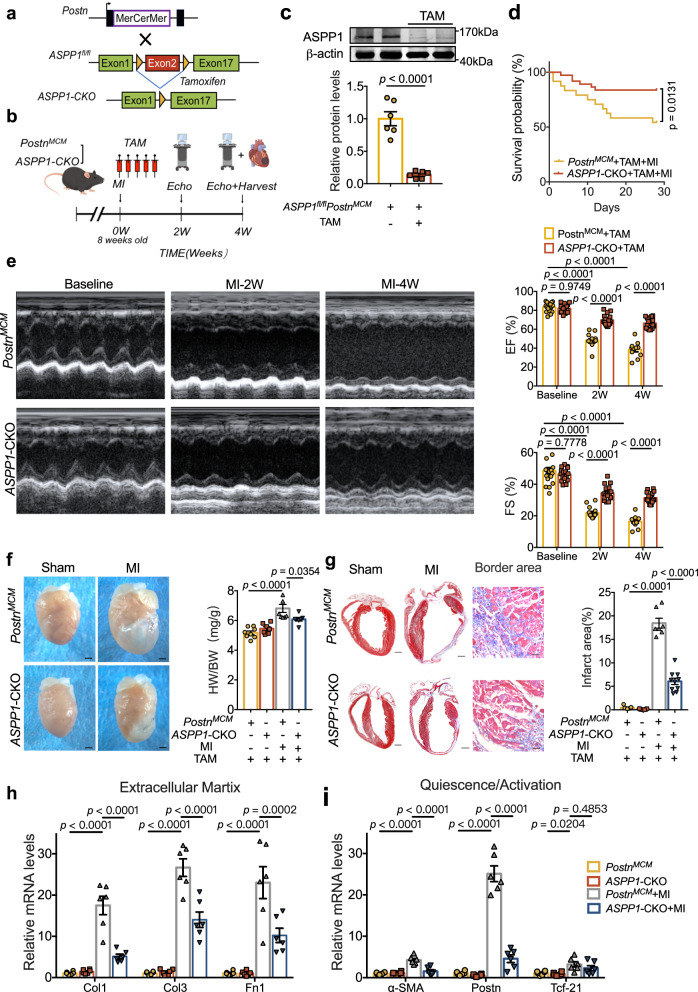
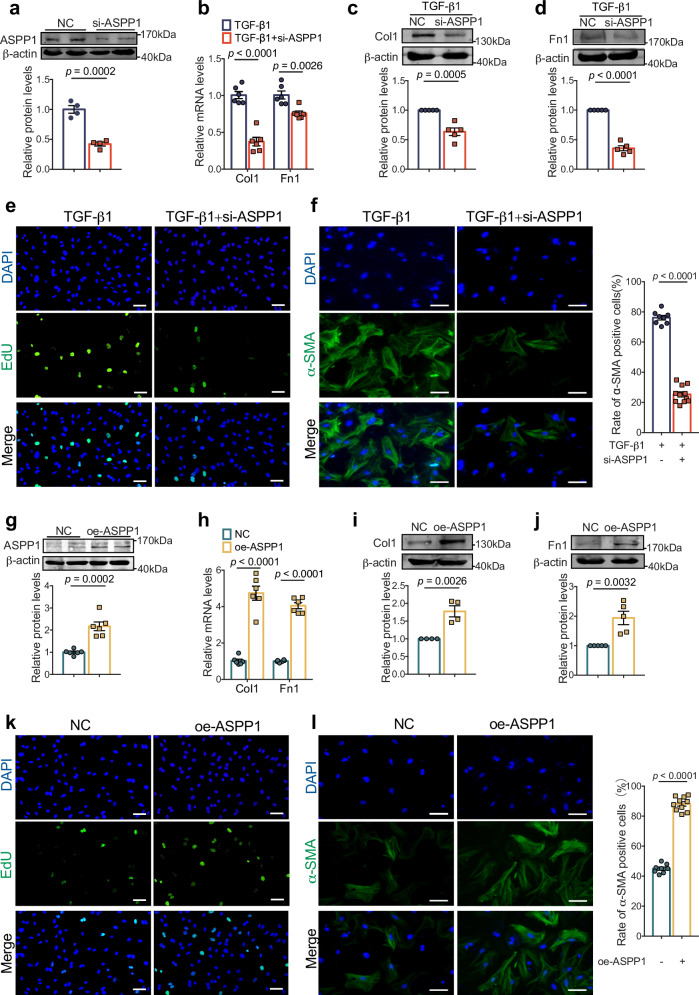
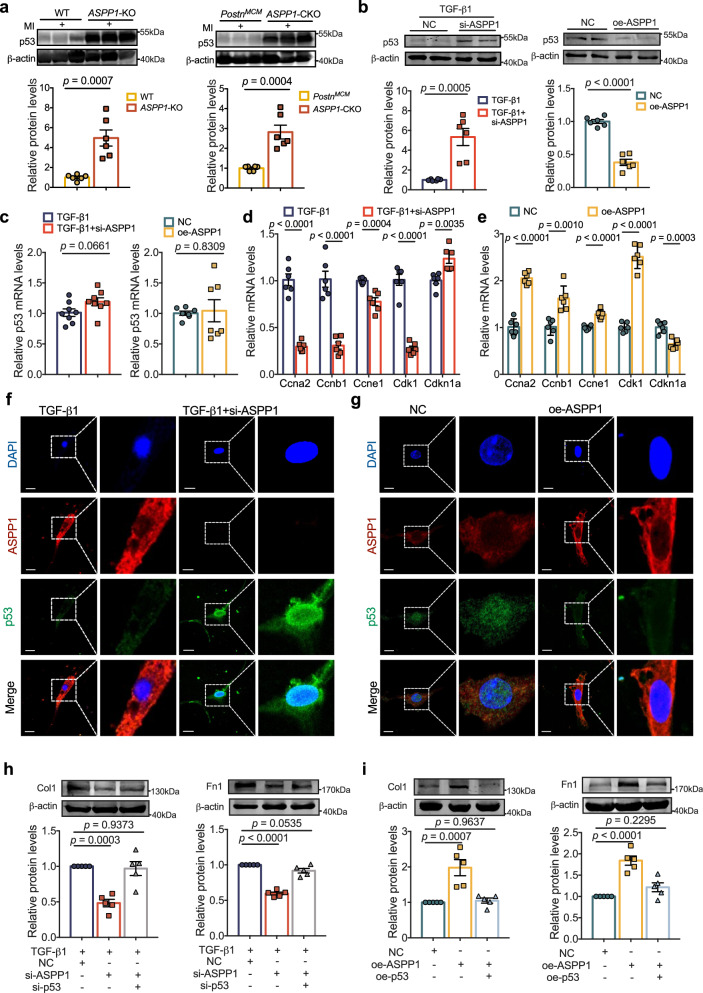
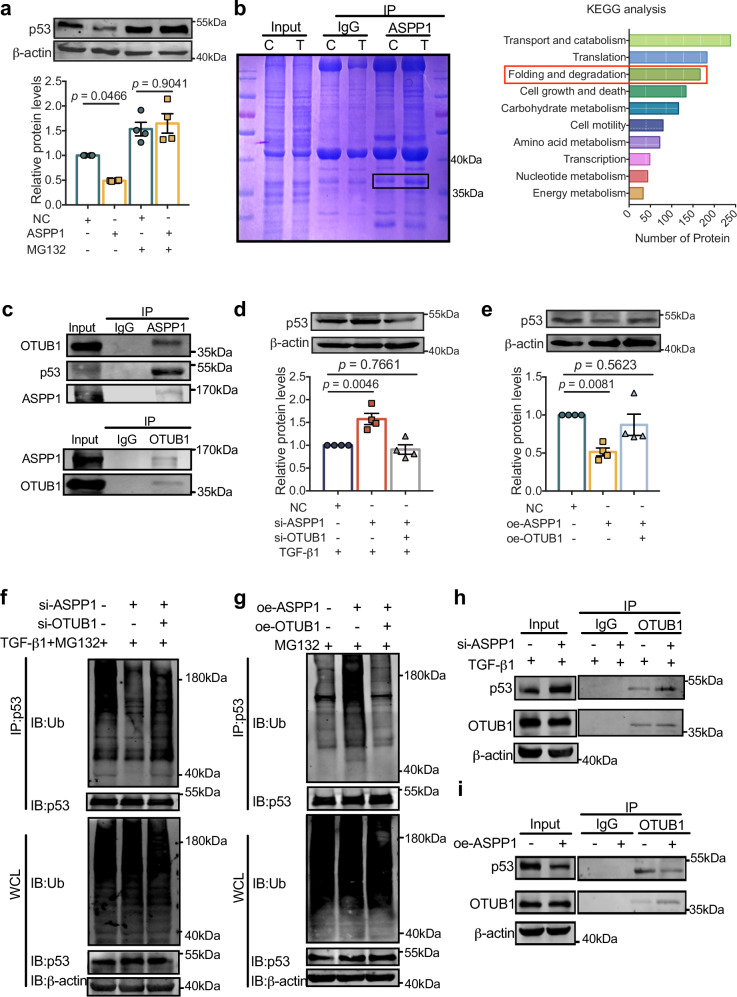
In the healing process of myocardial infarction, cardiac fibroblasts are activated to produce collagen, leading to adverse remodeling and heart failure. Our previous study showed that ASPP1 promotes cardiomyocyte apoptosis by enhancing the nuclear trafficking of p53. We thus explored the influence of ASPP1 on myocardial fibrosis and the underlying mechanisms. Here, we observed that ASPP1 was increased after 4 weeks of MI. Both global and myofibroblast knockout of ASPP1 in mice mitigated cardiac dysfunction and fibrosis after MI. Strikingly, ASPP1 produced the opposite influence on p53 level and cell fate in cardiac fibroblasts and cardiomyocytes. Knockdown of ASPP1 increased p53 levels and inhibited the activity of cardiac fibroblasts. ASPP1 accumulated in the cytoplasm of fibroblasts while the level of p53 was reduced following TGF-β1 stimulation; however, inhibition of ASPP1 increased the p53 level and promoted p53 nuclear translocation. Mechanistically, ASPP1 is directly bound to deubiquitinase OTUB1, thereby promoting the ubiquitination and degradation of p53, attenuating myofibroblast activity and cardiac fibrosis, and improving heart function after MI.
在心肌梗死的修复过程中,心肌成纤维细胞被激活以产生胶原,导致不良重构和心力衰竭。我们之前的研究表明,ASPP1 通过增强 p53 的核易位促进心肌细胞凋亡。因此,我们探讨了 ASPP1 对心肌纤维化的影响及其潜在机制。在这里,我们观察到心肌梗死后 4 周 ASPP1 增加。在小鼠中敲除 ASPP1 的全局和肌成纤维细胞均可减轻心肌梗死后的心功能障碍和纤维化。引人注目的是,ASPP1 对心肌成纤维细胞和心肌细胞中 p53 水平和细胞命运产生相反的影响。敲低 ASPP1 会增加 p53 水平并抑制心肌成纤维细胞的活性。ASPP1 在成纤维细胞的细胞质中积累,而 TGF-β1 刺激后 p53 水平降低;然而,抑制 ASPP1 会增加 p53 水平并促进 p53 核易位。在机制上,ASPP1 直接与去泛素化酶 OTUB1 结合,从而促进 p53 的泛素化和降解,减弱肌成纤维细胞的活性和心肌纤维化,改善心肌梗死后的心功能。