Itahashi Takashi, Yamashita Ayumu, Takahara Yuji, Yahata Noriaki, Aoki Yuta Y, Fujino Junya, Yoshihara Yujiro, Nakamura Motoaki, Aoki Ryuta, Okimura Tsukasa, Ohta Haruhisa, Sakai Yuki, Takamura Masahiro, Ichikawa Naho, Okada Go, Okada Naohiro, Kasai Kiyoto, Tanaka Saori C, Imamizu Hiroshi, Kato Nobumasa, Okamoto Yasumasa, Takahashi Hidehiko, Kawato Mitsuo, Yamashita Okito, Hashimoto Ryu-Ichiro
Medical Institute of Developmental Disabilities Research, Showa University, Tokyo, Japan.
Brain Information Communication Research Laboratory Group, Advanced Telecommunications Research Institute International, Kyoto, Japan.
Mol Psychiatry. 2025 Apr;30(4):1466-1478. doi: 10.1038/s41380-024-02759-3. Epub 2024 Sep 28.
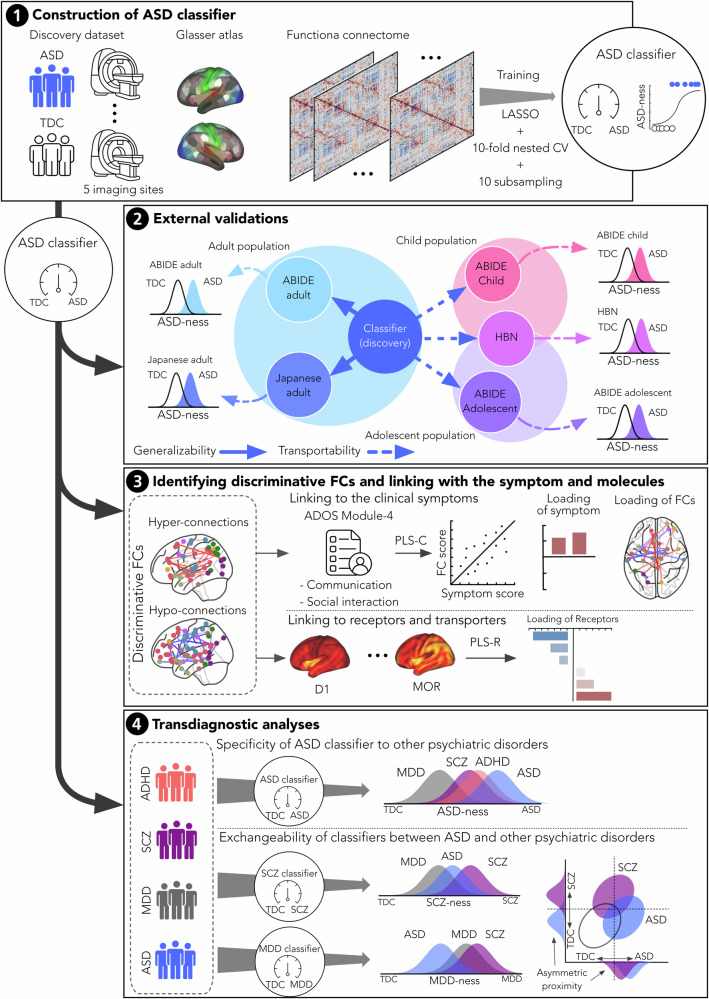
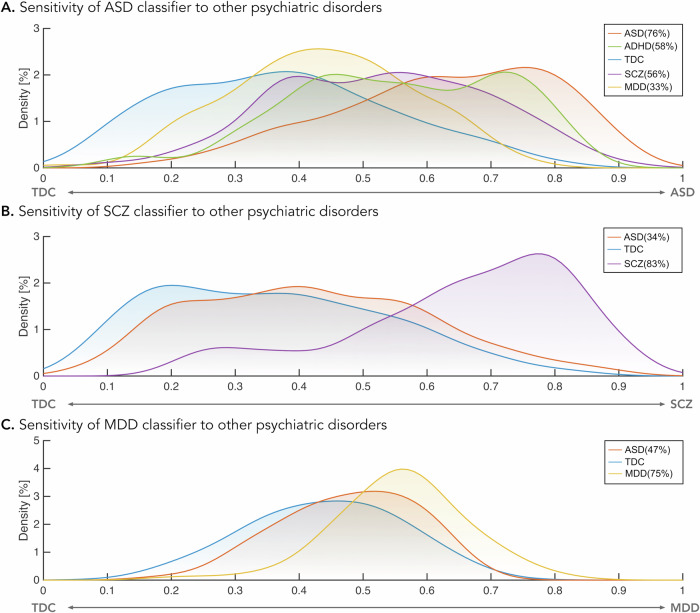
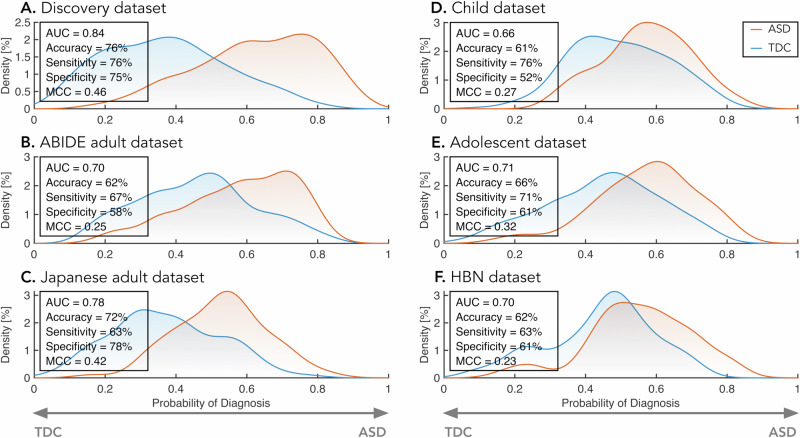
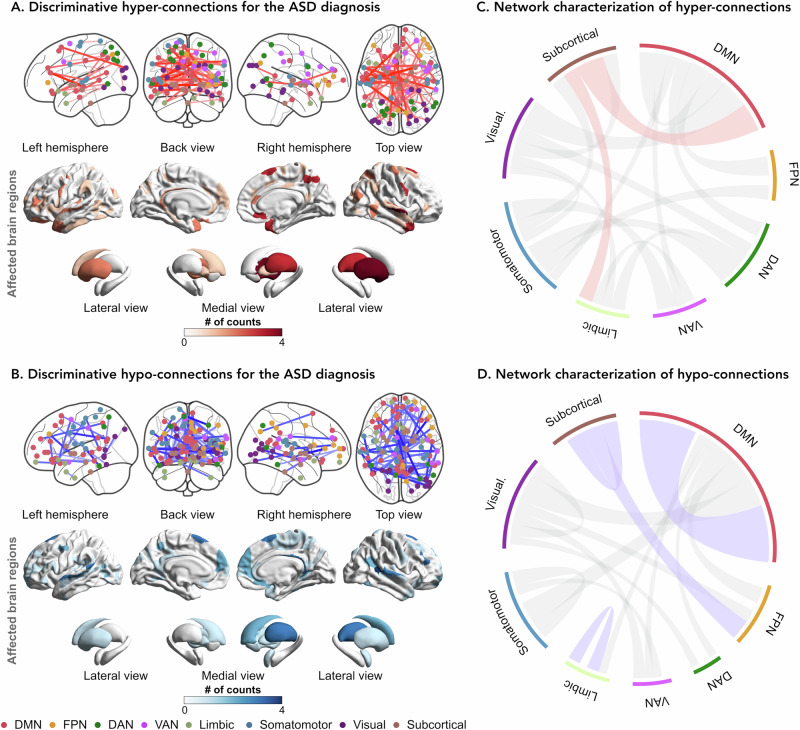
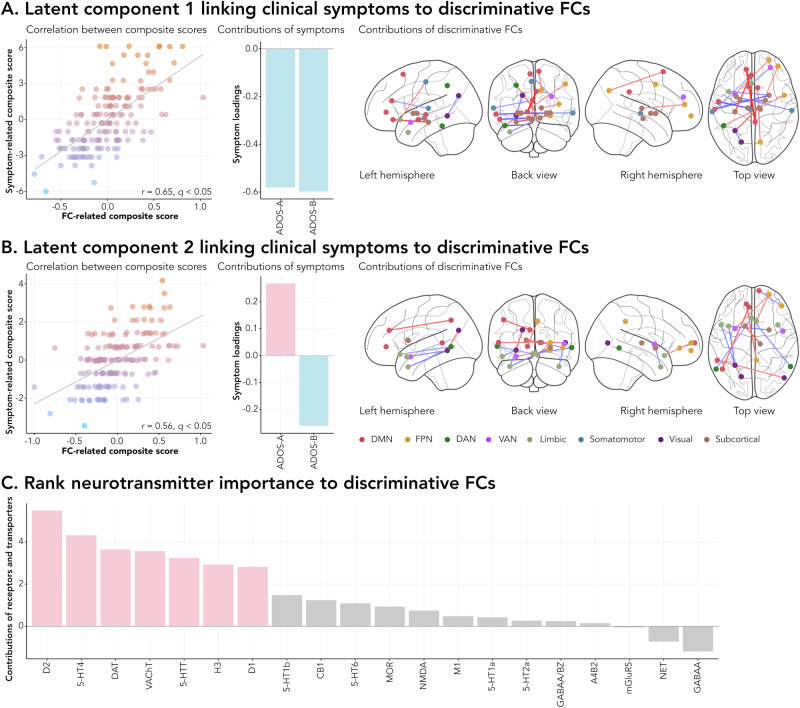
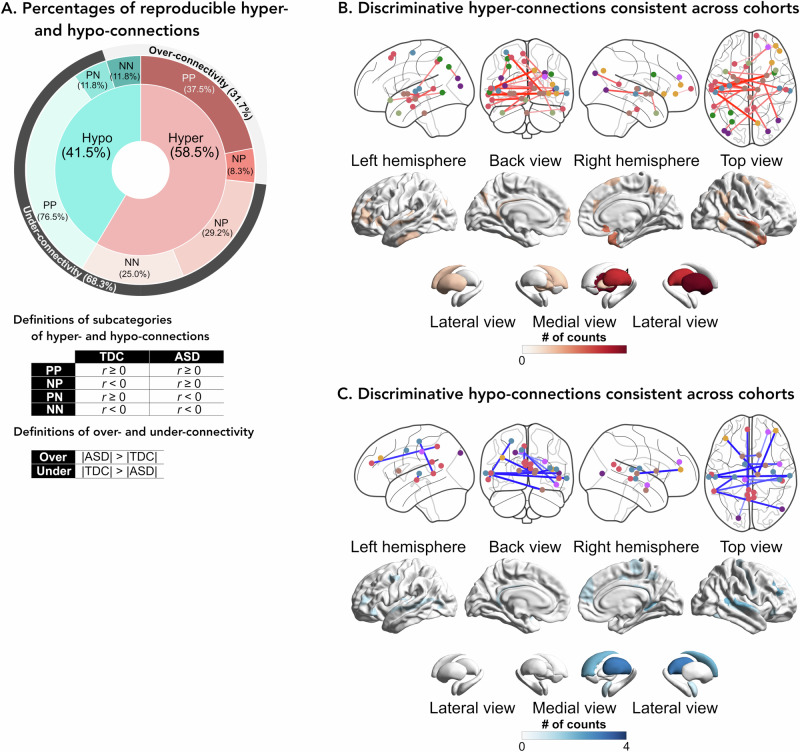
Autism spectrum disorder (ASD) is a lifelong condition with elusive biological mechanisms. The complexity of factors, including inter-site and developmental differences, hinders the development of a generalizable neuroimaging classifier for ASD. Here, we developed a classifier for ASD using a large-scale, multisite resting-state fMRI dataset of 730 Japanese adults, aiming to capture neural signatures that reflect pathophysiology at the functional network level, neurotransmitters, and clinical symptoms of the autistic brain. Our adult ASD classifier was successfully generalized to adults in the United States, Belgium, and Japan. The classifier further demonstrated its successful transportability to children and adolescents. The classifier contained 141 functional connections (FCs) that were important for discriminating individuals with ASD from typically developing controls. These FCs and their terminal brain regions were associated with difficulties in social interaction and dopamine and serotonin, respectively. Finally, we mapped attention-deficit/hyperactivity disorder (ADHD), schizophrenia (SCZ), and major depressive disorder (MDD) onto the biological axis defined by the ASD classifier. ADHD and SCZ, but not MDD, were located proximate to ASD on the biological dimensions. Our results revealed functional signatures of the ASD brain, grounded in molecular characteristics and clinical symptoms, achieving generalizability and transportability applicable to the evaluation of the biological continuity of related diseases.
自闭症谱系障碍(ASD)是一种终身疾病,其生物学机制难以捉摸。包括不同研究地点和发育差异在内的多种因素的复杂性,阻碍了针对ASD的通用神经影像分类器的开发。在此,我们利用730名日本成年人的大规模多地点静息态功能磁共振成像(fMRI)数据集开发了一种ASD分类器,旨在捕捉反映自闭症大脑功能网络水平病理生理学、神经递质和临床症状的神经特征。我们的成人ASD分类器成功推广至美国、比利时和日本的成年人。该分类器进一步证明了其成功应用于儿童和青少年的可转移性。该分类器包含141个功能连接(FCs),这些连接对于区分ASD个体与典型发育对照个体至关重要。这些FCs及其终末脑区分别与社交互动困难以及多巴胺和血清素相关。最后,我们将注意力缺陷多动障碍(ADHD)、精神分裂症(SCZ)和重度抑郁症(MDD)映射到由ASD分类器定义的生物学轴上。在生物学维度上,ADHD和SCZ位于ASD附近,而MDD并非如此。我们的研究结果揭示了基于分子特征和临床症状的ASD大脑功能特征,实现了适用于评估相关疾病生物学连续性的通用性和可转移性。