Li Zhengrui, Li Jing, Bai Xiaolei, Huang Xufeng, Wang Qi
Department of Oral and Maxillofacial-Head and Neck Oncology, Shanghai Ninth People's Hospital, Shanghai Jiao Tong University School of Medicine, Shanghai, China.
College of Stomatology, Shanghai Jiao Tong University, Shanghai, China.
Clin Transl Oncol. 2025 May;27(5):1943-1952. doi: 10.1007/s12094-024-03697-w. Epub 2024 Sep 28.
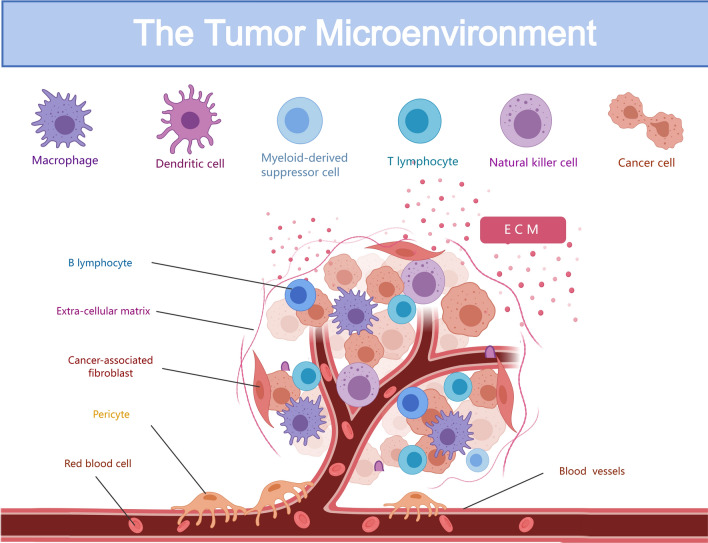
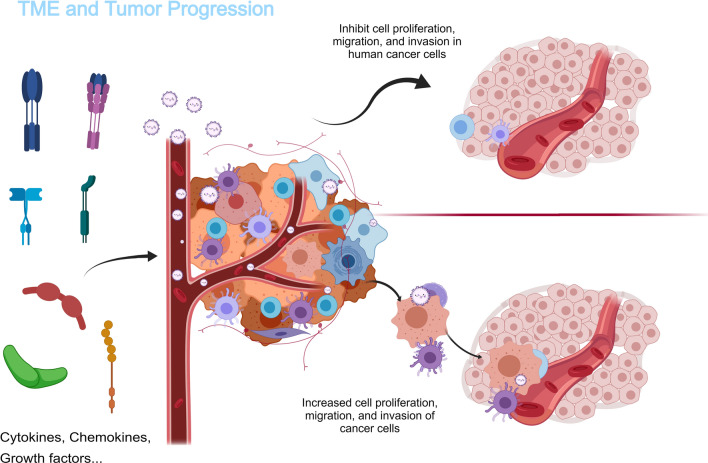
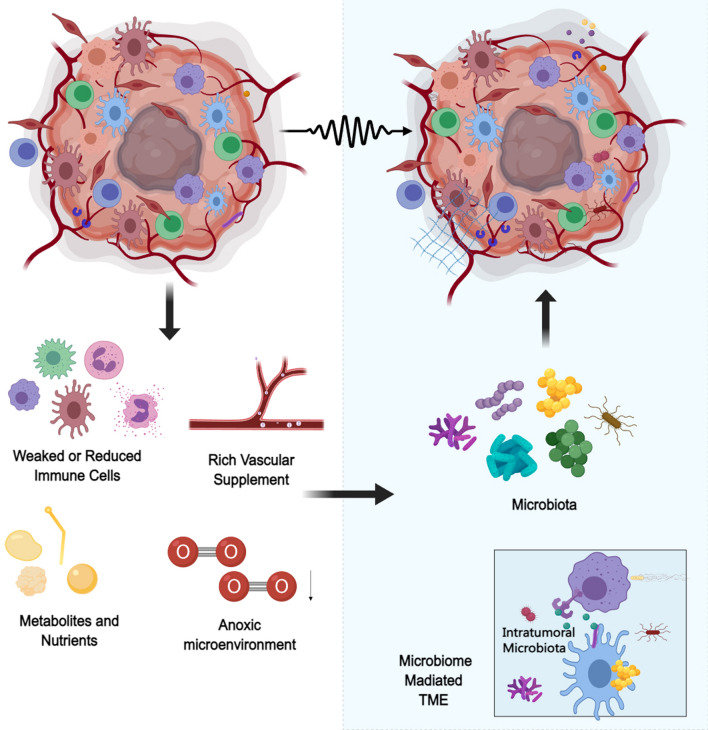
It has been spotlighted that the Tumor Microenvironment (TME) is crucial for comprehending cancer progression and therapeutic resistance. Therefore, this comprehensive review elucidates the intricate architecture of the TME, which encompasses tumor cells, immune components, support cells, and a myriad of bioactive molecules. These constituents collectively foster dynamic interactions that underpin tumor growth, metastasis, and nuanced responses to anticancer therapies. Notably, the TME's role extends beyond mere physical support, serving as a critical mediator in cancer-cell evolution, immune modulation, and treatment outcomes. Innovations targeting the TME, including strategies focused on the vasculature, immune checkpoints, and T-cell therapies, have forged new pathways for clinical intervention. However, the heterogeneity and complexity of the TME present significant challenges, necessitating deeper exploration of its components and their interplay to enhance therapeutic efficacy. This review underscores the imperative for integrated research strategies that amalgamate insights from tumor biology, immunology, and systems biology. Such an approach aims to refine cancer treatments and improve patient prognoses by exploiting the TME's complexity.
肿瘤微环境(TME)对于理解癌症进展和治疗耐药性至关重要,这一点已受到广泛关注。因此,本综述全面阐释了肿瘤微环境的复杂结构,其中包括肿瘤细胞、免疫成分、支持细胞以及众多生物活性分子。这些成分共同促进动态相互作用,这些相互作用是肿瘤生长、转移以及对抗癌治疗产生细微反应的基础。值得注意的是,肿瘤微环境的作用不仅限于提供物理支持,它还是癌细胞进化、免疫调节和治疗结果的关键调节因子。针对肿瘤微环境的创新,包括针对血管系统、免疫检查点和T细胞疗法的策略,为临床干预开辟了新途径。然而,肿瘤微环境的异质性和复杂性带来了重大挑战,需要更深入地探索其组成成分及其相互作用,以提高治疗效果。本综述强调了整合研究策略的必要性,这些策略融合了肿瘤生物学、免疫学和系统生物学的见解。这种方法旨在通过利用肿瘤微环境的复杂性来优化癌症治疗并改善患者预后。