Department of Anesthesia, Wenzhou Medical University Affiliated Taizhou Hospital of Zhejiang Province, No.150 Ximen Street, Linhai, Taizhou, 317000, Zhejiang, China.
Operating Room, Wenzhou Medical University Affiliated Taizhou Hospital of Zhejiang Province, Taizhou, 317000, Zhejiang, China.
J Orthop Surg Res. 2024 Sep 28;19(1):604. doi: 10.1186/s13018-024-05083-2.
The incidence of hemidiaphragmatic paresis (HDP) in superior trunk block (STB) usually depends on the dose of local anesthetic. This study aimed to further evaluate the impact of a lower volume (10 mL) of the same low concentration (0.25%) ropivacaine compared to a conventional volume (15 mL), on diaphragmatic function and analgesic efficacy under a multimodal analgesia regimen for shoulder arthroscopy.
Patients scheduled to undergo shoulder arthroscopy were randomized allocated to receive either 10 mL or 15 mL of 0.25% ropivacaine in the STB under ultrasound guidance prior to general anesthesia. The primary outcome was the percentage reduction in diaphragm excursion (ΔDE) between baseline and 30 min after block. Secondary outcomes included DE and diaphragm thickening fraction (DTF) before and after block, incidence of HDP, onset of sensory/motor block, duration of analgesia/motor block, dermatomal coverage area of the block, postoperative pain severity, pre- and post-block respiratory function and intraoperative hemodynamic parameters, the use of other anesthetic and analgesic drugs, post-block complications, and adverse events post-surgery.
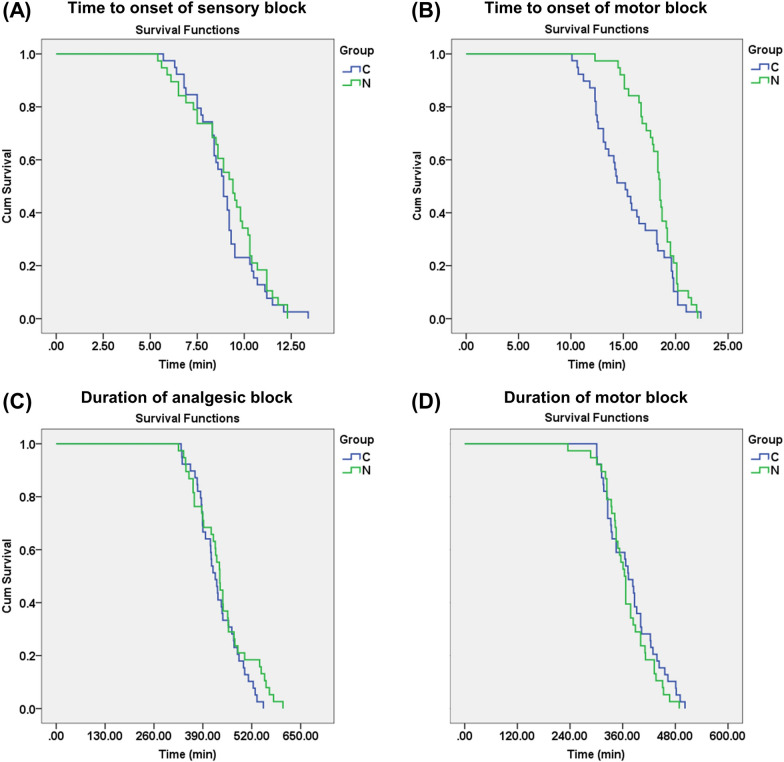
Compared with 15 mL volume, 10 mL ropivacaine significantly reduced the incidence of post-block HDP (as measured by ΔDE: 39.47% vs. 64.10%; and by post-block DTF: 13.16% vs. 33.33%). There was no significant difference in onset of sensory block, duration of analgesia/motor block, dermatomal coverage area of the block, postoperative pain severity between the two groups, except that the onset of motor block was significantly slower in the 10 mL group than in the 15 mL group. Pre- and post-block respiratory function and intraoperative hemodynamic parameters, the use of other anesthetic and analgesic drugs, post-block complications, or postoperative adverse events were not significantly different between the two groups.
In shoulder arthroscopy, STB with 10 mL of ropivacaine can reduce the incidence of HDP with no significant difference in analgesic effects under a multimodal analgesia regimen compared with 15 mL.
We registered the study at chictr.org ( ChiCTR2200057543 , 14/03/2022. https://www.chictr.ogr.cn.
在上干阻滞(STB)中,膈神经麻痹(HDP)的发生率通常取决于局部麻醉药的剂量。本研究旨在进一步评估与传统剂量(15ml)相比,在多模式镇痛方案下,超声引导下使用相同低浓度(0.25%)罗哌卡因 10ml 对肩关节镜手术中膈肌功能和镇痛效果的影响。
拟行肩关节镜手术的患者随机分为两组,在全身麻醉前于 STB 中分别接受 10ml 或 15ml 0.25%罗哌卡因。主要结局是阻滞后 30min 时与基线相比膈肌活动度(ΔDE)的百分比降低。次要结局包括阻滞前后的 DE 和膈肌增厚分数(DTF)、HDP 的发生率、感觉/运动阻滞的起效时间、镇痛/运动阻滞的持续时间、阻滞的皮肤感觉区、术后疼痛严重程度、阻滞前后的呼吸功能和术中血流动力学参数、其他麻醉和镇痛药物的使用、阻滞后并发症和术后不良事件。
与 15ml 容量相比,10ml 罗哌卡因显著降低了 HDP 的发生率(通过ΔDE 测量:39.47%比 64.10%;通过阻滞后 DTF 测量:13.16%比 33.33%)。两组间感觉阻滞的起始时间、镇痛/运动阻滞的持续时间、阻滞的皮肤感觉区、术后疼痛严重程度无显著差异,只是运动阻滞的起始时间在 10ml 组明显比 15ml 组慢。两组间阻滞前后的呼吸功能和术中血流动力学参数、其他麻醉和镇痛药物的使用、阻滞后并发症或术后不良事件无显著差异。
在肩关节镜手术中,与 15ml 相比,在多模式镇痛方案下,STB 中使用 10ml 罗哌卡因可降低 HDP 的发生率,而镇痛效果无显著差异。
我们在中国临床试验注册中心(ChiCTR2200057543,2022 年 3 月 14 日,https://www.chictr.ogr.cn。