Mercado Noe B, Real Jacqueline N, Kaiserman Jacob, Panagioti Eleni, Cook Charles H, Lawler Sean E
Department of Pathology and Laboratory Medicine, Legorreta Cancer Center, Brown University, Providence, RI, US.
The Warren Alpert Medical School, Brown University, Providence, RI, US.
NPJ Precis Oncol. 2024 Sep 29;8(1):213. doi: 10.1038/s41698-024-00709-4.
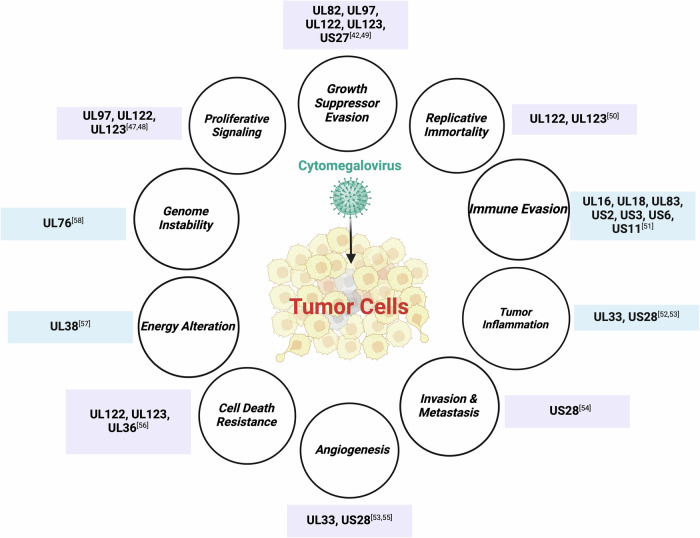
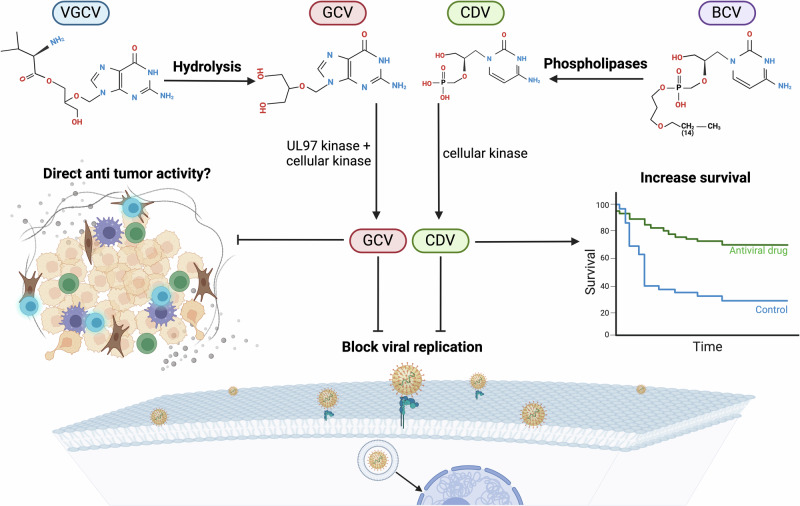
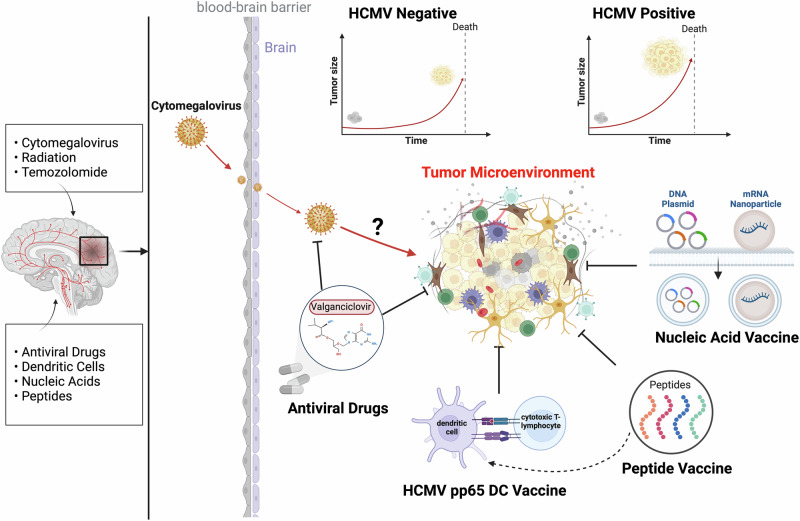
Glioblastoma (GBM) is one of the deadliest brain cancers with a median survival of only 15 months. This poor prognosis has prompted exploration of novel therapeutic targets for GBM patients. Human cytomegalovirus (HCMV) has been implicated in GBM; however, its impact remains poorly defined, and there is conflicting data over the presence of HCMV in tumors. Nonetheless, clinical trials targeting HCMV have shown promising initial data, and evidence suggests that HCMV may negatively impact GBM patient survival by multiple mechanisms including changes in GBM cell behavior and the tumor microenvironment (TME) that potentiate tumor progression as well as therapy-induced virus reactivation. Moreover, HCMV has many effects on host immunity that could impact tumor behavior by altering the TME, which are largely unexplored. The goal of this review is to describe these potential interactions between HCMV and GBM. Better understanding of these processes may allow the development of new therapeutic modalities to improve GBM patient outcomes.
胶质母细胞瘤(GBM)是最致命的脑癌之一,中位生存期仅为15个月。这种预后不佳促使人们探索针对GBM患者的新型治疗靶点。人巨细胞病毒(HCMV)与GBM有关;然而,其影响仍不明确,关于肿瘤中HCMV的存在也存在相互矛盾的数据。尽管如此,针对HCMV的临床试验已显示出有前景的初步数据,并且有证据表明,HCMV可能通过多种机制对GBM患者的生存产生负面影响,这些机制包括GBM细胞行为和肿瘤微环境(TME)的变化,这些变化会促进肿瘤进展以及治疗诱导的病毒再激活。此外,HCMV对宿主免疫有许多影响,可能通过改变TME影响肿瘤行为,而这在很大程度上尚未得到探索。本综述的目的是描述HCMV与GBM之间的这些潜在相互作用。更好地理解这些过程可能有助于开发新的治疗方法以改善GBM患者的预后。