CREA Research Centre for Vegetable and Ornamental Crops, Via Cavalleggeri 51, Pontecagnano Faiano, 84098, Italy.
Department of Agricultural Sciences, University of Naples Federico II, Portici, 80055, Italy.
BMC Plant Biol. 2024 Sep 30;24(1):894. doi: 10.1186/s12870-024-05602-7.
To counteract soil degradation, it is important to convert conventional agricultural practices to environmentally sustainable management practices. To this end, the application of biostimulants could be considered a good strategy. Compost, produced by the composting of biodegradable organic compounds, is a source of natural biostimulants, such as humic acids, which are naturally occurring organic compounds that arise from the decomposition and transformation of organic residues, and compost tea, a compost-derived liquid formulated produced by compost water-phase extraction. This study aimed to determine the molecular responses of the roots of tomato plants (cv. Crovarese) grown under hydroponic conditions and subjected to biostimulation with humic substances (HSs) and filtered sterile compost tea (SCT).
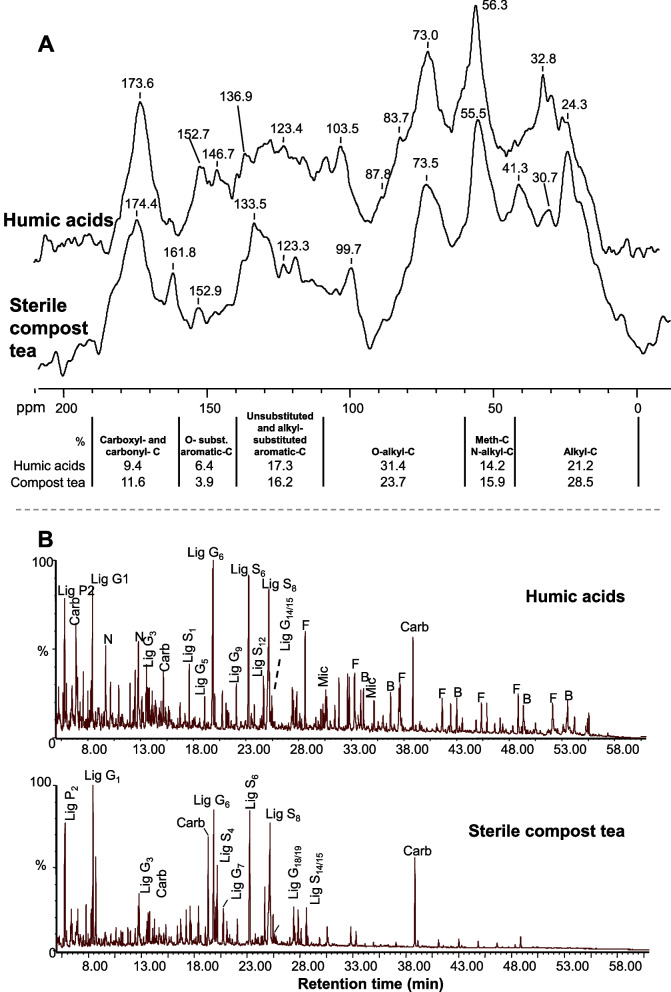
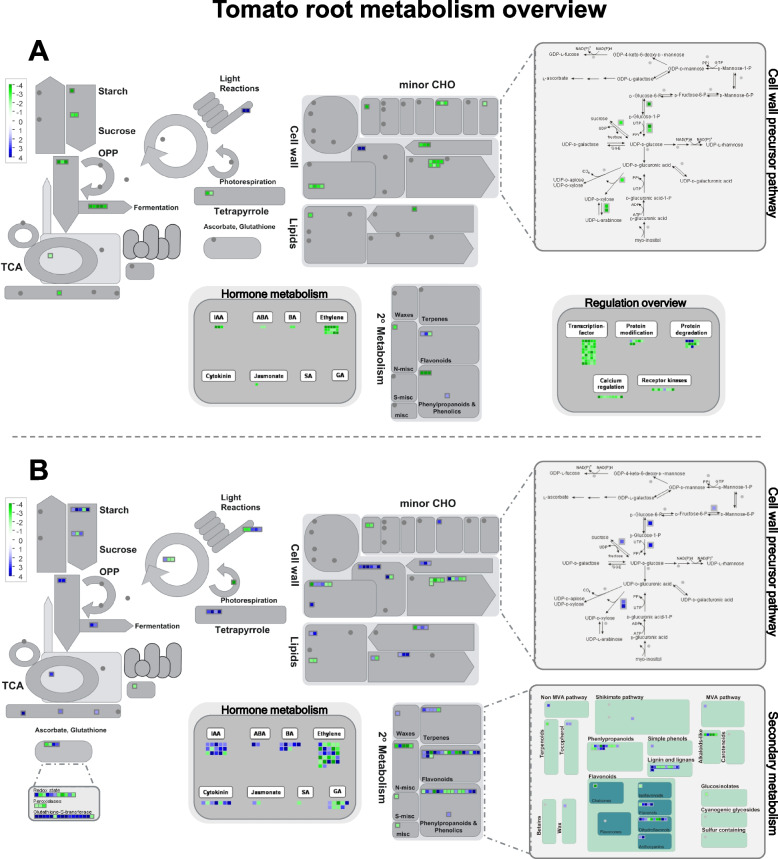
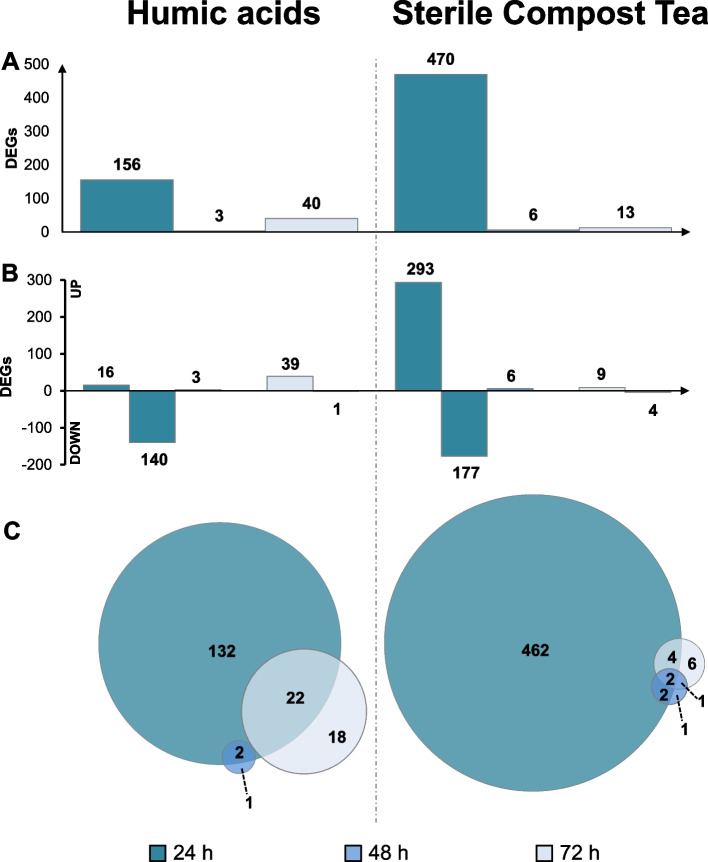
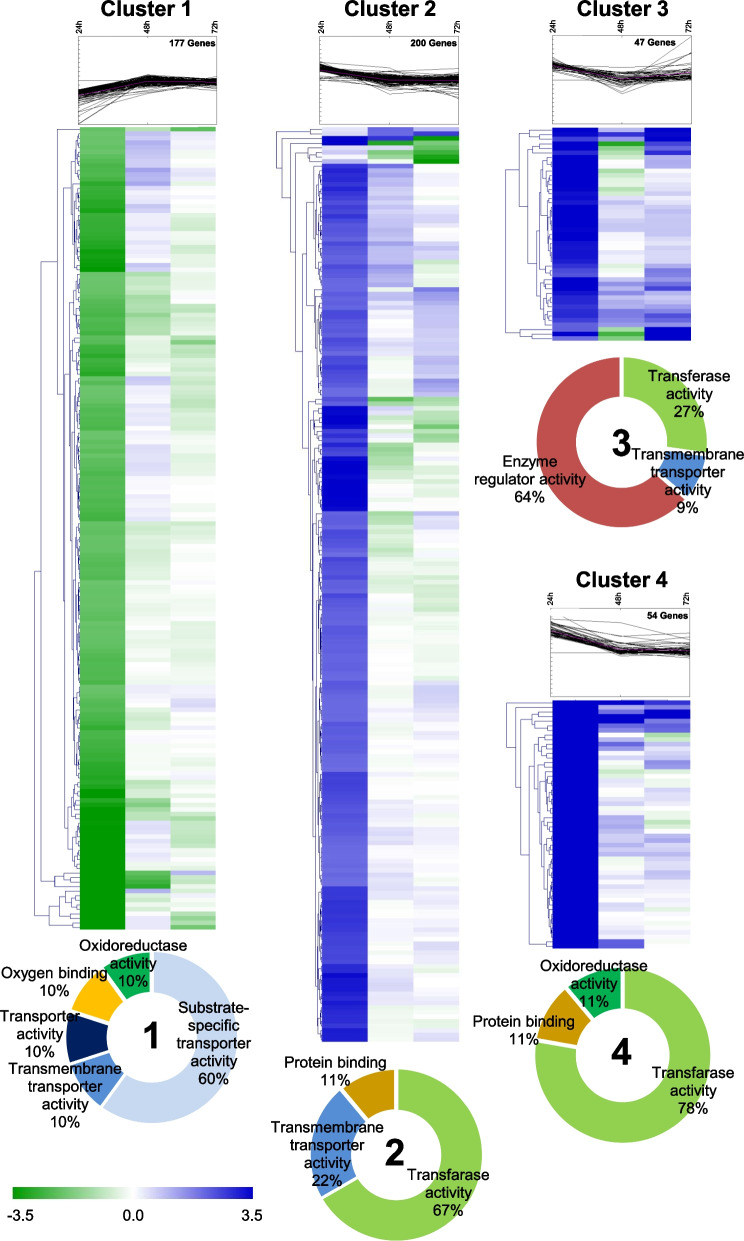
The C CPMAS NMR of humic acids (HA) and SCT revealed strong O-alkyl-C signals, indicating a high content of polysaccharides.Thermochemolysis identified over 100 molecules, predominantly from lignin, fatty acids, and biopolymers. RNA-Seq analysis of tomato roots treated with HA or SCT revealed differentially expressed genes (DEGs) with distinct patterns of transcriptional reprogramming. Notably, HA treatment affected carbohydrate metabolism and secondary metabolism, particularly phenylpropanoids and flavonoids, while SCT had a broader impact on hormone and redox metabolism. Both biostimulants induced significant gene expression changes within 24 h, including a reduction in cell wall degradation activity and an increase in the expression of hemicellulose synthesis genes, suggesting that the treatments prompted proactive cell wall development.
The results demonstrate that HS and SCT can mitigate stress by activating specific molecular mechanisms and modifying root metabolic pathways, particularly those involved in cell wall synthesis. However, gene regulation in response to these treatments is complex and influenced by various factors. These findings highlight the biostimulatory effects of HS and SCT, suggesting their potential application in crop biofertilization and the development of innovative breeding strategies to maximize the benefits of humic substances for crops. Further research is needed to fully elucidate these mechanisms across various contexts and plant species.
为了应对土壤退化,将传统农业实践转变为环境可持续的管理实践非常重要。为此,应用生物刺激素可以被认为是一种很好的策略。堆肥是由可生物降解的有机化合物堆肥制成的,是天然生物刺激素的来源,如腐殖酸,腐殖酸是一种天然存在的有机化合物,它是由有机残渣的分解和转化产生的,而堆肥茶则是一种由堆肥水相提取制成的堆肥衍生的液体配方。本研究旨在确定在水培条件下生长的番茄植株(cv.Crovarese)的根系对腐殖质(HS)和过滤无菌堆肥茶(SCT)生物刺激的分子反应。
腐殖酸(HA)和 SCT 的 C CPMAS NMR 显示出强烈的 O-烷基-C 信号,表明多糖含量高。热化学分解鉴定出超过 100 种分子,主要来自木质素、脂肪酸和生物聚合物。用 HA 或 SCT 处理的番茄根的 RNA-Seq 分析显示,差异表达基因(DEGs)具有不同的转录重编程模式。值得注意的是,HA 处理影响碳水化合物代谢和次生代谢,特别是苯丙烷类和类黄酮,而 SCT 对激素和氧化还原代谢有更广泛的影响。两种生物刺激剂在 24 小时内都能引起显著的基因表达变化,包括细胞壁降解活性的降低和半纤维素合成基因表达的增加,这表明处理促使细胞主动进行细胞壁发育。
结果表明,HS 和 SCT 可以通过激活特定的分子机制和改变根代谢途径来缓解胁迫,特别是那些与细胞壁合成有关的途径。然而,对这些处理的基因调控是复杂的,并受到各种因素的影响。这些发现强调了 HS 和 SCT 的生物刺激作用,表明它们在作物生物肥料中的潜在应用以及开发创新的育种策略以最大限度地发挥腐殖质对作物的益处。需要进一步的研究来全面阐明这些机制在不同背景和植物物种中的作用。