• 文献检索
  • 文档翻译
  • 深度研究
  • 学术资讯
  • Suppr Zotero 插件Zotero 插件
  • 邀请有礼
  • 套餐&价格
  • 历史记录
应用&插件
Suppr Zotero 插件Zotero 插件浏览器插件Mac 客户端Windows 客户端微信小程序
定价
高级版会员购买积分包购买API积分包
服务
文献检索文档翻译深度研究API 文档MCP 服务
关于我们
关于 Suppr公司介绍联系我们用户协议隐私条款
关注我们

Suppr 超能文献

核心技术专利:CN118964589B侵权必究
粤ICP备2023148730 号-1Suppr @ 2026

文献检索

告别复杂PubMed语法,用中文像聊天一样搜索,搜遍4000万医学文献。AI智能推荐,让科研检索更轻松。

立即免费搜索

文件翻译

保留排版,准确专业,支持PDF/Word/PPT等文件格式,支持 12+语言互译。

免费翻译文档

深度研究

AI帮你快速写综述,25分钟生成高质量综述,智能提取关键信息,辅助科研写作。

立即免费体验

用DNA-脂质纳米颗粒对表达转铁蛋白受体的细胞系进行选择性转染。

Selective Transfection of a Transferrin Receptor-Expressing Cell Line with DNA-Lipid Nanoparticles.

作者信息

Vinales Irodiel, Silva-Espinoza Juan Carlos, Medina Bryan A, Urbay Juan E M, Beltran Miguel A, Salinas Dante E, Ramirez-Ramos Marco A, Maldonado Rosa A, Poon Wilson, Penichet Manuel L, Almeida Igor C, Michael Katja

机构信息

Department of Chemistry and Biochemistry, University of Texas at El Paso, El Paso, Texas 79968, United States.

Border Biomedical Research Center, University of Texas at El Paso, El Paso, Texas 79968, United States.

出版信息

ACS Omega. 2024 Sep 15;9(38):39533-39545. doi: 10.1021/acsomega.4c03541. eCollection 2024 Sep 24.

DOI:10.1021/acsomega.4c03541
PMID:39346819
原文链接:https://pmc.ncbi.nlm.nih.gov/articles/PMC11425831/
Abstract

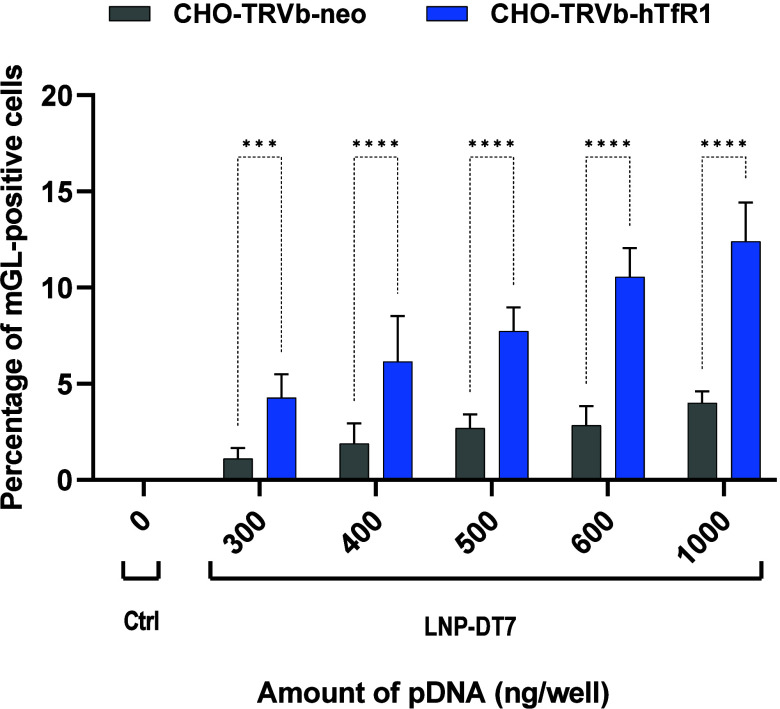
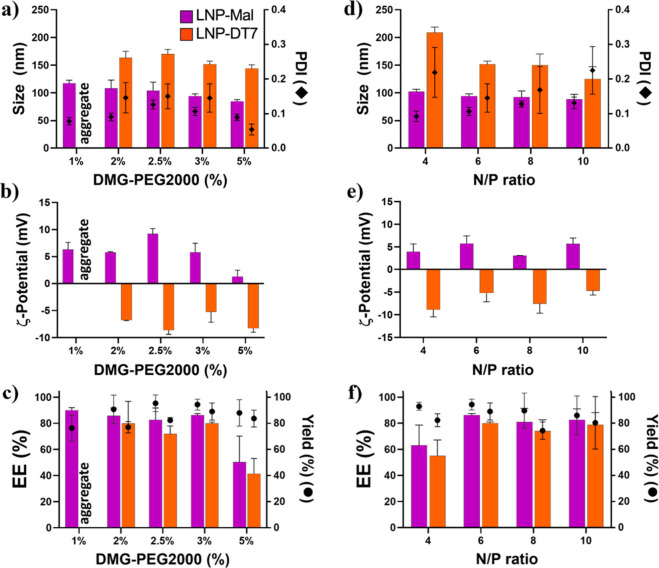
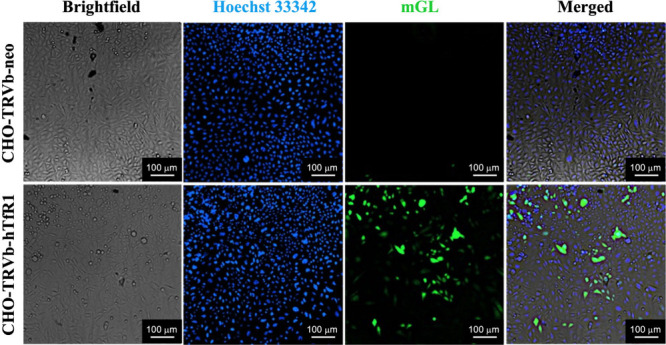
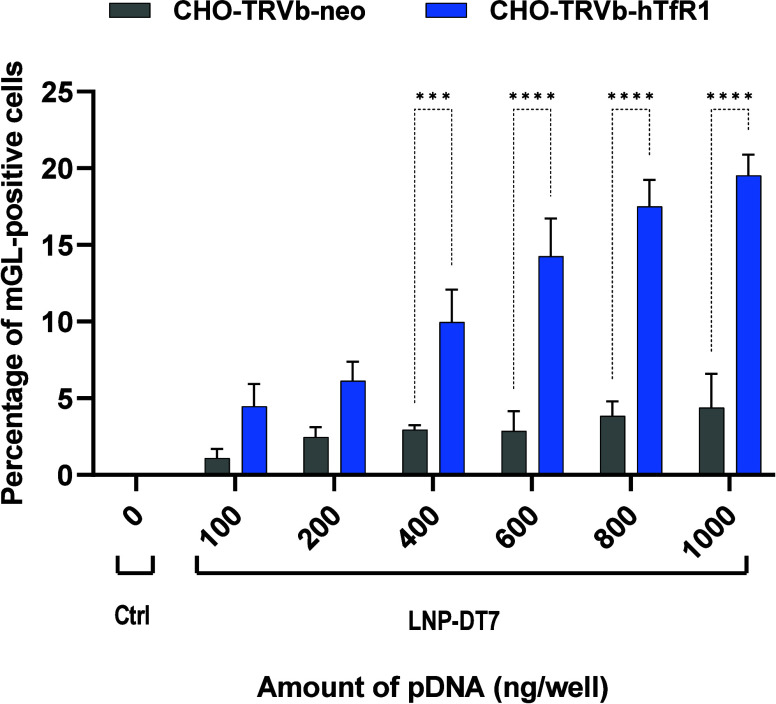
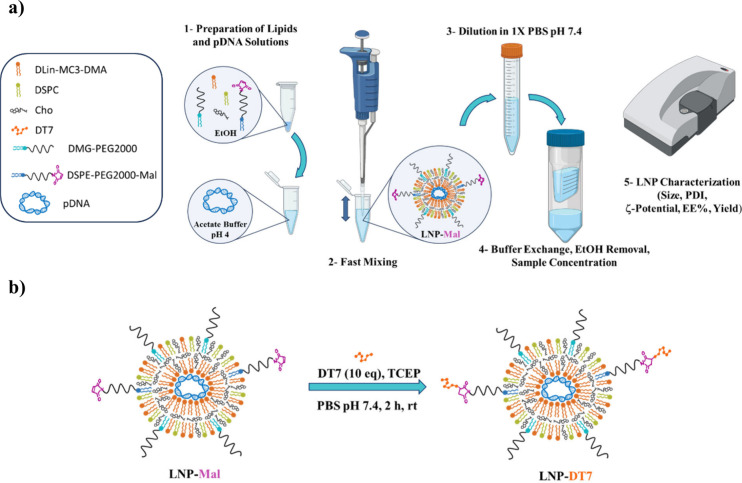
Despite considerable progress in using lipid nanoparticle (LNP) vehicles for gene delivery, achieving selective transfection of specific cell types remains a significant challenge, hindering the advancement of new gene or gene-editing therapies. Although LNPs have been equipped with ligands aimed at targeting specific cellular receptors, achieving complete selectivity continues to be elusive. The exact reasons for this limited selectivity are not fully understood, as cell targeting involves a complex interplay of various cellular factors. Assessing how much ligand/receptor binding contributes to selectivity is challenging due to these additional influencing factors. Nonetheless, such data are important for developing new nanocarriers and setting realistic expectations for selectivity. Here, we have quantified the selective, targeted transfection using two uniquely engineered cell lines that eliminate unpredictable and interfering cellular influences. We have compared the targeted transfection of Chinese ovary hamster (CHO) cells engineered to express the human transferrin receptor 1 (hTfR1), CHO-TRVb-hTfR1, with CHO cells that completely lack any transferrin receptor, CHO-TRVb-neo cells (negative control). Thus, the two cell lines differ only in the presence/absence of hTfR1. The transfection was performed with pDNA-encapsulating LNPs equipped with the DT7 peptide ligand that specifically binds to hTfR1 and enables targeted transfection. The LNP's pDNA encoded for the monomeric GreenLantern (mGL) reporter protein, whose fluorescence was used to quantify transfection. We report a novel LNP composition designed to achieve an optimal particle size and ζ-potential, efficient pDNA encapsulation, hTfR1-targeting capability, and sufficient polyethylene glycol sheltering to minimize random cell targeting. The transfection efficiency was quantified in both cell lines separately through flow cytometry based on the expression of the fluorescent gene product. Our results demonstrated an LNP dose-dependent mGL expression, with a 5-fold preference for the CHO-TRVb-hTfR1 when compared to CHO-TRVb-neo. In another experiment, when both cell lines were mixed at a 1:1 ratio, the DT7-decorated LNP achieved a 3-fold higher transfection of the CHO-TRVb-hTfR1 over the CHO-TRVb-neo cells. Based on the low-level transfection of the CHO-TRVb-neo cells in both experiments, our results suggest that 17-25% of the transfection occurred in a nonspecific manner. The observed transfection selectivity for the CHO-TRVb-hTfR1 cells was based entirely on the hTfR1/DT7 interaction. This work showed that the platform of two engineered cell lines which differ only in the hTfR1 can greatly facilitate the development of LNPs with hTfR1-targeting ligands.

摘要

尽管在使用脂质纳米颗粒(LNP)载体进行基因递送方面取得了显著进展,但实现特定细胞类型的选择性转染仍然是一项重大挑战,阻碍了新基因或基因编辑疗法的发展。尽管LNP已配备旨在靶向特定细胞受体的配体,但实现完全选择性仍然难以捉摸。由于细胞靶向涉及多种细胞因子的复杂相互作用,这种有限选择性的确切原因尚未完全了解。由于这些额外的影响因素,评估配体/受体结合对选择性的贡献程度具有挑战性。尽管如此,这些数据对于开发新的纳米载体和设定对选择性的现实期望非常重要。在这里,我们使用两种独特设计的细胞系对选择性靶向转染进行了量化,这两种细胞系消除了不可预测和干扰性的细胞影响。我们将工程改造为表达人转铁蛋白受体1(hTfR1)的中国仓鼠卵巢(CHO)细胞(CHO-TRVb-hTfR1)与完全缺乏任何转铁蛋白受体的CHO细胞(CHO-TRVb-neo细胞,阴性对照)的靶向转染进行了比较。因此,这两种细胞系仅在是否存在hTfR1方面有所不同。转染是使用封装有pDNA的LNP进行的,该LNP配备了与hTfR1特异性结合并实现靶向转染的DT7肽配体。LNP的pDNA编码单体绿色荧光蛋白(mGL)报告蛋白,其荧光用于量化转染。我们报告了一种新型LNP组合物,旨在实现最佳粒径和ζ电位、高效的pDNA封装、hTfR1靶向能力以及足够的聚乙二醇保护,以最大限度地减少随机细胞靶向。通过基于荧光基因产物表达的流式细胞术分别对两种细胞系中的转染效率进行了量化。我们的结果表明mGL表达呈LNP剂量依赖性,与CHO-TRVb-neo相比,CHO-TRVb-hTfR1的偏好性高5倍。在另一项实验中,当将两种细胞系以1:1的比例混合时,用DT7修饰的LNP对CHO-TRVb-hTfR1的转染比对CHO-TRVb-neo细胞高3倍。基于两项实验中CHO-TRVb-neo细胞的低水平转染,我们的结果表明17%-25%的转染以非特异性方式发生。观察到的对CHO-TRVb-hTfR1细胞的转染选择性完全基于hTfR1/DT7相互作用。这项工作表明,仅在hTfR1方面存在差异的两种工程细胞系平台可以极大地促进具有hTfR1靶向配体的LNP的开发。
https://cdn.ncbi.nlm.nih.gov/pmc/blobs/fb01/11425831/73c1c0c2bfd6/ao4c03541_0006.jpg
https://cdn.ncbi.nlm.nih.gov/pmc/blobs/fb01/11425831/5e418f1f4a4b/ao4c03541_0001.jpg
https://cdn.ncbi.nlm.nih.gov/pmc/blobs/fb01/11425831/2260128ba0e3/ao4c03541_0002.jpg
https://cdn.ncbi.nlm.nih.gov/pmc/blobs/fb01/11425831/9fa7a8d7d709/ao4c03541_0003.jpg
https://cdn.ncbi.nlm.nih.gov/pmc/blobs/fb01/11425831/ca33b8859151/ao4c03541_0004.jpg
https://cdn.ncbi.nlm.nih.gov/pmc/blobs/fb01/11425831/c11bb19c259f/ao4c03541_0005.jpg
https://cdn.ncbi.nlm.nih.gov/pmc/blobs/fb01/11425831/73c1c0c2bfd6/ao4c03541_0006.jpg
https://cdn.ncbi.nlm.nih.gov/pmc/blobs/fb01/11425831/5e418f1f4a4b/ao4c03541_0001.jpg
https://cdn.ncbi.nlm.nih.gov/pmc/blobs/fb01/11425831/2260128ba0e3/ao4c03541_0002.jpg
https://cdn.ncbi.nlm.nih.gov/pmc/blobs/fb01/11425831/9fa7a8d7d709/ao4c03541_0003.jpg
https://cdn.ncbi.nlm.nih.gov/pmc/blobs/fb01/11425831/ca33b8859151/ao4c03541_0004.jpg
https://cdn.ncbi.nlm.nih.gov/pmc/blobs/fb01/11425831/c11bb19c259f/ao4c03541_0005.jpg
https://cdn.ncbi.nlm.nih.gov/pmc/blobs/fb01/11425831/73c1c0c2bfd6/ao4c03541_0006.jpg

相似文献

1
Selective Transfection of a Transferrin Receptor-Expressing Cell Line with DNA-Lipid Nanoparticles.用DNA-脂质纳米颗粒对表达转铁蛋白受体的细胞系进行选择性转染。
ACS Omega. 2024 Sep 15;9(38):39533-39545. doi: 10.1021/acsomega.4c03541. eCollection 2024 Sep 24.
2
Characterisation of hepcidin response to holotransferrin treatment in CHO TRVb-1 cells.在CHO TRVb-1细胞中对铁调素对全转铁蛋白治疗反应的表征。
Blood Cells Mol Dis. 2015 Aug;55(2):110-8. doi: 10.1016/j.bcmd.2015.05.002. Epub 2015 May 8.
3
Diblock Copolymer Targeted Lipid Nanoparticles: Next-Generation Nucleic Acid Delivery System Produced by Confined Impinging Jet Mixers.两亲嵌段共聚物靶向脂质纳米颗粒:受限撞击射流混合器制备的新一代核酸给药系统。
ACS Appl Bio Mater. 2024 Nov 18;7(11):7595-7607. doi: 10.1021/acsabm.4c01176. Epub 2024 Oct 31.
4
Dual targeted lipid nanoparticles for enhanced DNA delivery and transfection of breast cancer cells.用于增强DNA递送和乳腺癌细胞转染的双靶向脂质纳米颗粒。
Eur J Pharm Biopharm. 2025 Apr;209:114674. doi: 10.1016/j.ejpb.2025.114674. Epub 2025 Feb 21.
5
Transferrin receptor 2-alpha supports cell growth both in iron-chelated cultured cells and in vivo.转铁蛋白受体2-α在铁螯合培养细胞和体内均支持细胞生长。
J Biol Chem. 2000 Jun 2;275(22):16618-25. doi: 10.1074/jbc.M908846199.
6
Electrostatic adsorption of polyanions onto lipid nanoparticles controls uptake, trafficking, and transfection of RNA and DNA therapies.聚阴离子通过静电吸附作用被脂质纳米粒摄取,控制 RNA 和 DNA 治疗药物的摄取、转染和运输。
Proc Natl Acad Sci U S A. 2024 Mar 12;121(11):e2307809121. doi: 10.1073/pnas.2307809121. Epub 2024 Mar 4.
7
Polyphosphate coated nanoparticles: Enzyme-activated charge-reversal gene delivery systems.多聚磷酸盐包覆纳米粒:酶激活的电荷反转基因递释系统。
Int J Pharm. 2023 Nov 5;646:123474. doi: 10.1016/j.ijpharm.2023.123474. Epub 2023 Oct 2.
8
Lipid nanoparticle formulations for optimal RNA-based topical delivery to murine airways.用于优化基于 RNA 的经皮递送至小鼠气道的脂质纳米颗粒制剂。
Eur J Pharm Sci. 2022 Sep 1;176:106234. doi: 10.1016/j.ejps.2022.106234. Epub 2022 Jun 8.
9
Efficient Delivery of DNA Using Lipid Nanoparticles.使用脂质纳米颗粒高效递送DNA。
Pharmaceutics. 2022 Aug 15;14(8):1698. doi: 10.3390/pharmaceutics14081698.
10
Lung cancer gene therapy: Transferrin and hyaluronic acid dual ligand-decorated novel lipid carriers for targeted gene delivery.肺癌基因治疗:转铁蛋白和透明质酸双配体修饰的新型脂质载体用于靶向基因递送。
Oncol Rep. 2017 Feb;37(2):937-944. doi: 10.3892/or.2016.5298. Epub 2016 Dec 7.

本文引用的文献

1
Surface modification of lipid nanoparticles for gene therapy.脂质纳米粒的基因治疗表面修饰。
J Gene Med. 2024 Jan;26(1):e3642. doi: 10.1002/jgm.3642. Epub 2023 Dec 3.
2
Delivery of Plasmid DNA by Ionizable Lipid Nanoparticles to Induce CAR Expression in T Cells.离子脂质纳米粒递送质粒 DNA 以诱导 T 细胞表达 CAR。
Int J Nanomedicine. 2023 Oct 18;18:5891-5904. doi: 10.2147/IJN.S424723. eCollection 2023.
3
Lipid nanoparticles with PEG-variant surface modifications mediate genome editing in the mouse retina.具有聚乙二醇变体表面修饰的脂质纳米颗粒介导了小鼠视网膜中的基因组编辑。
Nat Commun. 2023 Oct 13;14(1):6468. doi: 10.1038/s41467-023-42189-3.
4
The role of protein corona on nanodrugs for organ-targeting and its prospects of application.蛋白质冠在靶向器官的纳米药物中的作用及其应用前景。
J Control Release. 2023 Aug;360:15-43. doi: 10.1016/j.jconrel.2023.06.014. Epub 2023 Jun 20.
5
PEGylated Lipid Nanoparticle Formulations: Immunological Safety and Efficiency Perspective.聚乙二醇化脂质纳米颗粒制剂:免疫安全性和效率视角。
Bioconjug Chem. 2023 Jun 21;34(6):941-960. doi: 10.1021/acs.bioconjchem.3c00174. Epub 2023 May 10.
6
Critical challenges and advances in recombinant adeno-associated virus (rAAV) biomanufacturing.重组腺相关病毒(rAAV)生物制造的关键挑战和进展。
Biotechnol Bioeng. 2023 Sep;120(9):2601-2621. doi: 10.1002/bit.28412. Epub 2023 May 1.
7
Delivering the next generation of cancer immunotherapies with RNA.用 RNA 传递下一代癌症免疫疗法。
Cell. 2023 Apr 13;186(8):1535-1540. doi: 10.1016/j.cell.2023.02.031.
8
Transfection Efficacy and Cellular Uptake of Lipid-Modified Polyethyleneimine Derivatives for Anionic Nanoparticles as Gene Delivery Vectors.脂质修饰的聚乙烯亚胺衍生物作为基因传递载体用于阴离子纳米颗粒的转染效率和细胞摄取
ACS Appl Bio Mater. 2023 Mar 20;6(3):1105-1121. doi: 10.1021/acsabm.2c00978. Epub 2023 Feb 28.
9
Design of lipid-based nanoparticles for delivery of therapeutic nucleic acids.用于递送治疗性核酸的脂质基纳米颗粒的设计
Drug Discov Today. 2023 Mar;28(3):103505. doi: 10.1016/j.drudis.2023.103505. Epub 2023 Jan 25.
10
Passive, active and endogenous organ-targeted lipid and polymer nanoparticles for delivery of genetic drugs.用于递送基因药物的被动、主动和内源性器官靶向脂质及聚合物纳米颗粒。
Nat Rev Mater. 2023;8(4):282-300. doi: 10.1038/s41578-022-00529-7. Epub 2023 Jan 19.