Klein Sandra Gabriela, Soares de Assis Tamires, Pereira Gabriel Silva, Coutinho Loyane Bertagnolli, Guerra Renan Faria, Neves Matheus Morais, Ferreira Flávia Batista, Lemos de Lima Isabela, Polveiro Richard Costa, Ferro Eloisa Amália Vieira, Vieira da Silva Murilo
Biotechnology in Experimental Models Laboratory - LABME, Universidade Federal de Uberlândia, Uberlândia, Brazil.
Rodents Animal Facilities Complex, Universidade Federal de Uberlândia, Uberlandia, Brazil.
Front Vet Sci. 2024 Sep 13;11:1436907. doi: 10.3389/fvets.2024.1436907. eCollection 2024.
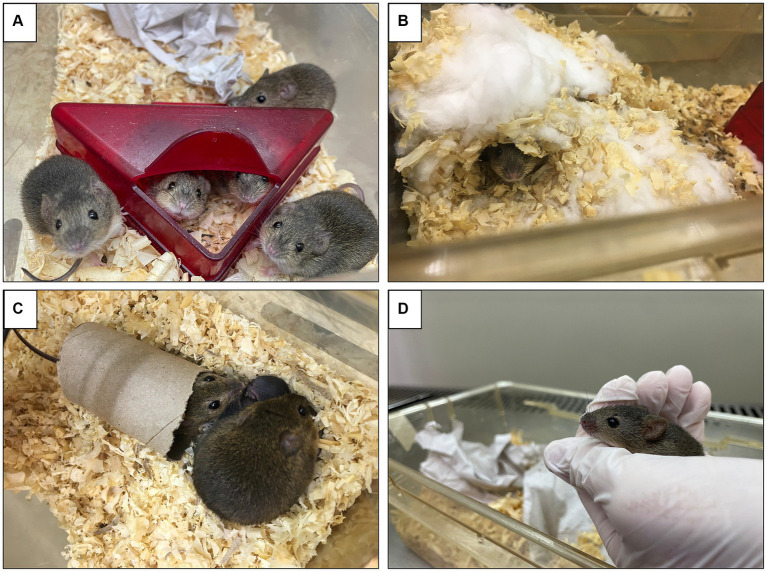
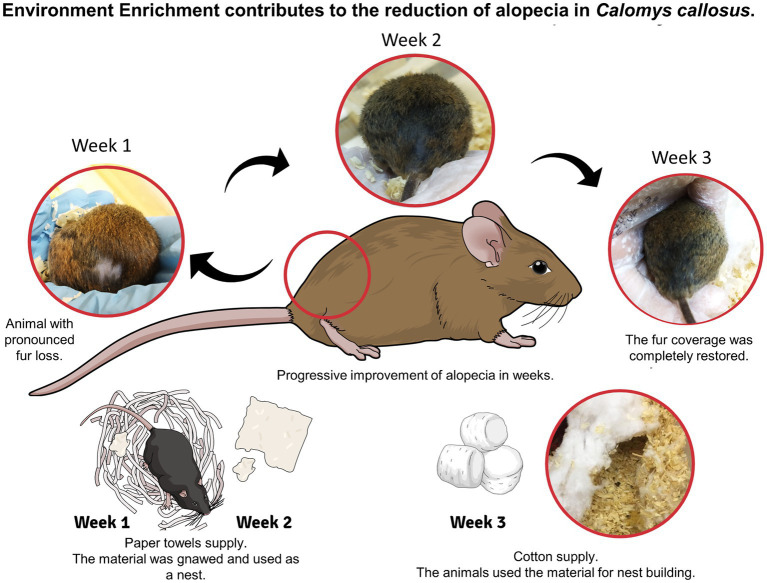
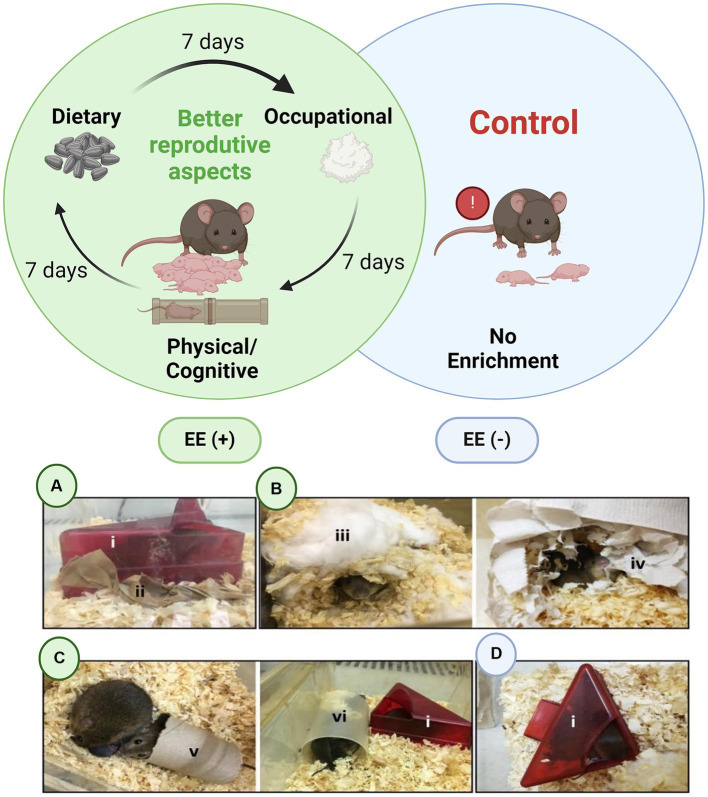
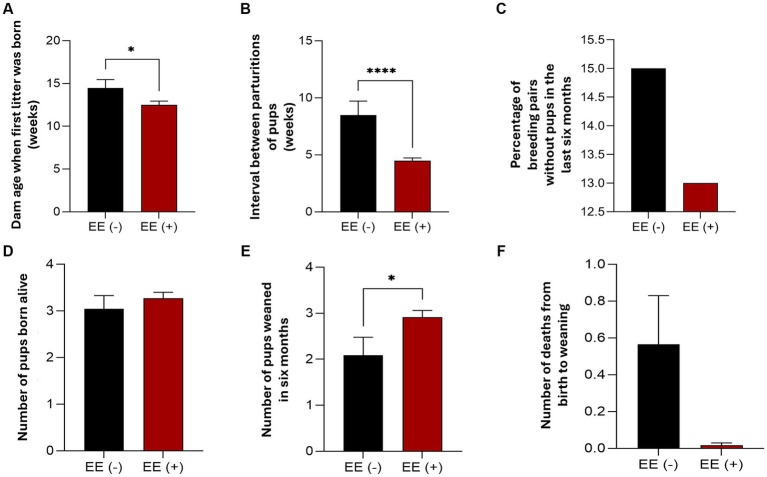
An environmental enrichment protocol is essential for testing experimental models because it upholds animal welfare, aligns with ethical principles in animal experimentation, and reduces the number of animals needed. , a South American rodent from the Cricetidae family, is bred in rodent animal facilities for its ease of handling, longevity, prolificacy, and effectively mimicking diseases like Toxoplasmosis, Leishmaniasis, Chagas, and Schistosomiasis. There are no reports on environmental enrichments for this species or their impact on reproductive parameters. This study aimed to analyze the influence of the Environmental Enrichment Program (EEP) on the reproductive and zootechnical performance of kept in the Rodents Animal Facilities Complex of Universidade Federal de Uberlândia (UFU). Two experimental groups were established: with environmental enrichment EE+ and without environmental enrichment EE-. The materials used in the experimental design were changed weekly and alternated between dietary, occupational, physical/cognitive, and non-enrichment items. After the inclusion of the EEP, an improvement in the reproductive indices of was identified in the EE+ group. These improvements included increased female precocity, a decreased interbirth interval, and a higher number of pairs producing more offspring. The postpartum zootechnical indices were also better, such as the number of animals born alive, improved weaning rates, and a reduced average number of deaths from birth to weaning. After the inclusion of the EEP, the general health status of improved, reducing cases of non-infectious lumbar alopecia. Therefore, EEP allows to express natural reproductive behaviors and improves parental care.
环境丰富方案对于测试实验模型至关重要,因为它维护动物福利,符合动物实验的伦理原则,并减少所需动物数量。(该物种名未给出英文,无法准确翻译)是一种来自仓鼠科的南美啮齿动物,因其易于处理、寿命长、繁殖力强以及能有效模拟弓形虫病、利什曼病、恰加斯病和血吸虫病等疾病,而在啮齿动物饲养设施中繁殖。目前尚无关于该物种环境丰富化及其对生殖参数影响的报道。本研究旨在分析环境丰富计划(EEP)对保存在乌贝兰迪亚联邦大学(UFU)啮齿动物饲养设施综合体内的(该物种名未给出英文,无法准确翻译)的生殖和畜牧学性能的影响。设立了两个实验组:有环境丰富化的EE+组和无环境丰富化的EE-组。实验设计中使用的材料每周更换,并在饮食、职业、身体/认知和非丰富化物品之间交替。引入EEP后,EE+组的(该物种名未给出英文,无法准确翻译)生殖指标有所改善。这些改善包括雌性早熟增加、产仔间隔缩短以及产仔更多的配对数量增加。产后畜牧学指标也更好,例如活产动物数量、断奶率提高以及出生至断奶期间平均死亡数量减少。引入EEP后,(该物种名未给出英文,无法准确翻译)的总体健康状况得到改善,非传染性腰部脱毛病例减少。因此,EEP使(该物种名未给出英文,无法准确翻译)能够表现出自然生殖行为并改善亲代照顾。