Coria-Avila Genaro A, Pfaus James G, Orihuela Agustín, Domínguez-Oliva Adriana, José-Pérez Nancy, Hernández Laura Astrid, Mota-Rojas Daniel
Instituto de Investigaciones Cerebrales, Universidad Veracruzana, Avenida Luis Castelazo S/N, Col. Industrial Ánimas, Xalapa 91190, Mexico.
Department of Psychology and Life Sciences, Charles University, 182 00 Prague, Czech Republic.
Animals (Basel). 2022 Apr 4;12(7):928. doi: 10.3390/ani12070928.
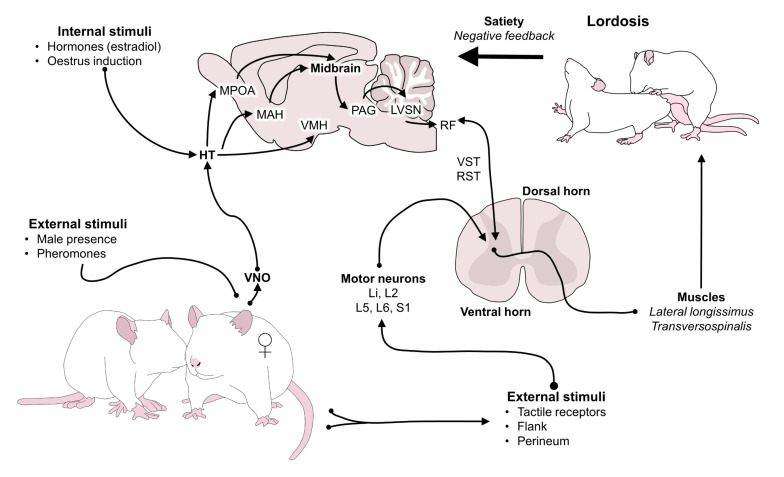
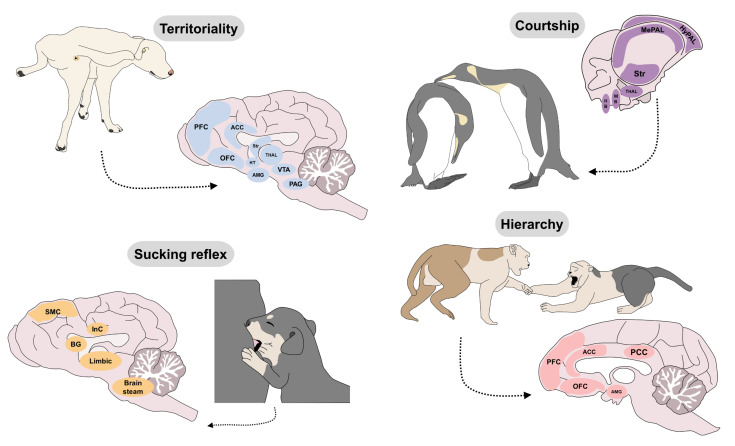
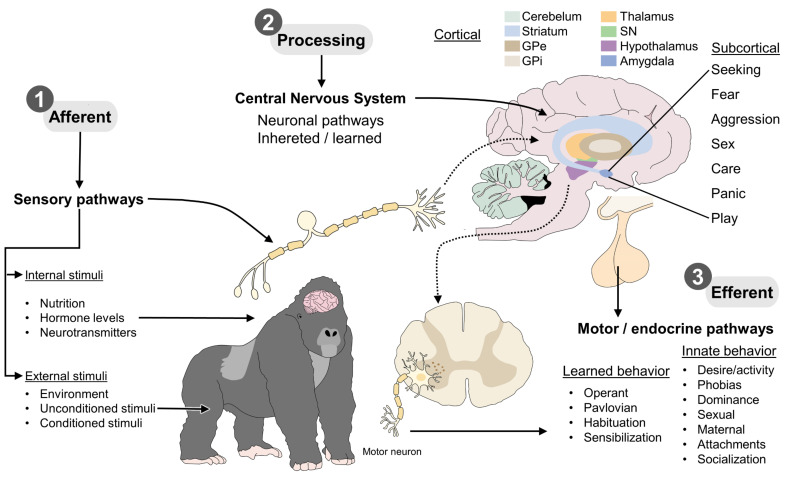
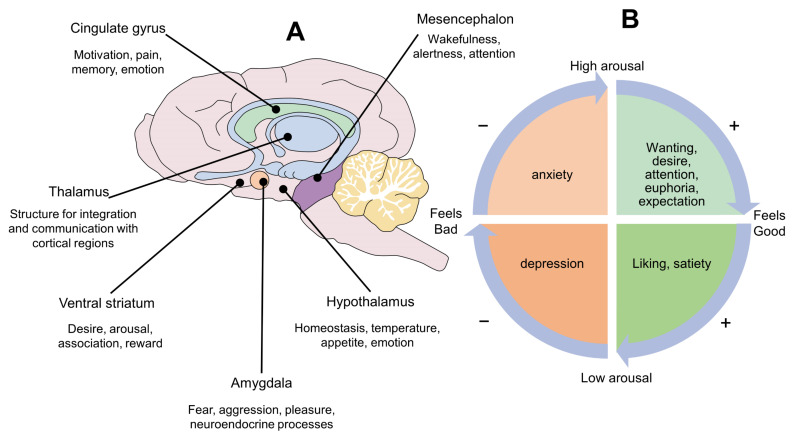
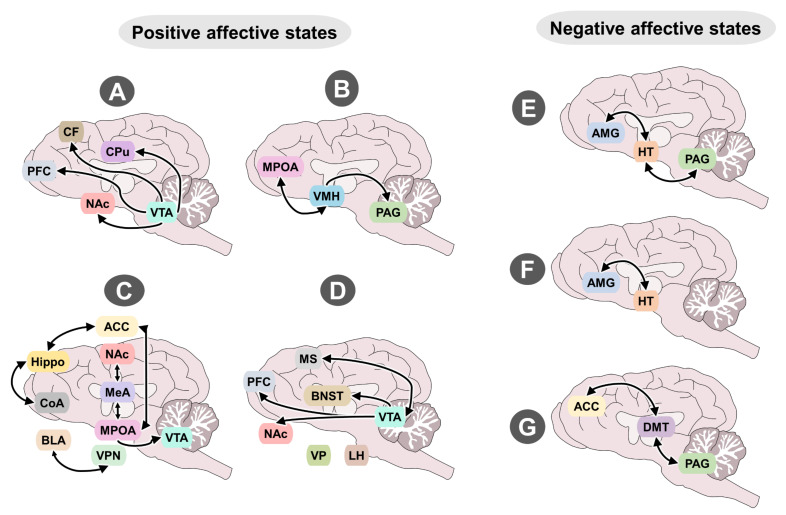
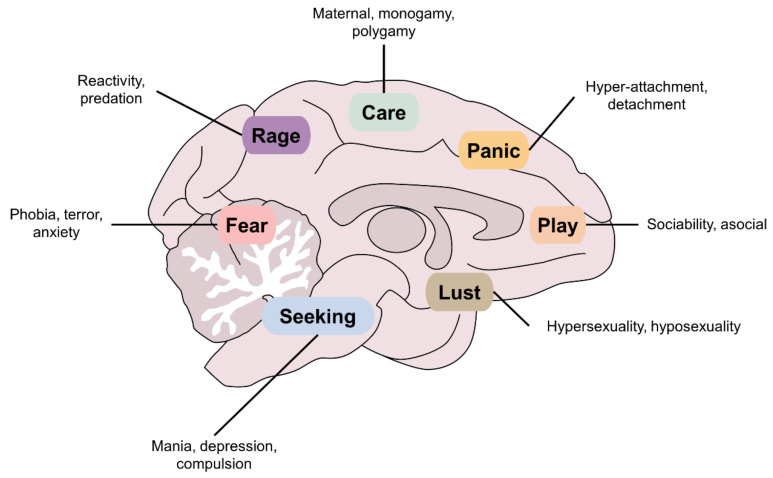
Understanding the foundations of the neurobiology of behavior and well-being can help us better achieve animal welfare. Behavior is the expression of several physiological, endocrine, motor and emotional responses that are coordinated by the central nervous system from the processing of internal and external stimuli. In mammals, seven basic emotional systems have been described that when activated by the right stimuli evoke positive or negative innate responses that evolved to facilitate biological fitness. This review describes the process of how those neurobiological systems can directly influence animal welfare. We also describe examples of the interaction between primary (innate) and secondary (learned) processes that influence behavior.
了解行为与幸福的神经生物学基础有助于我们更好地实现动物福利。行为是由中枢神经系统对内部和外部刺激进行处理后协调产生的多种生理、内分泌、运动和情感反应的表现。在哺乳动物中,已描述了七种基本情绪系统,当受到适当刺激激活时,会引发积极或消极的先天反应,这些反应的进化有助于生物适应性。本综述描述了这些神经生物学系统如何直接影响动物福利的过程。我们还描述了影响行为的初级(先天)和次级(习得)过程之间相互作用的例子。