Chowdhry Bhabesh K, Nair Anagha, Jha Sangam, Banerjee Amrita, Singh Pallavi, Dalai Richie
Neonatology, All India Institute of Medical Sciences, Patna, IND.
Pediatrics, All India Institute of Medical Sciences, Patna, IND.
Cureus. 2024 Aug 29;16(8):e68153. doi: 10.7759/cureus.68153. eCollection 2024 Aug.
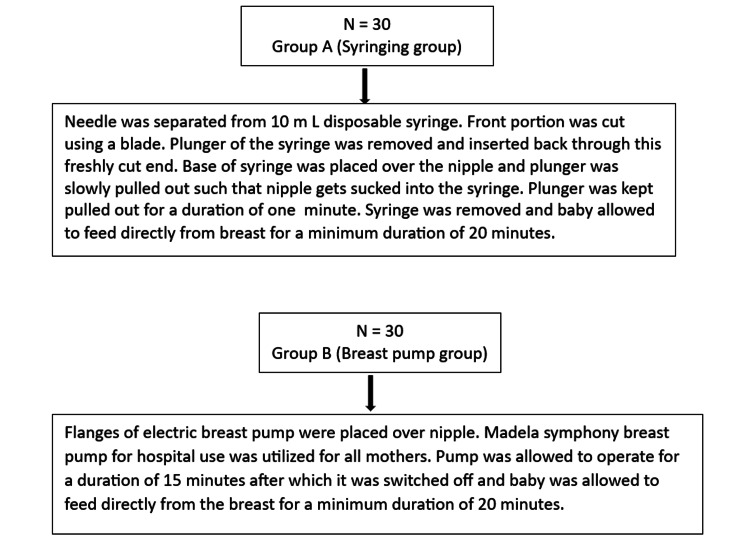
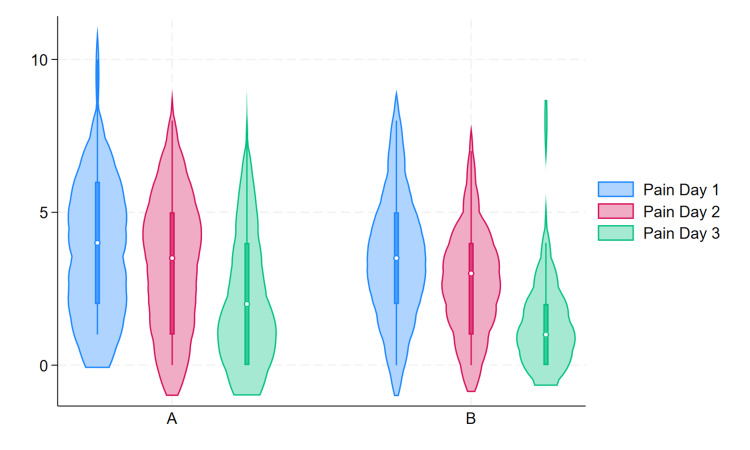
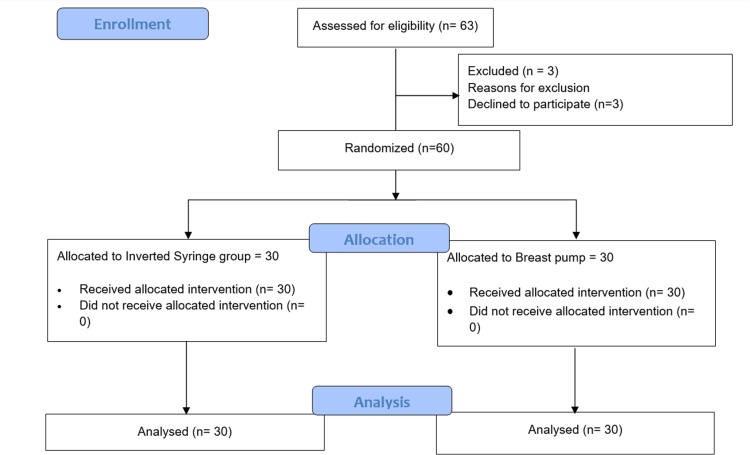
Background Inverted nipple is a commonly encountered impediment to proper attachment and latch establishment. Correction of inversion using a disposable syringe represents the conventional method of management. However, it is understudied, cumbersome, and inconvenient. Using electric breast pump represents a more physiological method to achieve correction of inversion. This open-label, randomized control trial investigated syringing versus electric breast pump both in terms of effectiveness in achieving correction of inversion of nipple and patient satisfaction with the use of the assigned intervention. Objectives The primary objective of this study was to compare breastfeeding success by Day 3 postnatal age (achieving correction of inversion of nipple and establishment of direct breastfeeding) in syringing versus electric breast pump in mothers with inverted or flat nipples. The secondary objective was to compare the two methods for the pain experienced by the mother while using syringing versus an electric breast pump. Methodology/Design This was a single-center, open-label randomized control trial performed at a tertiary care neonatal unit in Eastern India, from December 2022 to September 2023. 60 healthy mothers with inverted nipples were randomly allocated to one of two interventions: Group A (n=30, syringing); or Group B (n=30, electric breast pump). Both groups were compared for the establishment of breastfeeding by Day 3 postnatal age and daily maximum pain scores till Day 3 (visual analogue scale). Multivariable logistic regression was used to look for factors independently associated with establishment of breast feeding by Day 3 postnatal period. Chi square test was used to compare the proportions of different outcomes between the groups. Results The primary outcome of establishment of breastfeeding by Day 3 postnatal period was achieved in 18 (60%) mothers in syringe group vs. 17 (56.67%) in the breast pump group, with no statistically significant difference (p=0.793). In the first two days the pain score differences were not statistically significant, but on Day 3, 28 (93.99%) mothers in the electric breast pump group had no/mild pain compared to 22 (73.33%) mothers in the syringe usage group. This difference was statistically significant (p= 0.038). Conclusion In hospital settings where electric breast pump is easily available, the same may be preferred over inverted syringe technique for achieving establishment of breastfeeding by Day 3 postnatal period with minimal nipple pain in mothers. However, further large scale studies will be required to confirm these findings.
乳头内陷是妨碍正确衔接和建立有效吸吮的常见问题。使用一次性注射器矫正乳头内陷是传统的处理方法。然而,该方法缺乏充分研究,操作繁琐且不便。使用电动吸奶器是一种更符合生理的矫正乳头内陷的方法。本开放标签随机对照试验研究了注射器法与电动吸奶器法在矫正乳头内陷效果及患者对指定干预措施使用满意度方面的差异。
本研究的主要目的是比较注射器法与电动吸奶器法对乳头内陷或扁平乳头母亲产后第3天母乳喂养成功率(实现乳头内陷矫正和直接母乳喂养)的影响。次要目的是比较两种方法在母亲使用注射器与电动吸奶器时所经历的疼痛程度。
方法/设计:这是一项在印度东部一家三级护理新生儿病房进行的单中心、开放标签随机对照试验,时间为2022年12月至2023年9月。60名乳头内陷的健康母亲被随机分配到两种干预措施之一:A组(n = 30,注射器法);或B组(n = 30,电动吸奶器法)。比较两组产后第3天母乳喂养的建立情况以及直至第3天的每日最大疼痛评分(视觉模拟评分)。采用多变量逻辑回归分析寻找与产后第3天母乳喂养建立独立相关的因素。使用卡方检验比较两组不同结局的比例。
注射器组18名(60%)母亲在产后第3天实现了母乳喂养这一主要结局,电动吸奶器组为17名(56.67%),差异无统计学意义(p = 0.793)。前两天疼痛评分差异无统计学意义,但在第3天,电动吸奶器组28名(93.99%)母亲无/轻度疼痛,而注射器使用组为22名(73.33%)母亲。这一差异具有统计学意义(p = 0.038)。
在容易获得电动吸奶器的医院环境中,相较于注射器法,电动吸奶器法可能更有助于产后第3天实现母乳喂养的建立,且母亲乳头疼痛最小。然而,需要进一步的大规模研究来证实这些发现。