Biopharmaceutical Research Center, Korea Basic Science Institute (KBSI), Cheongju, 28119, Republic of Korea.
Korea University of Science and Technology (UST), Daejeon, 34113, Republic of Korea.
Commun Biol. 2024 Sep 30;7(1):1222. doi: 10.1038/s42003-024-06917-9.
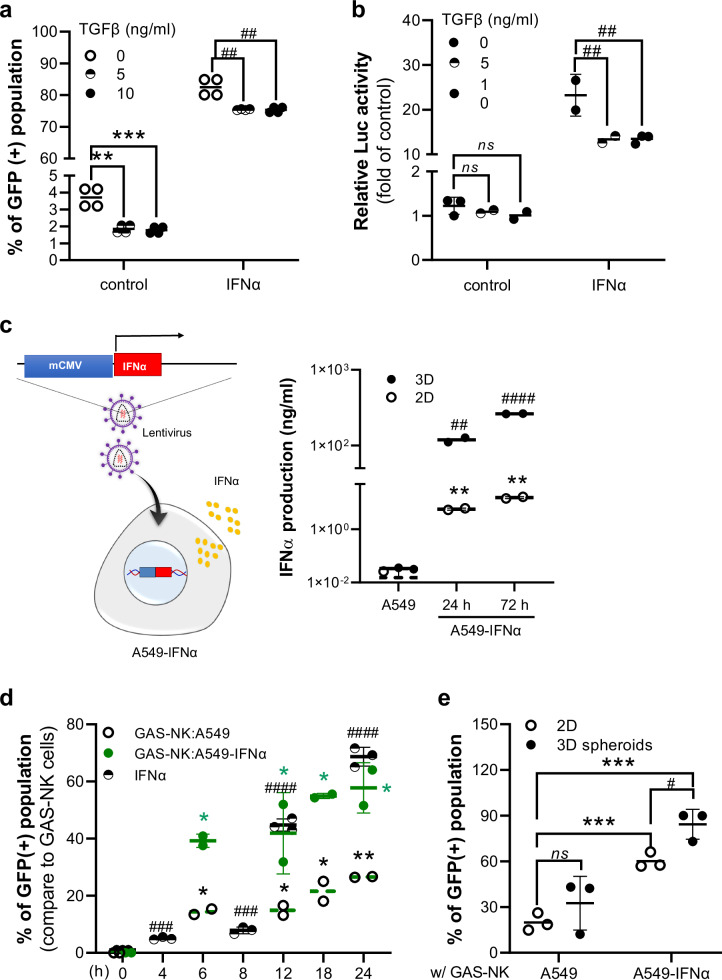
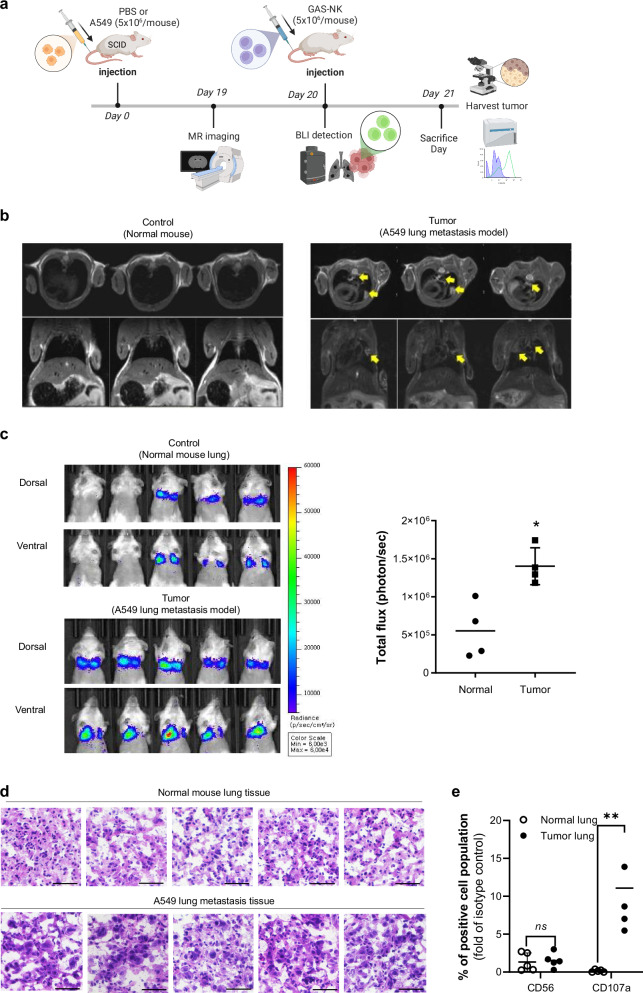
Natural killer (NK) cells play a crucial role in immunotherapy for cancer due to their natural ability to target and destroy cancer cells. However, current methods to visualize NK cells' activity against tumors in live organisms are limited. We introduce an imaging method that non-invasively tracks NK cell activation by cancer cells through the STAT1 protein. To achieve this, we modified NK cells to include a specific genetic sequence that binds to STAT1 when activated. These engineered NK cells (GAS-NK) demonstrate their functionality through various biological tests and analysis. Observations of changes in cancer environments and patient-derived cancer organoid models further confirm the effectiveness of this approach. Our method provides a way to monitor NK cell activity, which could improve the prediction and effectiveness of NK cell-based cancer therapies, contributing to advances in cancer treatment.
自然杀伤 (NK) 细胞因其天然靶向和破坏癌细胞的能力,在癌症的免疫治疗中发挥着关键作用。然而,目前在活体生物中可视化 NK 细胞针对肿瘤活动的方法受到限制。我们介绍了一种成像方法,通过 STAT1 蛋白非侵入性地跟踪 NK 细胞对癌细胞的激活。为此,我们修改了 NK 细胞,使其包含一种特定的遗传序列,当被激活时与 STAT1 结合。这些工程化的 NK 细胞(GAS-NK)通过各种生物学测试和分析证明了它们的功能。对癌症环境变化和患者来源的癌症类器官模型的观察进一步证实了该方法的有效性。我们的方法提供了一种监测 NK 细胞活性的方法,这可以提高基于 NK 细胞的癌症治疗的预测和效果,有助于癌症治疗的进展。