Corporal Michael J. Crescenz Veterans Affairs Medical Center, Philadelphia, PA, USA.
Department of Dermatology, School of Medicine, University of Pennsylvania, 3400 Civic Center Boulevard, Philadelphia, PA, 19104, USA.
Cell Commun Signal. 2024 Sep 30;22(1):461. doi: 10.1186/s12964-024-01839-9.
Ultraviolet-B (UVB) light induces dermal inflammation, although it is mostly absorbed in the epidermis. Recent reports suggest extracellular vesicles (EVs) act as a mediator of photodamage signaling. Melatonin is reported to be a protective factor against UV-induced damage. We hypothesized that EVs derived from UVB-irradiated keratinocytes might trigger proinflammatory responses in dermal cells and tested whether melatonin can ameliorate UVB-induced inflammation.
We used UVB-irradiated HaCaT cells, primary keratinocytes and STING knock-out mice to model production of EVs under photodamaging conditions and performed immunoblotting and ELISA to measure their effect on dermal macrophages.
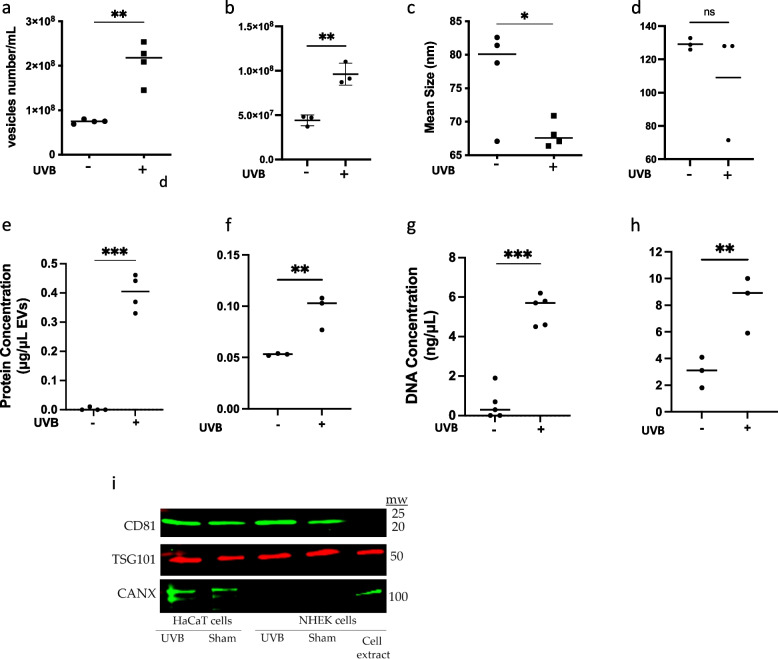
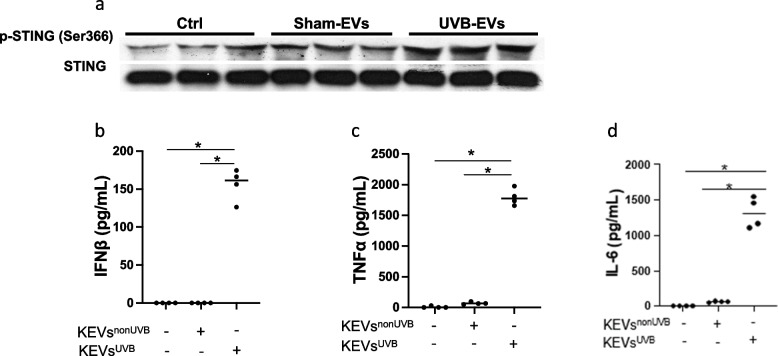
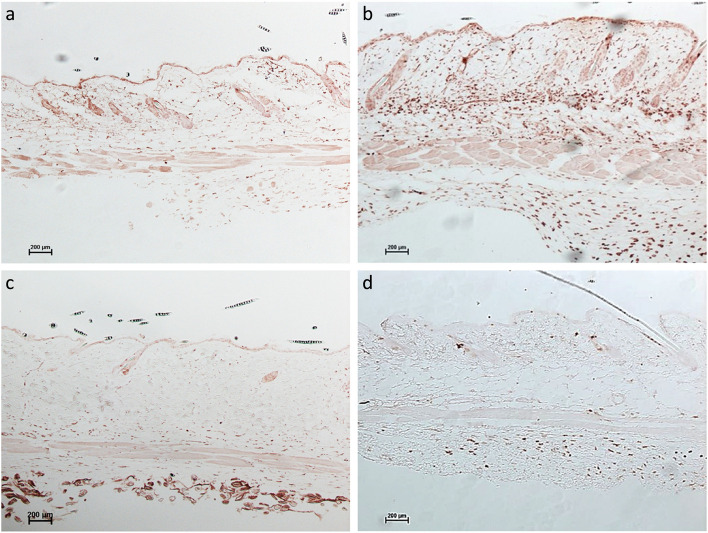
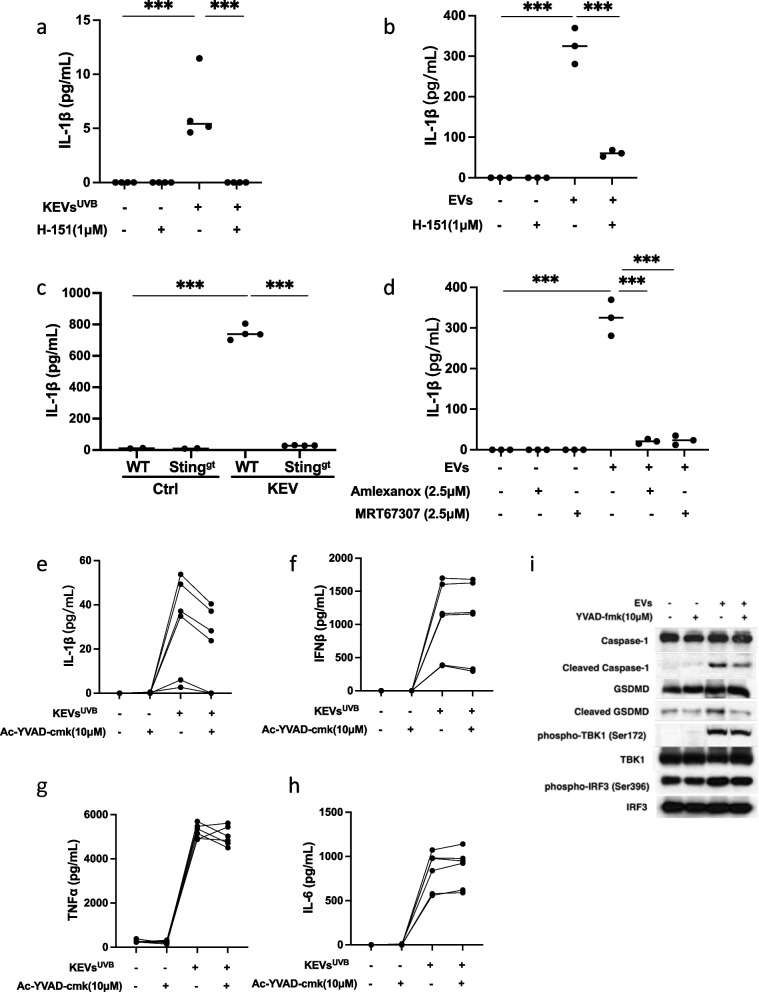
UVB-irradiated keratinocytes produce an increased number of EVs that contain higher concentrations of DNA and protein compared with controls. KC-derived EVs (KEVs) induced a STING- and inflammasome-mediated proinflammatory response in macrophages in vitro, and a pronounced inflammatory infiltrate in mouse dermis in vivo. Melatonin ameliorated KEVs inflammatory effect both in vitro and in vivo.
This data suggests EVs are mediators in a crosstalk that takes place between keratinocytes and their neighboring cells as a result of photodamage. Further studies exploring EVs induced by damaging doses of UVB, and their impact on other cells will provide insight into photodamage and may help develop targeted therapeutic approaches.
紫外线-B(UVB)光会引起皮肤炎症,尽管它主要被表皮吸收。最近的报告表明,细胞外囊泡(EVs)是光损伤信号转导的介质。褪黑素被报道是对抗 UV 诱导损伤的保护因素。我们假设来自 UVB 照射的角质形成细胞的 EVs 可能会引发真皮细胞的促炎反应,并测试褪黑素是否可以改善 UVB 诱导的炎症。
我们使用 UVB 照射的 HaCaT 细胞、原代角质形成细胞和 STING 敲除小鼠来模拟光损伤条件下 EVs 的产生,并通过免疫印迹和 ELISA 来测量它们对真皮巨噬细胞的影响。
与对照相比,UVB 照射的角质形成细胞产生了更多数量的 EVs,其中包含更高浓度的 DNA 和蛋白质。KC 衍生的 EVs(KEVs)在体外诱导了 STING 和炎性小体介导的巨噬细胞促炎反应,并在体内诱导了明显的炎症浸润。褪黑素在体外和体内均改善了 KEVs 的炎症作用。
这些数据表明,EVs 是角质形成细胞与其相邻细胞之间因光损伤而发生的串扰的介质。进一步研究探索由破坏性剂量的 UVB 诱导的 EVs 及其对其他细胞的影响,将深入了解光损伤,并可能有助于开发靶向治疗方法。