Department of Gastroenterology, The First Affiliated Hospital of Guangxi Medical University, Nanning 530021, Guangxi Zhuang Autonomous Region, China.
World J Gastroenterol. 2024 Sep 21;30(35):3996-4010. doi: 10.3748/wjg.v30.i35.3996.
The incidence of hypertriglyceridemia (HTG)-induced acute pancreatitis (AP) is steadily increasing in China, becoming the second leading cause of AP. Clinical complications and outcomes associated with HTG-AP are generally more severe than those seen in AP caused by other etiologies. HTG-AP is closely linked to metabolic dysfunction and frequently coexists with metabolic syndrome or its components. However, the impact of metabolic syndrome components on HTG-AP clinical outcomes remains unclear.
To investigate the impact of metabolic syndrome component burden on clinical outcomes in HTG-AP.
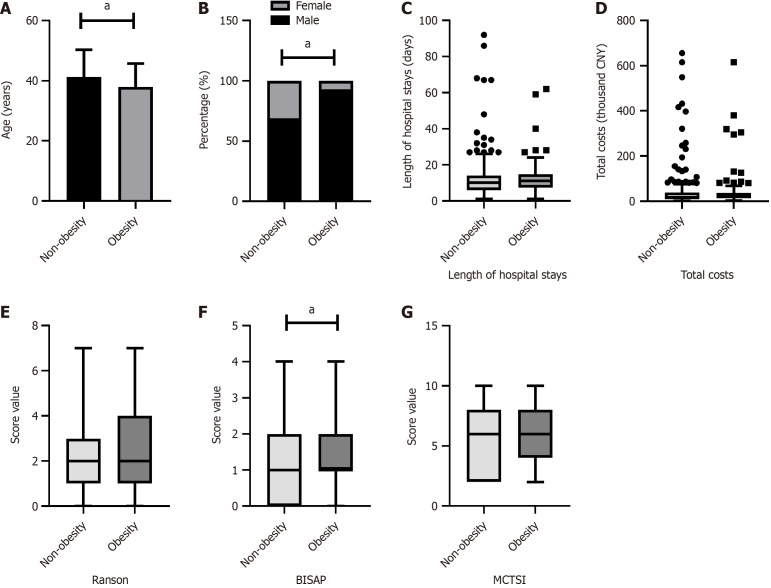
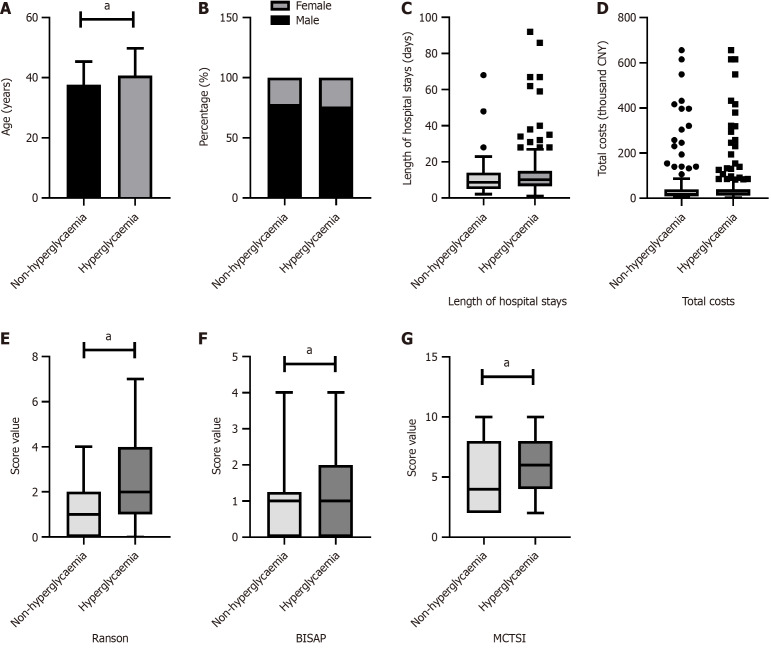
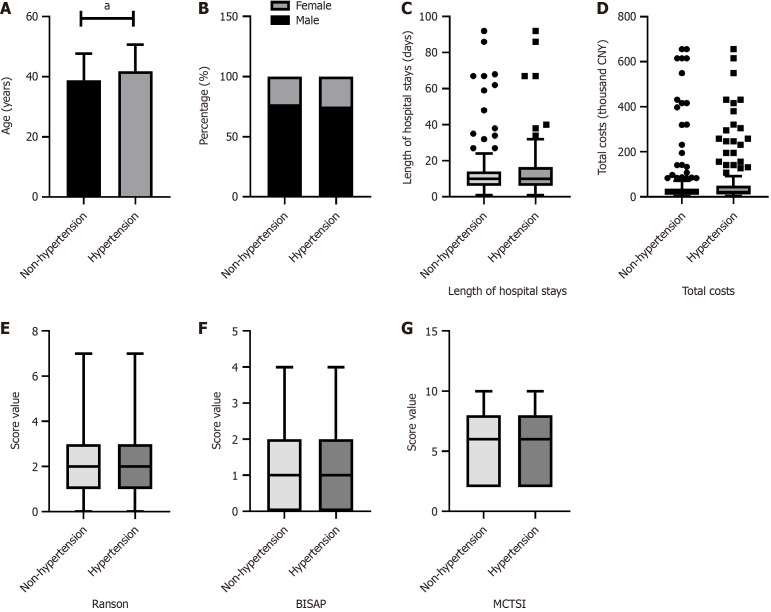
In this retrospective study of 255 patients diagnosed with HTG-AP at the First Affiliated Hospital of Guangxi Medical University, we collected data on patient demographics, clinical scores, complications, and clinical outcomes. Subsequently, we analyzed the influence of the presence and number of individual metabolic syndrome components, including obesity, hyperglycemia, hypertension, and low high-density lipoprotein cholesterol (HDL-C), on the aforementioned parameters in HTG-AP patients.
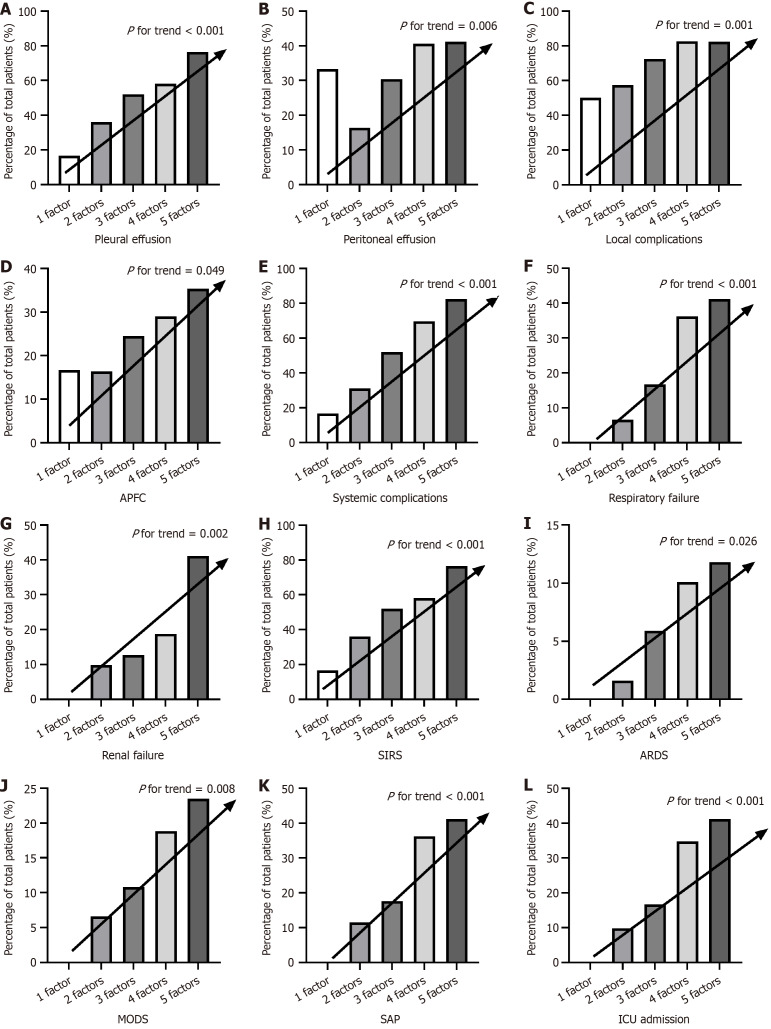
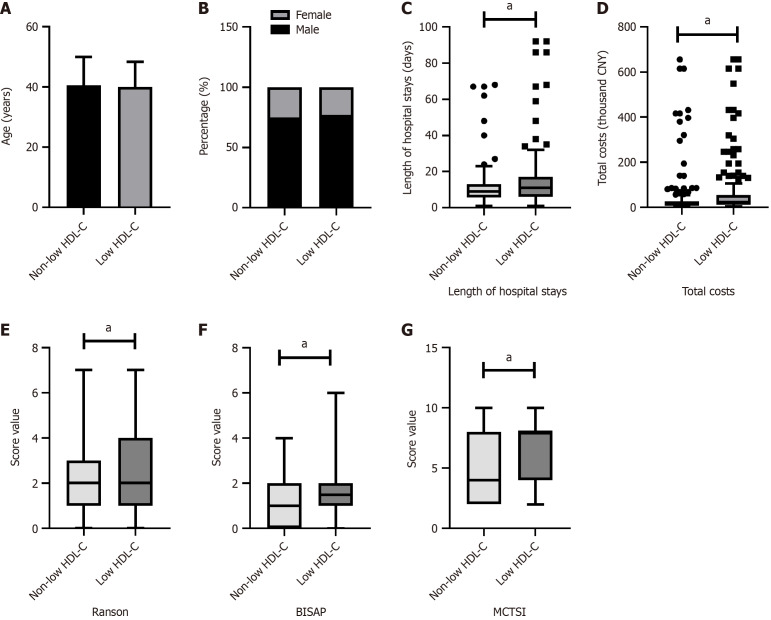
This study found that metabolic syndrome components were associated with an increased risk of various complications in HTG-AP, with low HDL-C being the most significant risk factor for clinical outcomes. The risk of complications increased with the number of metabolic syndrome components. Adjusted for age and sex, patients with high-component metabolic syndrome had significantly higher risks of renal failure [odds ratio (OR) = 3.02, 95%CI: 1.12-8.11)], SAP (OR = 5.05, 95%CI: 2.04-12.49), and intensive care unit admission (OR = 6.41, 95%CI: 2.42-16.97) compared to those without metabolic syndrome.
The coexistence of multiple metabolic syndrome components can synergistically worsen the clinical course of HTG-AP, making it crucial to monitor these components for effective disease management.
在中国,高甘油三酯血症(HTG)诱发的急性胰腺炎(AP)的发病率稳步上升,已成为 AP 的第二大主要病因。与由其他病因引起的 AP 相比,HTG-AP 相关的临床并发症和结局通常更为严重。HTG-AP 与代谢功能障碍密切相关,常与代谢综合征或其成分并存。然而,代谢综合征成分对 HTG-AP 临床结局的影响尚不清楚。
探讨代谢综合征成分负担对 HTG-AP 临床结局的影响。
本研究回顾性分析了 255 例在广西医科大学第一附属医院确诊为 HTG-AP 的患者,收集了患者的人口统计学、临床评分、并发症和临床结局数据。随后,我们分析了肥胖、高血糖、高血压和低高密度脂蛋白胆固醇(HDL-C)等单个代谢综合征成分的存在和数量对 HTG-AP 患者上述参数的影响。
本研究发现,代谢综合征成分与 HTG-AP 中各种并发症的发生风险增加相关,其中低 HDL-C 是临床结局的最显著危险因素。随着代谢综合征成分数量的增加,并发症的发生风险也随之增加。在校正年龄和性别后,高成分代谢综合征患者发生肾衰竭(比值比 [OR] = 3.02,95%可信区间:1.12-8.11)、SAP(OR = 5.05,95%可信区间:2.04-12.49)和入住重症监护病房(OR = 6.41,95%可信区间:2.42-16.97)的风险显著高于无代谢综合征的患者。
多种代谢综合征成分的共存可能协同恶化 HTG-AP 的临床病程,因此监测这些成分对于有效的疾病管理至关重要。