Liu Yifan, Zhao Chenxi, Zhang Rong, Pang Yilin, Li Linquan, Feng Shiqing
Department of Orthopaedics, Qilu Hospital of Shandong University, Shandong University Centre for Orthopaedics, Advanced Medical Research Institute, Cheeloo College of Medicine, Shandong University, 107 West Wenhua Road, Lixia District, Jinan, 250012, Shandong, China.
Institute of Medical Sciences, The Second Hospital of Shandong University, Shandong University Center for Orthopaedics, Cheeloo College of Medicine, Shandong University, Jinan, 250033, Shandong, China.
Stem Cell Res Ther. 2024 Oct 1;15(1):343. doi: 10.1186/s13287-024-03914-x.
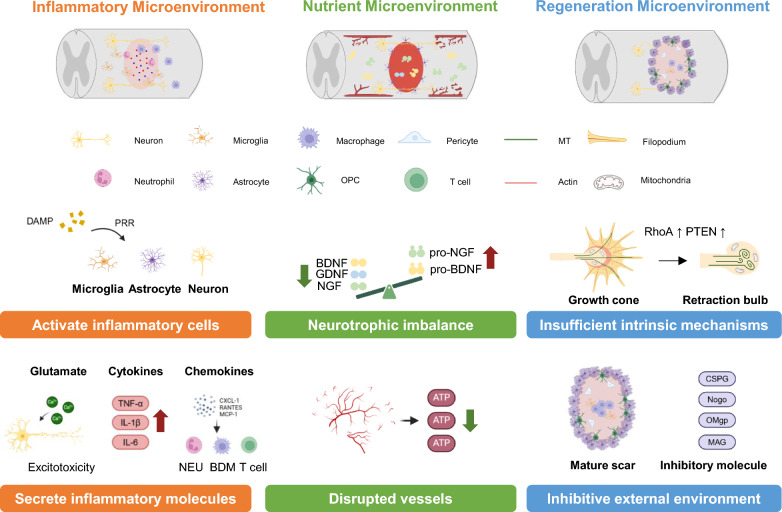
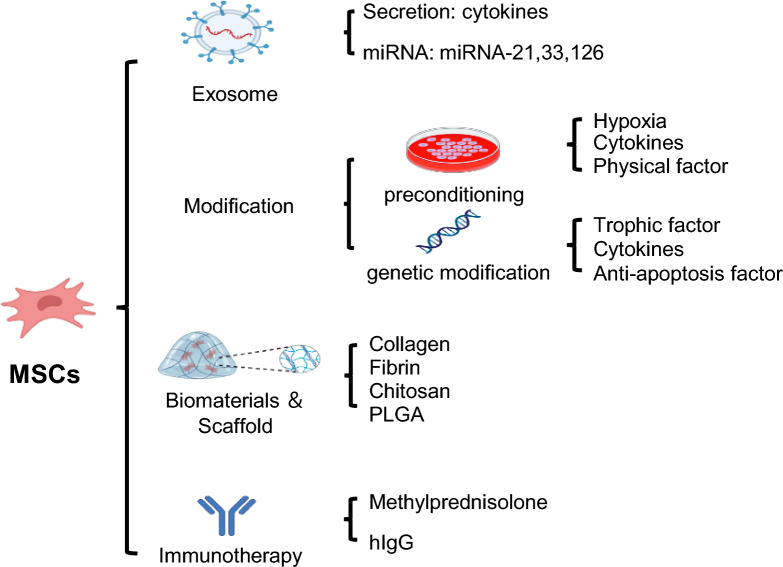
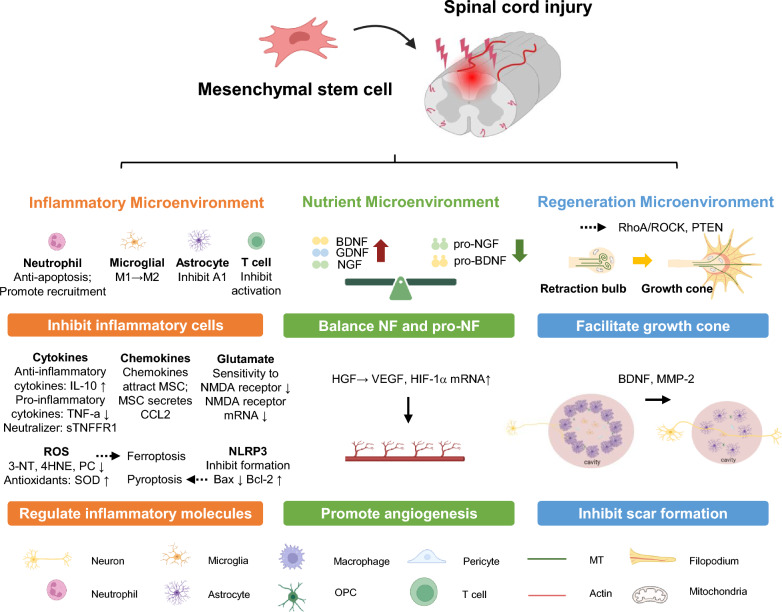
Spinal cord injury (SCI) results in significant neural damage and inhibition of axonal regeneration due to an imbalanced microenvironment. Extensive evidence supports the efficacy of mesenchymal stem cell (MSC) transplantation as a therapeutic approach for SCI. This review aims to present an overview of MSC regulation on the imbalanced microenvironment following SCI, specifically focusing on inflammation, neurotrophy and axonal regeneration. The application, limitations and future prospects of MSC transplantation are discussed as well. Generally, a comprehensive perspective is provided for the clinical translation of MSC transplantation for SCI.
脊髓损伤(SCI)会导致严重的神经损伤,并由于微环境失衡而抑制轴突再生。大量证据支持间充质干细胞(MSC)移植作为SCI治疗方法的有效性。本综述旨在概述脊髓损伤后间充质干细胞对失衡微环境的调节作用,特别关注炎症、神经营养和轴突再生。还讨论了间充质干细胞移植的应用、局限性和未来前景。总体而言,为脊髓损伤间充质干细胞移植的临床转化提供了一个全面的视角。