International Joint Research Centre on Purinergic Signalling/School of Health and Rehabilitation, Chengdu University of Traditional Chinese Medicine, Chengdu, China.
Department of Forensic Analytical Toxicology, School of Forensic Medicine, China Medical University, Shenyang, China.
Signal Transduct Target Ther. 2023 Oct 13;8(1):396. doi: 10.1038/s41392-023-01628-9.
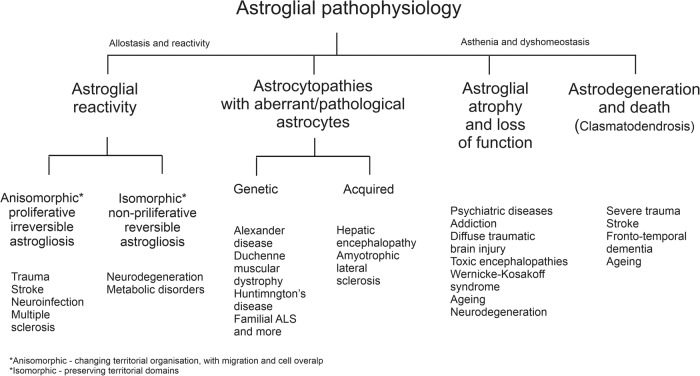
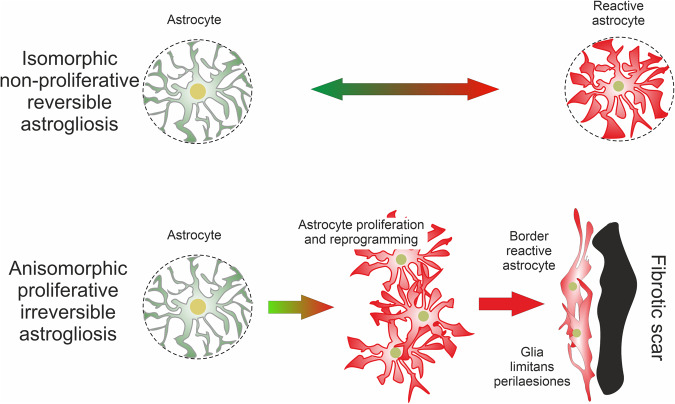
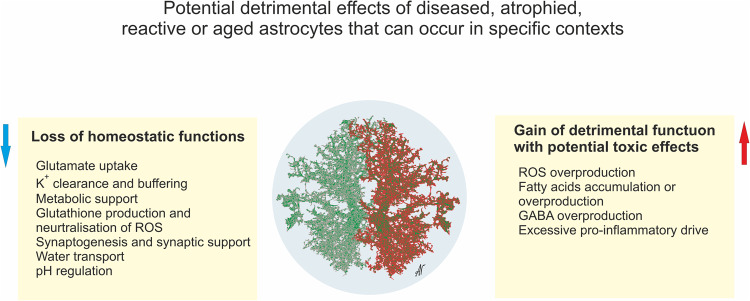
Astroglia are a broad class of neural parenchymal cells primarily dedicated to homoeostasis and defence of the central nervous system (CNS). Astroglia contribute to the pathophysiology of all neurological and neuropsychiatric disorders in ways that can be either beneficial or detrimental to disorder outcome. Pathophysiological changes in astroglia can be primary or secondary and can result in gain or loss of functions. Astroglia respond to external, non-cell autonomous signals associated with any form of CNS pathology by undergoing complex and variable changes in their structure, molecular expression, and function. In addition, internally driven, cell autonomous changes of astroglial innate properties can lead to CNS pathologies. Astroglial pathophysiology is complex, with different pathophysiological cell states and cell phenotypes that are context-specific and vary with disorder, disorder-stage, comorbidities, age, and sex. Here, we classify astroglial pathophysiology into (i) reactive astrogliosis, (ii) astroglial atrophy with loss of function, (iii) astroglial degeneration and death, and (iv) astrocytopathies characterised by aberrant forms that drive disease. We review astroglial pathophysiology across the spectrum of human CNS diseases and disorders, including neurotrauma, stroke, neuroinfection, autoimmune attack and epilepsy, as well as neurodevelopmental, neurodegenerative, metabolic and neuropsychiatric disorders. Characterising cellular and molecular mechanisms of astroglial pathophysiology represents a new frontier to identify novel therapeutic strategies.
星形胶质细胞是一类广泛的神经实质细胞,主要致力于中枢神经系统 (CNS) 的稳态和防御。星形胶质细胞以对疾病结果有益或有害的方式参与所有神经和神经精神疾病的病理生理学。星形胶质细胞的病理生理变化可以是原发性的,也可以是继发性的,可以导致功能的获得或丧失。星形胶质细胞通过其结构、分子表达和功能的复杂和可变变化,对与 CNS 病理学相关的外部、非细胞自主信号做出反应。此外,星形胶质细胞内在固有特性的内在驱动、细胞自主变化也会导致 CNS 病理学。星形胶质细胞的病理生理学是复杂的,具有不同的病理生理细胞状态和细胞表型,这些状态和表型是特定于上下文的,并随疾病、疾病阶段、合并症、年龄和性别而变化。在这里,我们将星形胶质细胞的病理生理学分为 (i) 反应性星形胶质细胞增生,(ii) 功能丧失的星形胶质细胞萎缩,(iii) 星形胶质细胞变性和死亡,以及 (iv) 以异常形式驱动疾病的星形胶质细胞病。我们综述了星形胶质细胞病理生理学在人类中枢神经系统疾病和障碍中的广泛表现,包括神经创伤、中风、神经感染、自身免疫攻击和癫痫,以及神经发育、神经退行性、代谢和神经精神障碍。表征星形胶质细胞病理生理学的细胞和分子机制代表了一个新的前沿,以确定新的治疗策略。