Hong Hea Jin, Zhang Antonia L, Conn Adam B, Blaha Gregor, O'Leary Seán E
Department of Biochemistry, University of California Riverside, Riverside, CA 92521, USA.
Center for RNA Biology and Medicine, University of California Riverside, Riverside, CA 92521, USA.
Sci Adv. 2024 Oct 4;10(40):eadm9801. doi: 10.1126/sciadv.adm9801. Epub 2024 Oct 2.
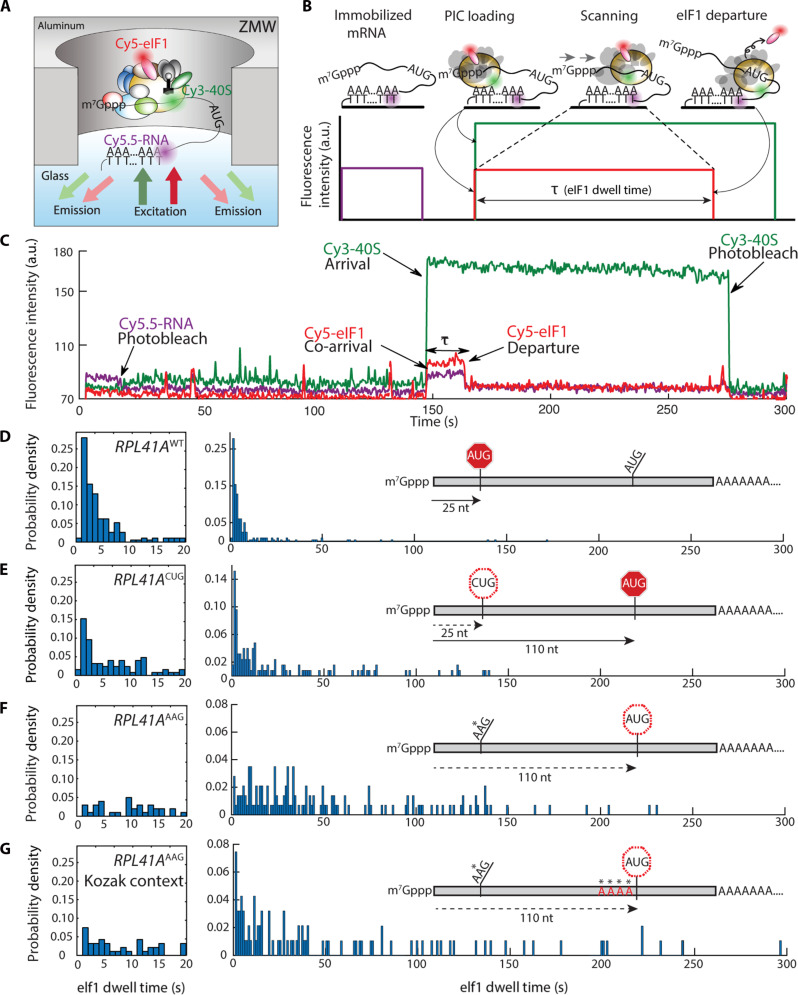
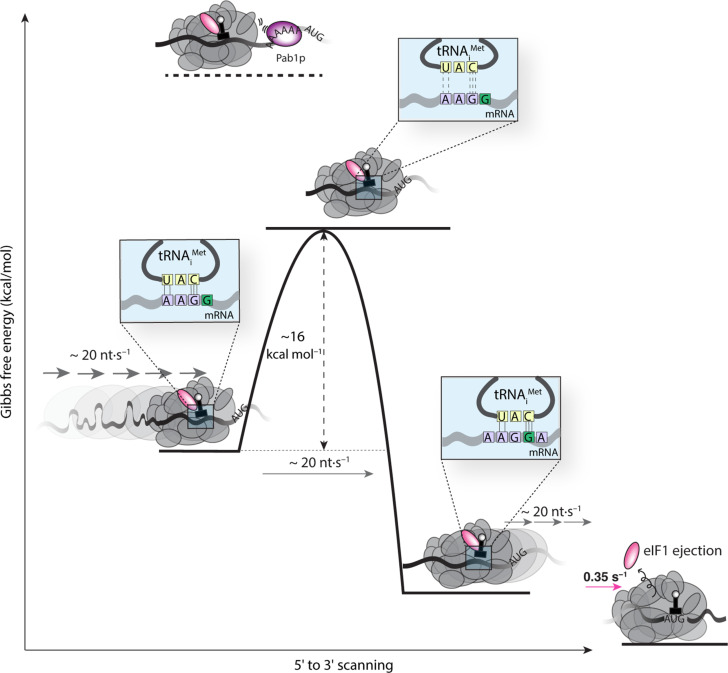
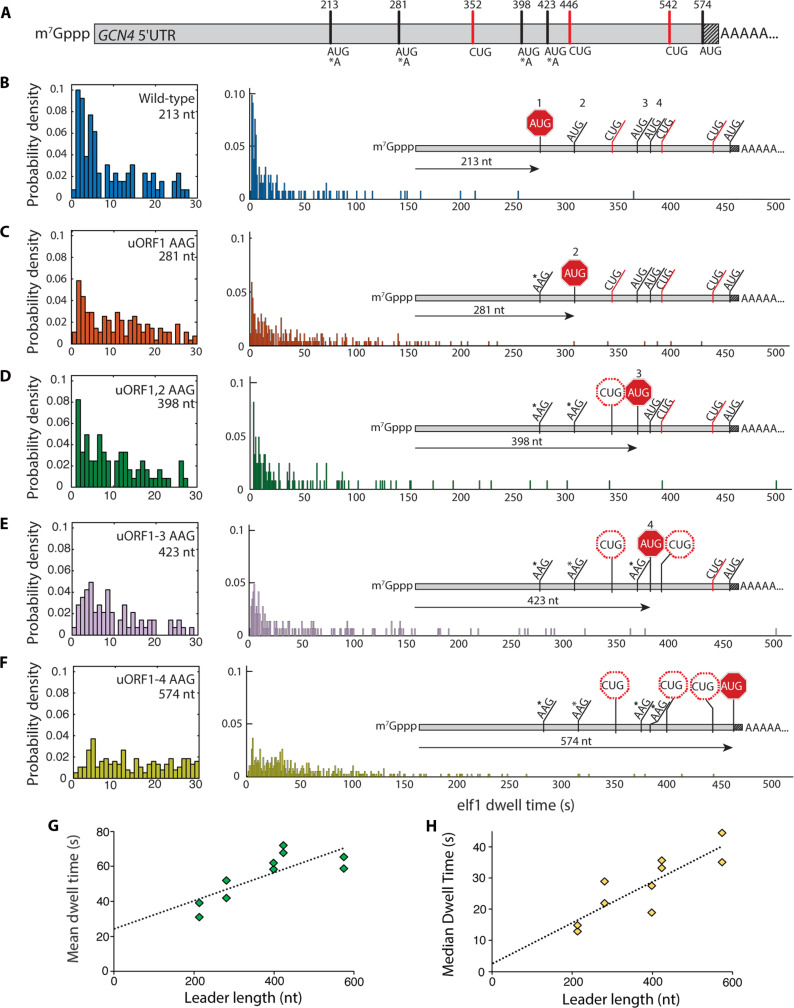
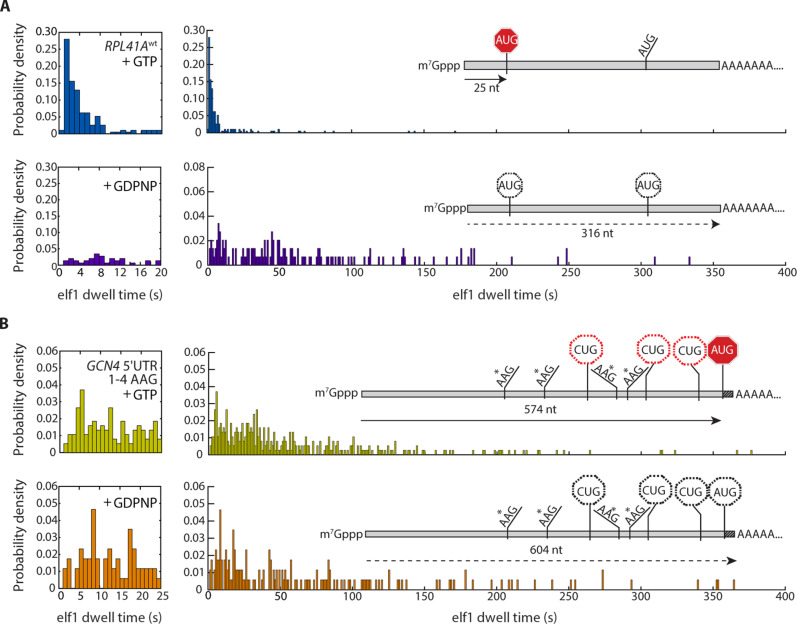
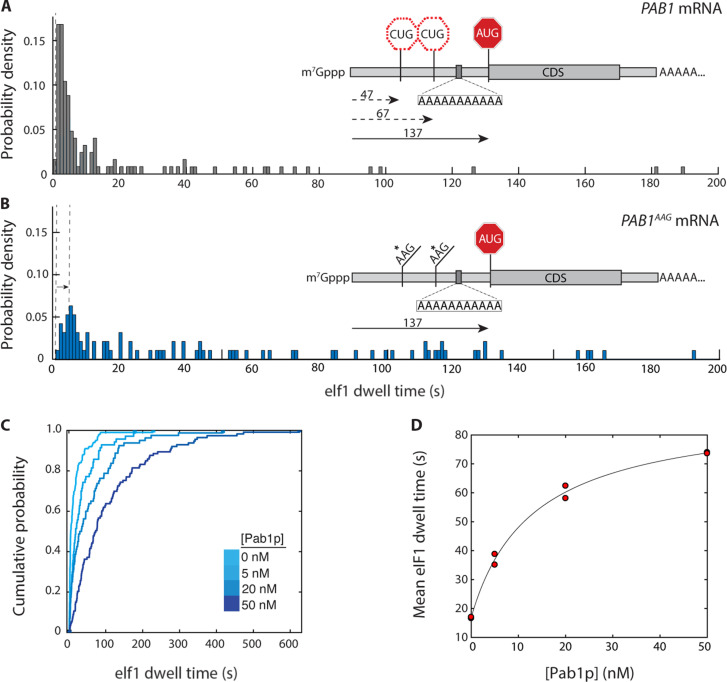
How eukaryotic ribosomes traverse messenger RNA (mRNA) leader sequences to search for protein-synthesis start sites remains one of the most mysterious aspects of translation and its regulation. While the search process is conventionally described by a linear "scanning" model, its exquisitely dynamic nature has restricted detailed mechanistic study. Here, we observed single ribosomal scanning complexes in real time, finding that they scan diverse mRNA leaders at a rate of 10 to 20 nt s. We show that specific binding of a protein to its mRNA leader sequence substantially arrests scanning. Conversely, impairing scanning-complex guanosine 5'-triphosphate hydrolysis results in native start-site bypass. Our results illustrate an mRNA-centric, kinetically controlled regulatory model where the ribosomal pre-initiation complex amplifies a nuanced energetic landscape to regulate scanning and start-site selection fidelity.
真核生物核糖体如何穿越信使核糖核酸(mRNA)前导序列以寻找蛋白质合成起始位点,仍然是翻译及其调控中最神秘的方面之一。虽然搜索过程通常用线性“扫描”模型来描述,但其极其动态的性质限制了详细的机制研究。在这里,我们实时观察单个核糖体扫描复合物,发现它们以每秒10至20个核苷酸的速度扫描不同的mRNA前导序列。我们表明,一种蛋白质与其mRNA前导序列的特异性结合会显著阻止扫描。相反,损害扫描复合物的鸟苷5'-三磷酸水解会导致天然起始位点旁路。我们的结果说明了一种以mRNA为中心、动力学控制的调控模型,其中核糖体预起始复合物放大了一个细微的能量景观,以调节扫描和起始位点选择的保真度。