Skov Cecilie Dollerup, Lindberg-Larsen Martin, Wiil Uffe Kock, Varnum Claus, Schmal Hagen, Jensen Charlotte Myhre, Holsgaard-Larsen Anders
Department of Orthopedic Surgery and Traumatology, Odense University Hospital, Odense C, Denmark.
Department of Clinical Research, University of Southern Denmark, Odense C, Denmark.
BMC Musculoskelet Disord. 2024 Oct 2;25(1):778. doi: 10.1186/s12891-024-07878-0.
Evidence on how to improve daily physical activity (PA) levels following total knee arthroplasty (TKA) or medial uni-compartmental knee arthroplasty (mUKA) by motivational feedback is lacking. Moreover, it is unknown whether a focus on increased PA after discharge from the hospital improves rehabilitation, physical function, and quality of life. The aim of this randomized controlled trial (RCT) nested in a prospective cohort is (a) to investigate whether PA, physical function, and quality of life following knee replacement can be increased using an activity monitoring device including motivational feedback via a patient app in comparison with activity monitoring without feedback (care-as-usual), and (b) to investigate the potential predictive value of PA level prior to knee replacement for the length of stay, return to work, and quality of life.
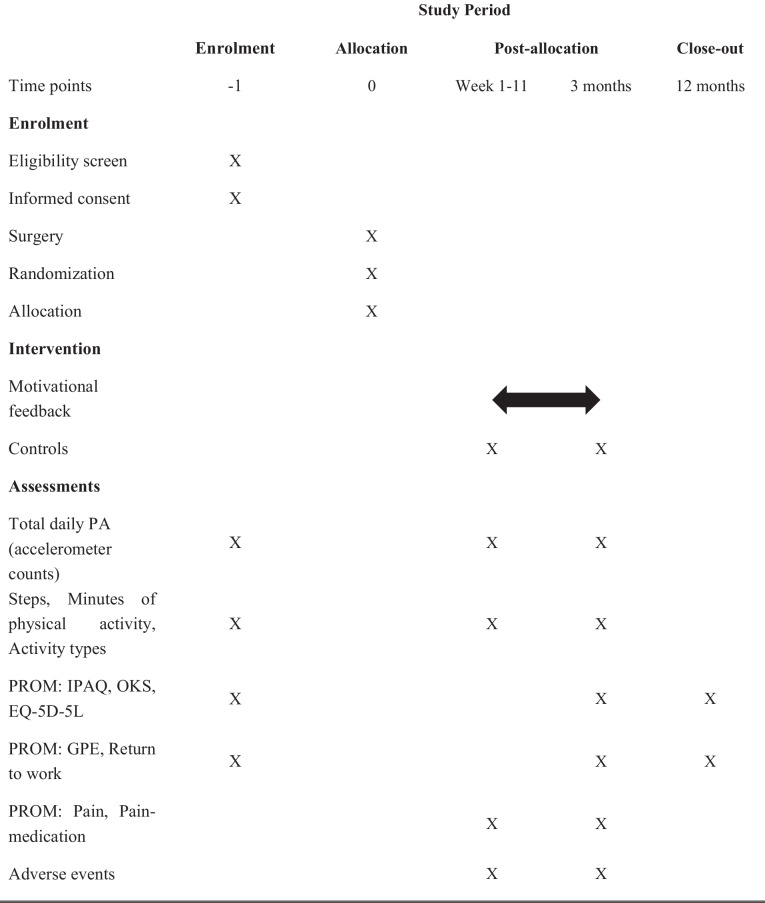
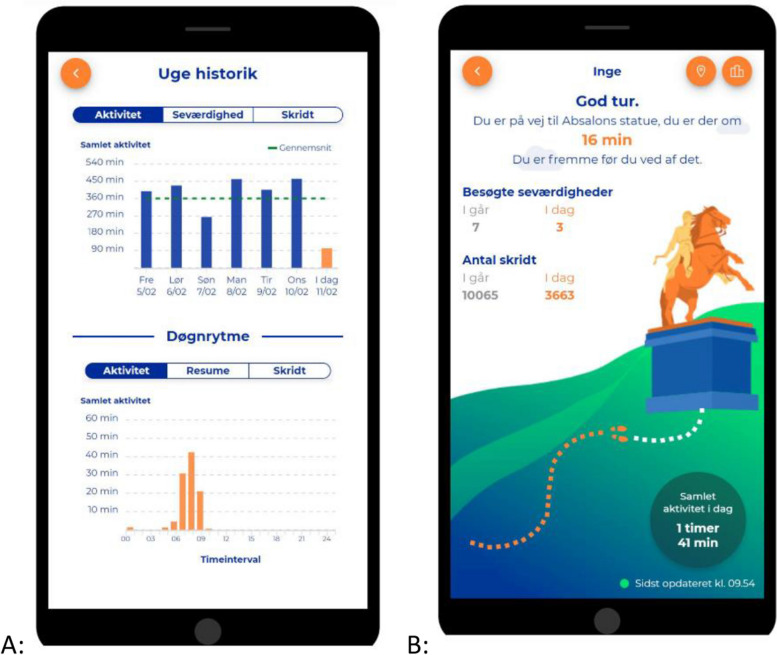
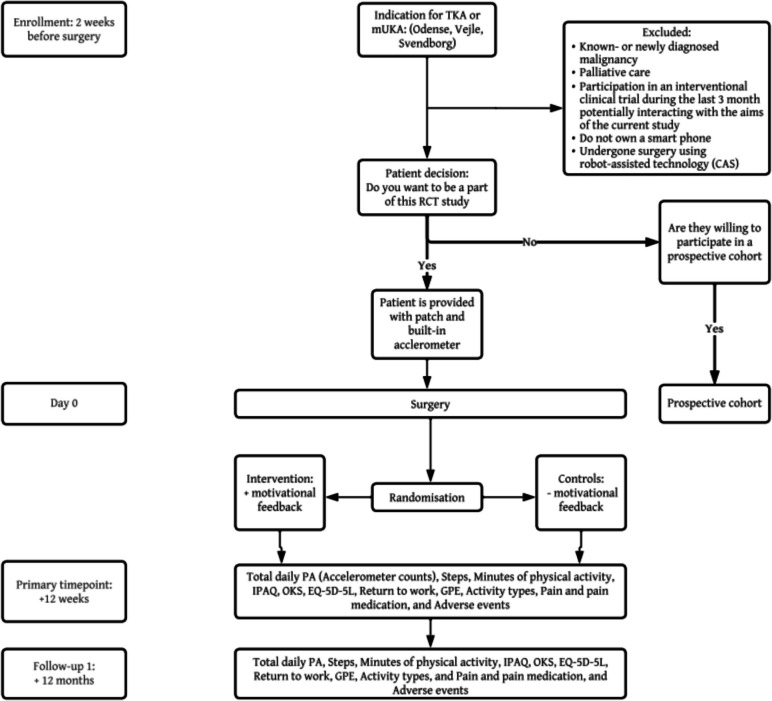
The study is designed as a multicenter, parallel-group, superiority RCT with balanced randomization (1:1) and blinded outcome assessments. One hundred and fifty patients scheduled for knee replacement (TKA or mUKA) will be recruited through Odense University Hospital, Denmark, Vejle Hospital, Denmark and Herlev/Gentofte Sygehus, Denmark. Patients will be randomized to either 12 weeks of activity monitoring and motivational feedback via a patient app by gamification or 'care-as-usual,' including activity monitoring without motivational feedback. The primary outcome is the between-group change score from baseline to 12-week follow-up of cumulative daily accelerometer counts, which is a valid proxy for average objectively assessed daily PA.
Improving PA through motivational feedback following knee replacement surgery might improve post-surgical function, health-related quality of life, and participation in everyday life.
ClinicalTrials.gov, ID: NCT06005623. Registered on 2023-08-22.
Recruiting.
缺乏关于如何通过动机性反馈来提高全膝关节置换术(TKA)或内侧单髁膝关节置换术(mUKA)后日常身体活动(PA)水平的证据。此外,尚不清楚出院后关注增加身体活动是否能改善康复、身体功能和生活质量。这项嵌套在前瞻性队列中的随机对照试验(RCT)的目的是:(a)研究与无反馈的活动监测(常规护理)相比,使用包括通过患者应用程序提供动机性反馈的活动监测设备,是否能提高膝关节置换术后的身体活动、身体功能和生活质量;(b)研究膝关节置换术前身体活动水平对住院时间、恢复工作情况和生活质量的潜在预测价值。
该研究设计为一项多中心、平行组、优效性随机对照试验,采用均衡随机化(1:1)和盲法结局评估。将通过丹麦欧登塞大学医院、丹麦韦勒医院和丹麦赫勒夫/根措夫特医院招募150例计划进行膝关节置换术(TKA或mUKA)的患者。患者将被随机分为两组,一组通过游戏化方式通过患者应用程序进行12周的活动监测和动机性反馈,另一组为“常规护理”,包括无动机性反馈的活动监测。主要结局是从基线到12周随访期间累计每日加速度计计数的组间变化分数,这是客观评估每日平均身体活动的有效指标。
通过膝关节置换术后的动机性反馈来改善身体活动可能会改善术后功能、健康相关生活质量和日常生活参与度。
ClinicalTrials.gov,标识符:NCT06005623。于2023年8月22日注册。
招募中。