Department of Clinical Medicine, Danish Center for Healthcare Improvements, Aalborg University, Aalborg, Denmark.
Department of Clinical Research, University of Southern Denmark and OPEN - Open Patient data Explorative Network, Odense University Hospital, Odense, Denmark.
Appl Health Econ Health Policy. 2021 Jul;19(4):579-591. doi: 10.1007/s40258-021-00639-3. Epub 2021 Feb 2.
Quality-adjusted life-years (QALYs) are expected to be used for priority setting of hospital-dispensed medicines in Denmark from 2021. The aim of this study was to develop the first Danish value set for the EQ-5D-5L based on interviews with a representative sample of the Danish adult population.
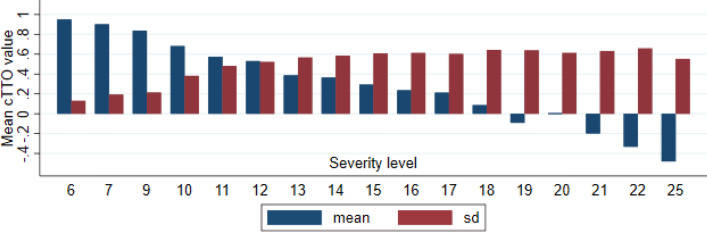
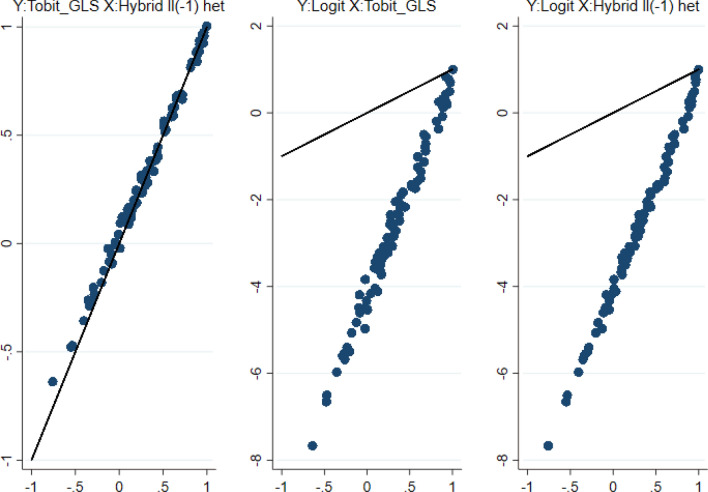
A nationally representative sample based on age (> 18 years), gender, education, and geographical region was recruited using data provided by Statistics Denmark. Computer-assisted personal interviews were carried out using the EQ-VT 2.1. Respondents each valued ten health states using composite time trade-off (cTTO) and seven health states using discrete-choice experiment (DCE). Different predictive models were explored using cTTO and DCE data alone or in combination as hybrid models. Model performance was assessed using logical consistency.
A total of 1014 interviews were included in the analyses. The sample was representative of the Danish adult population, though the sample contained slightly more respondents with higher education than in the general population. Only the heteroscedastic censored hybrid model combining cTTO and DCE data yielded consistent results, and hence was chosen for modelling the final Danish value set. The predicted values ranged from - 0.757 to 1, and anxiety/depression was the dimension assigned most value by respondents.
This study established the Danish EQ-5D-5L value set, which represents the preferences of the Danish general population, and is expected to provide key input for healthcare decision-making in a Danish context.
自 2021 年起,丹麦预计将使用质量调整生命年(QALYs)来确定医院配药的优先次序。本研究旨在基于对丹麦成年人群体的代表性样本进行访谈,开发首个基于 EQ-5D-5L 的丹麦效用值量表。
采用丹麦统计局提供的数据,基于年龄(>18 岁)、性别、教育程度和地理区域,招募了一个具有全国代表性的样本。采用计算机辅助个人访谈,使用 EQ-VT 2.1 进行。受访者分别使用综合时间权衡法(cTTO)和离散选择实验(DCE)对十种健康状态进行估值,对七种健康状态进行估值。使用 cTTO 和 DCE 数据单独或组合作为混合模型,探索了不同的预测模型。使用逻辑一致性评估模型性能。
共纳入 1014 次访谈进行分析。该样本具有代表性,与丹麦成年人口特征相符,但样本中接受高等教育的受访者比例略高于一般人群。只有结合 cTTO 和 DCE 数据的异方差 censored 混合模型得出了一致的结果,因此被选为建模最终的丹麦效用值量表。预测值范围为-0.757 至 1,受访者对焦虑/抑郁维度赋予的价值最高。
本研究建立了丹麦 EQ-5D-5L 效用值量表,代表了丹麦普通人群的偏好,预计将为丹麦背景下的医疗保健决策提供关键投入。