Department of Obstetrics and Gynecology, Shuang Ho Hospital, Taipei Medical University, New Taipei City, 23561, Taiwan.
Department of Pathology, Shuang Ho Hospital, Taipei Medical University, New Taipei City, 23561, Taiwan.
J Ovarian Res. 2024 Oct 2;17(1):194. doi: 10.1186/s13048-024-01520-2.
Ovarian cancer is the most lethal gynecological cancer. As the primary treatment, chemotherapy has a response rate of only 60-70% in advanced stages, and even lower as a second-line treatment. Despite guideline recommendations, which drugs will be most effective remains unclear. Thus, a strategy to prioritize chemotherapy options is urgently needed. Cancer organoids have recently emerged as a method for in vitro drug testing. However, limited clinical correlations have been assessed with test results from cancer organoids, particularly in gynecological cancers. We therefore aimed to generate patient-derived organoids (PDOs) of ovarian cancer, to assess their drug sensitivities and correlations with patient clinical outcomes.
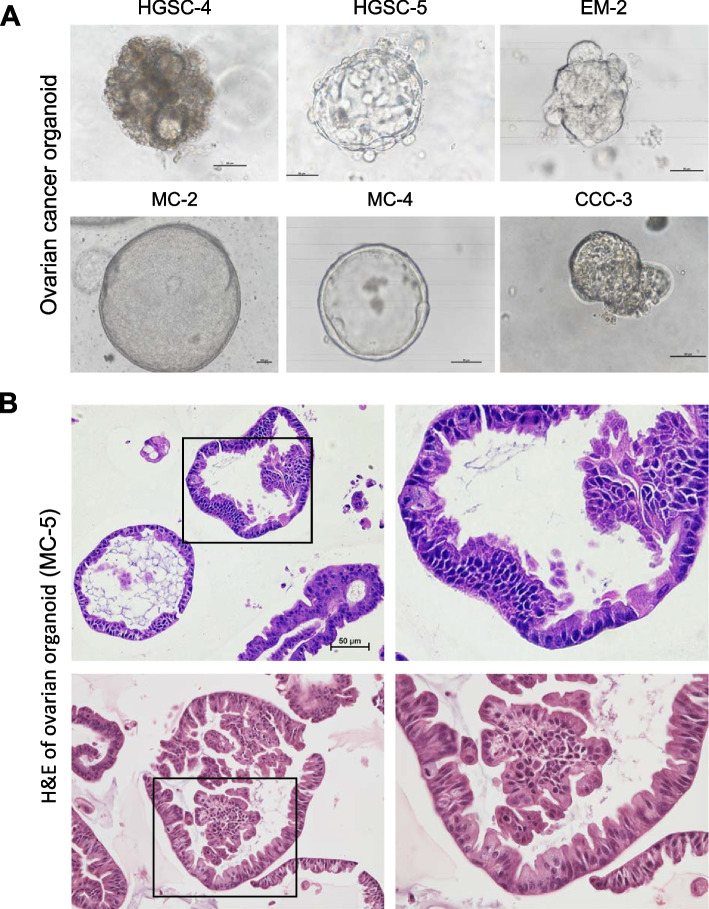
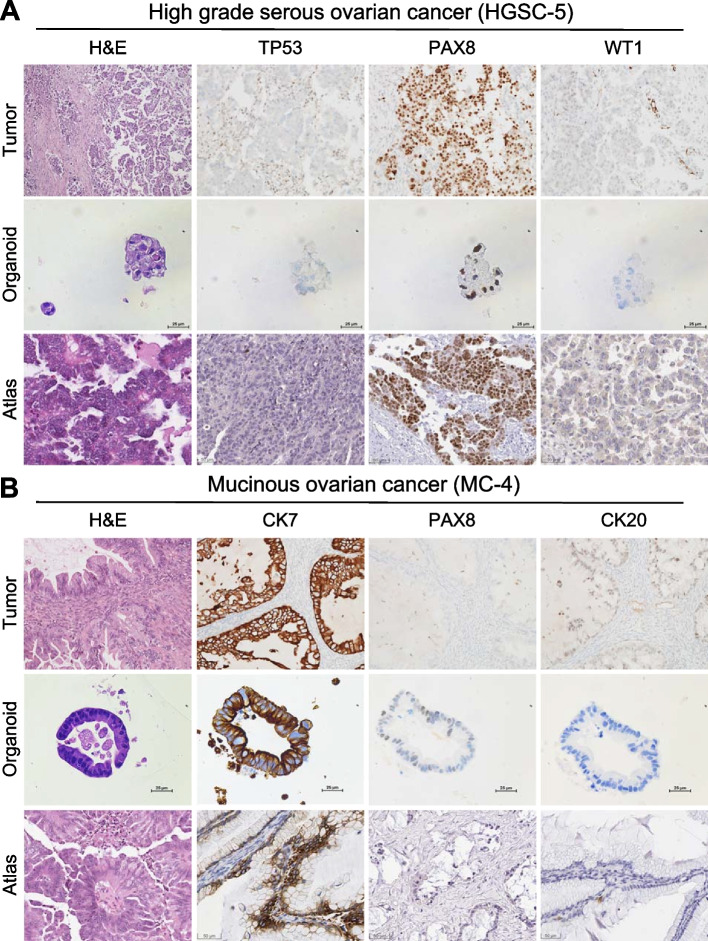
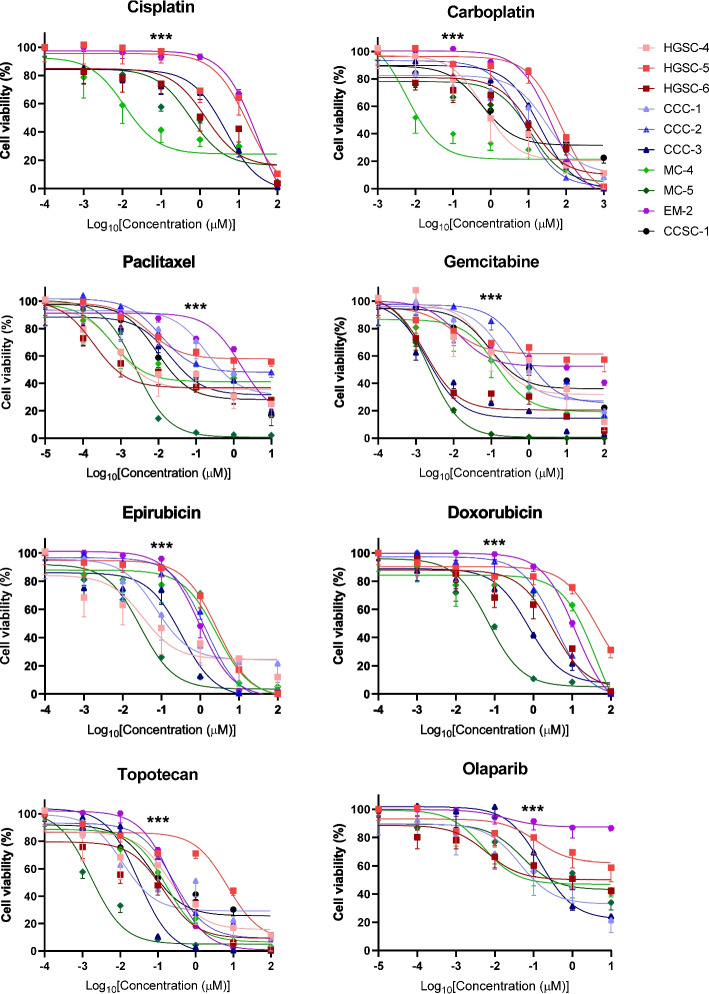
PDOs were generated from fresh tumors obtained during surgical resection, which was then cultured under matrix gel and appropriate growth factors. Morphological and molecular characterization of PDOs were assessed by phase contrast microscopy and paraffin-embedded histopathology. Expressions of PAX8, TP53, WT1, CK7, and CK20 were tested by immunohistochemical staining and compared with parental tumor tissues and the human protein atlas database. PDOs were subjected to in vitro drug testing to determine drug sensitivity using Titer-Glo 3D Cell Viability Assay. PDO viability was measured, and area under the curve calculated, to compare responses to various compounds. Correlations were calculated between selected patients' clinical outcomes and in vitro drug testing results.
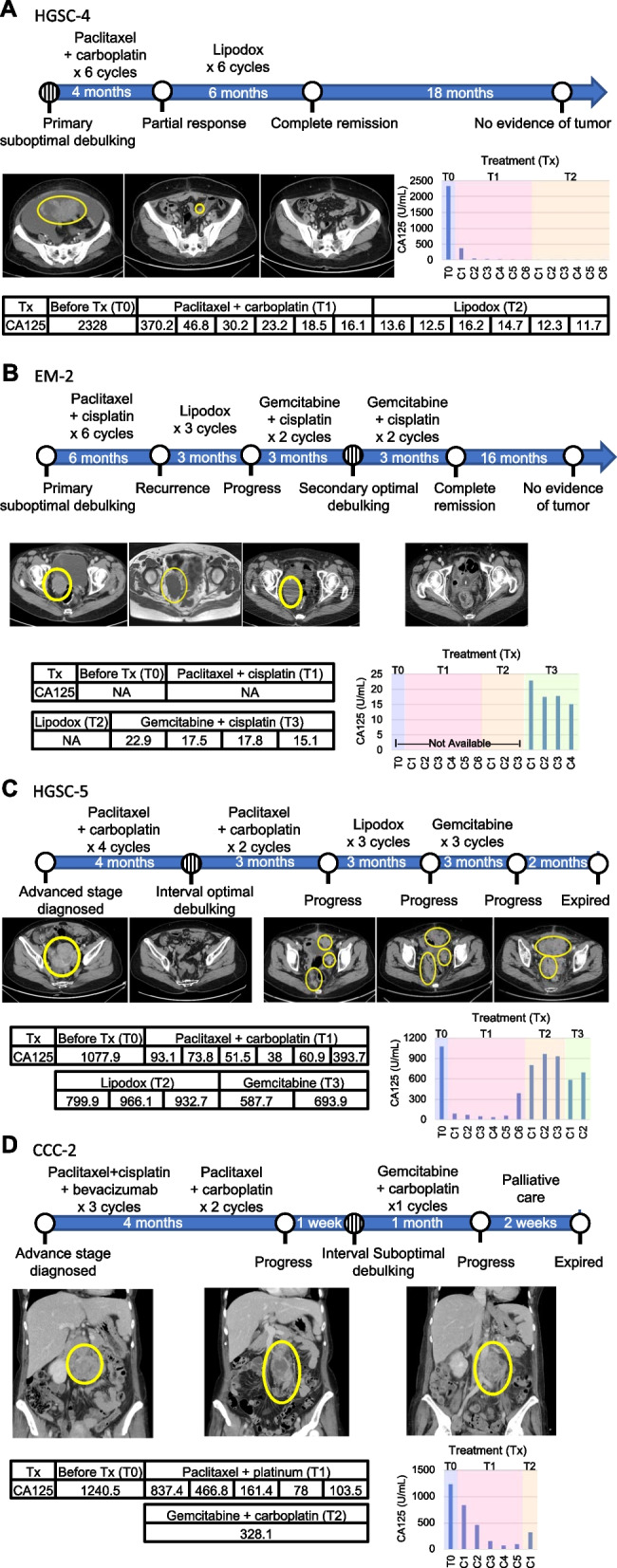
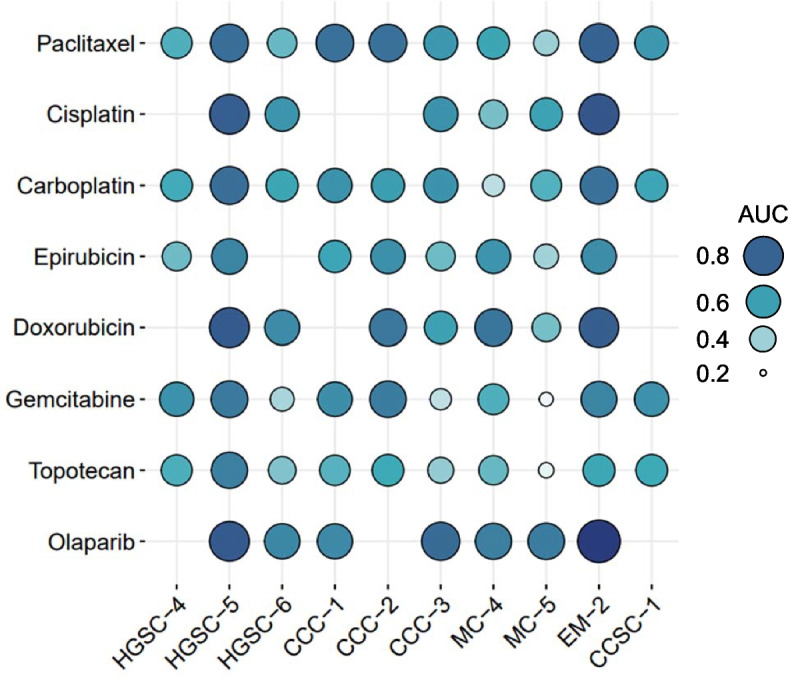
We established 31 PDOs. Among them, 28 PDOs can be expanded, including 15, 11, and 2 from ovarian, endometrial, and cervical cancers, respectively. The PDOs preserved the histopathological profiles of their originating tumors. In vitro drug testing of 10 ovarian cancer PDOs revealed individual differential responses to recommended drugs, and interpersonal heterogeneity in drug sensitivity, even with the same histology type. Among four patients who were platinum sensitive, resistant, or refractory, PDO drug responses correlated well with their clinical courses.
In vitro drug testing using ovarian cancer organoids is feasible and correlates well with patient clinical responses. These results may facilitate development of precision chemotherapy and personalized screening for repurposed or new drugs.
卵巢癌是最致命的妇科癌症。作为主要治疗方法,化疗在晚期的缓解率仅为 60-70%,二线治疗时更低。尽管有指南推荐,但哪种药物最有效仍不清楚。因此,迫切需要制定一种优先选择化疗方案的策略。癌症类器官最近已成为体外药物测试的一种方法。然而,与癌症类器官的测试结果相比,其与临床结果的相关性评估有限,特别是在妇科癌症中。因此,我们旨在生成卵巢癌患者来源的类器官(PDO),以评估其药物敏感性及其与患者临床结局的相关性。
PDO 是从手术切除时获得的新鲜肿瘤中生成的,然后在基质凝胶和适当的生长因子下培养。通过相差显微镜和石蜡包埋组织病理学评估 PDO 的形态和分子特征。通过免疫组织化学染色测试 PAX8、TP53、WT1、CK7 和 CK20 的表达,并与亲本肿瘤组织和人类蛋白质图谱数据库进行比较。通过 Titer-Glo 3D 细胞活力测定法进行体外药物测试,以确定 PDO 对各种化合物的敏感性。测量 PDO 的活力,并计算曲线下面积,以比较对各种化合物的反应。计算选定患者的临床结局与体外药物测试结果之间的相关性。
我们建立了 31 个 PDO。其中,28 个 PDO 可以扩增,包括卵巢癌、子宫内膜癌和宫颈癌来源的 15、11 和 2 个 PDO。PDO 保留了其起源肿瘤的组织病理学特征。对 10 个卵巢癌 PDO 的体外药物测试显示,即使组织学类型相同,对推荐药物的个体反应也存在差异,药物敏感性存在个体间异质性。在 4 名对铂敏感、耐药或难治的患者中,PDO 药物反应与他们的临床过程相关性良好。
使用卵巢癌类器官进行体外药物测试是可行的,与患者的临床反应相关性良好。这些结果可能有助于开发精准化疗,并对重新利用或新药物进行个性化筛选。