The Second School of Clinical Medicine, Southern Medical University, Guangzhou, China.
Guangdong Lung Cancer Institute, Guangdong Provincial People's Hospital, Guangdong Key Laboratory of Lung Cancer Translational Medicine, South China University of Technology & Guangdong Academy of Medical Sciences, Guangzhou, China.
Thorac Cancer. 2020 Aug;11(8):2279-2290. doi: 10.1111/1759-7714.13542. Epub 2020 Jul 7.
Patient-derived organoid (PDO) models are highly valuable and have potentially widespread clinical applications. However, limited information is available regarding organoid models of non-small cell lung cancer (NSCLC). This study aimed to characterize the consistency between primary tumors in NSCLC and PDOs and to explore the applications of PDOs as preclinical models to understand and predict treatment response during lung cancer.
Fresh tumor samples were harvested for organoid culture. Primary tumor samples and PDOs were analyzed via whole-exome sequencing. Paired samples were subjected to immunohistochemical analysis. There were 26 antineoplastic drugs tested in the PDOs. Cell viability was assessed using the Cell Titer Glo assay 7-10 days after drug treatment. A heatmap of log-transformed values of the half-maximal inhibitory concentrations was generated on the basis of drug responses of PDOs through nonlinear regression (curve fit). A total of 12 patients (stages I-III) were enrolled, and 7 paired surgical tumors and PDOs were analyzed.
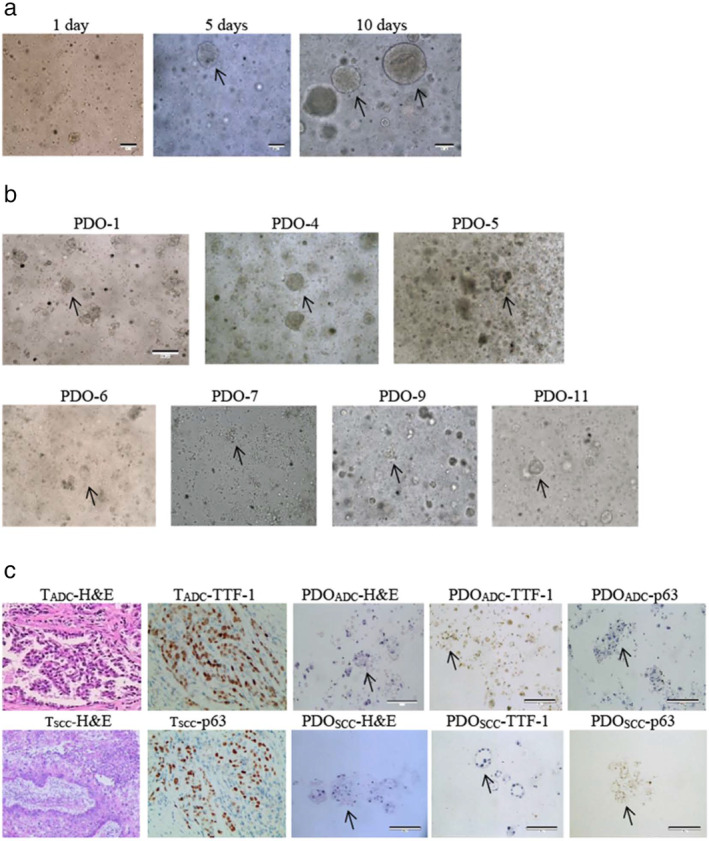
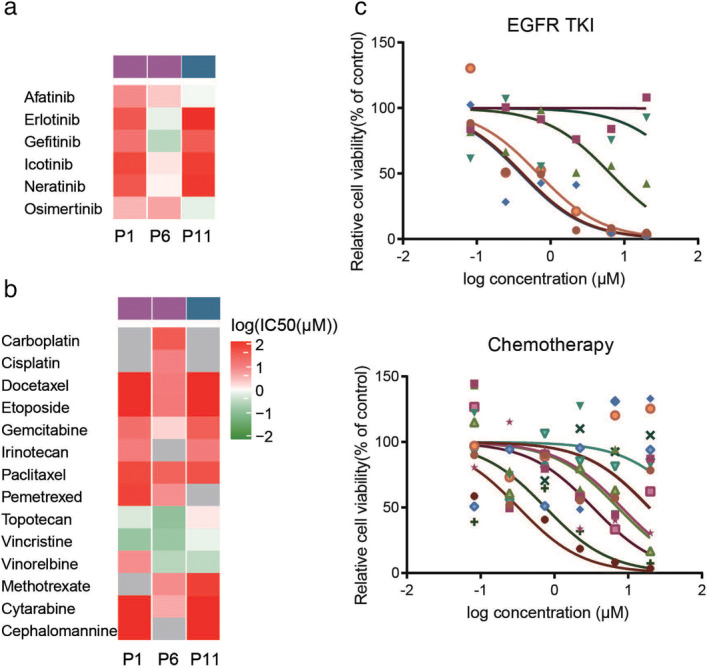
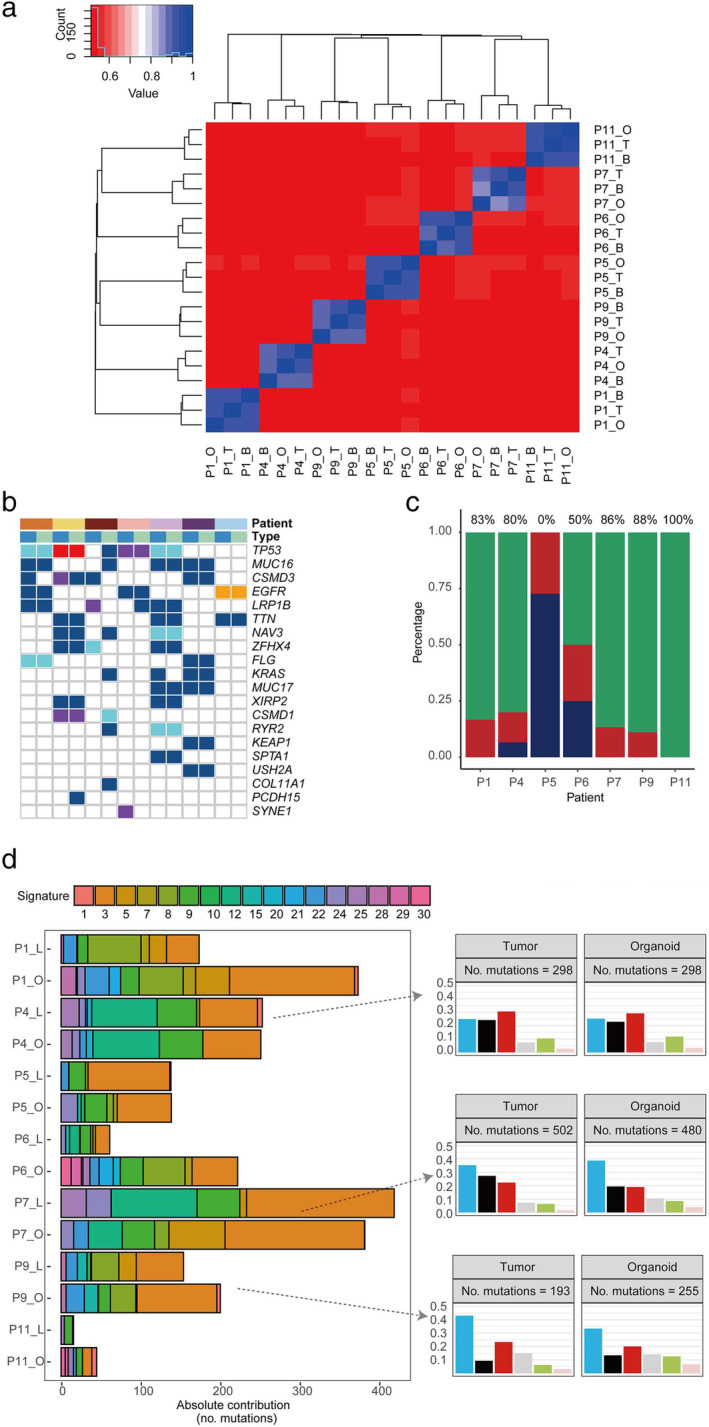
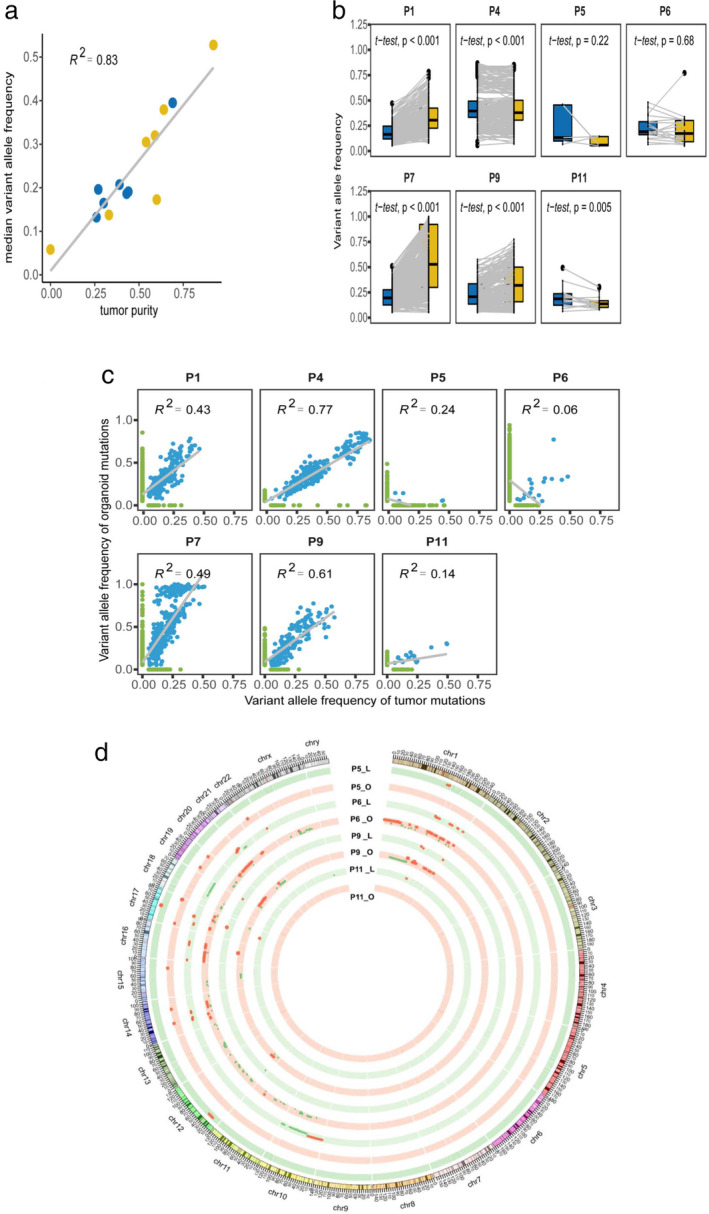
PDOs retained the histological and genetic characteristics of the primary tumors. The concordance between tumors and PDOs in mutations in the top 20 NSCLC-related genes was >80% in five patients. Sample purity was significantly and positively associated with variant allele frequency (Pearson r = 0.82, P = 0.0005) and chromosome stability. The in vitro response to drug screening with PDOs revealed high correlation with the mutation profiles in the primary tumors.
PDOs are highly credible models for detecting NSCLC and for prospective prediction of the treatment response for personalized precision medicine.
Lung cancer organoid models could save precious time of drug testing on patients, and accurately select anticancer drugs according to the drug sensitivity results, so as to provide a powerful supplement and verification for the gene sequencing.
患者来源的类器官(PDO)模型具有很高的价值,并且具有广泛的临床应用潜力。然而,关于非小细胞肺癌(NSCLC)的类器官模型的信息有限。本研究旨在分析 NSCLC 中原发性肿瘤与 PDO 之间的一致性,并探讨 PDO 作为临床前模型的应用,以了解和预测肺癌的治疗反应。
采集新鲜肿瘤样本进行类器官培养。对原发性肿瘤样本和 PDO 进行全外显子测序分析。对配对样本进行免疫组织化学分析。在 PDO 中测试了 26 种抗癌药物。用 Cell Titer Glo 检测试剂盒在药物处理后 7-10 天检测细胞活力。根据 PDO 对药物的反应,通过非线性回归(曲线拟合)生成基于半最大抑制浓度的对数转换值的热图。共纳入 12 名患者(I-III 期),分析了 7 对手术肿瘤和 PDO。
PDO 保留了原发性肿瘤的组织学和遗传学特征。在 5 名患者中,前 20 个 NSCLC 相关基因的突变在肿瘤和 PDO 之间的一致性>80%。样本纯度与变异等位基因频率(Pearson r = 0.82,P = 0.0005)和染色体稳定性显著正相关。PDO 对药物筛选的体外反应与原发性肿瘤的突变谱高度相关。
PDO 是检测 NSCLC 和前瞻性预测治疗反应的高度可信模型,可用于个性化精准医学。
肺癌类器官模型可以节省对患者进行药物测试的宝贵时间,并根据药物敏感性结果准确选择抗癌药物,从而为基因测序提供有力的补充和验证。