Department of Neuropathology, Graduate School of Medicine, The University of Tokyo, Hongo 7-3-1, Bunkyo-Ku, Tokyo, 113-8655, Japan.
Unit for Early and Exploratory Clinical Development, The University of Tokyo Hospital, Hongo 7-3-1, Bunkyo-Ku, Tokyo, 113-8655, Japan.
Alzheimers Res Ther. 2024 Oct 3;16(1):205. doi: 10.1186/s13195-024-01568-8.
The approval of lecanemab, an anti-amyloid therapy for Alzheimer's disease (AD), necessitates addressing healthcare preparedness for disease-modifying treatment (DMT) to ensure appropriate, safe, and sustainable drug administration. Understanding public perceptions on this matter is crucial. We aimed to assess discrepancies and similarities in the perceptions of Japanese trial-ready cohort study ('J-TRC webstudy') participants and clinical specialists in the fields of dementia treatment and radiology, concerning affairs related to challenges in DMT preparedness.
This was a cross-sectional prospective observational study conducted in November-December 2023. The J-TRC webstudy participants were invited to participate in an online survey using Google Forms, and clinical specialists were invited to complete a mail-based survey. Main questionnaire items had been designed to be common in both surveys, and their responses were analyzed for participant attributes, interests, attitudes, expectations, and concerns about DMTs without specifying lecanemab.
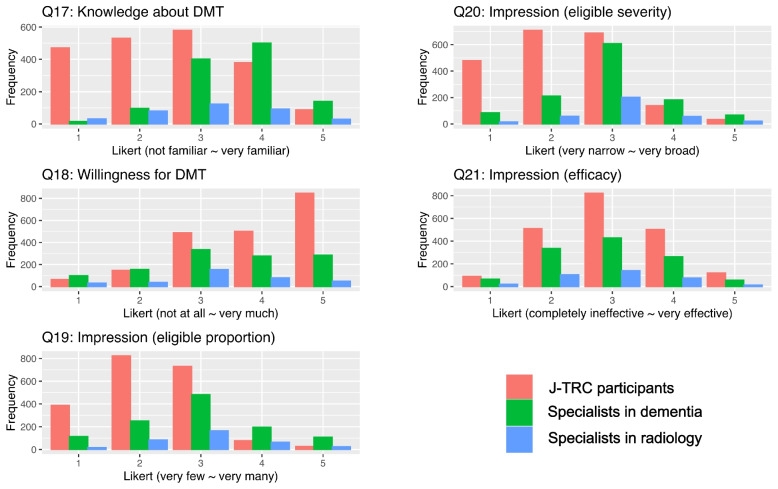
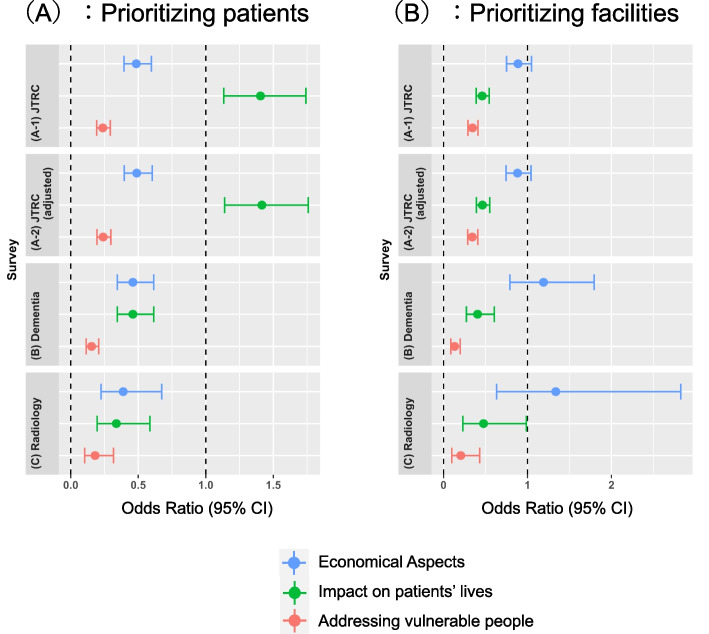
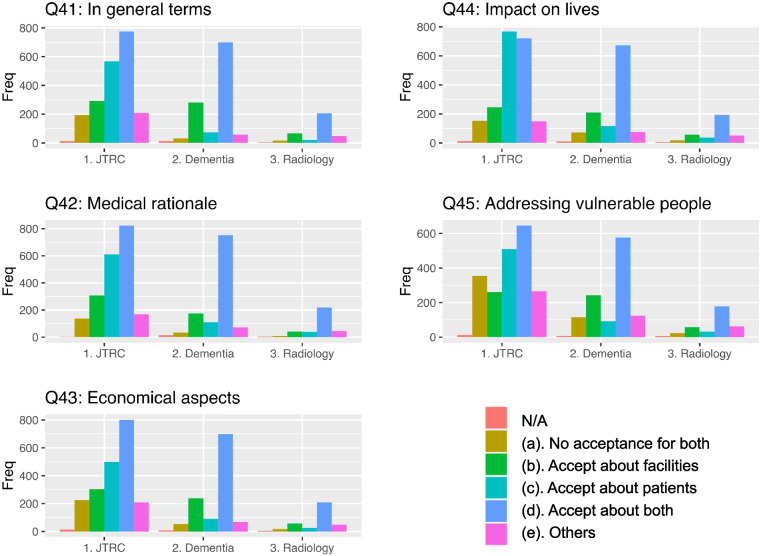
Responses were obtained from n = 2,050 J-TRC webstudy participants and n = 1,518 clinical specialists. Compared to specialists, more J-TRC respondents perceived the eligible proportion for DMT as smaller (59.1% versus 30.7%), perceived the eligible severity for DMT as more limited (58.0% versus 24.5%), and perceived the efficacy of DMT as slightly more encouraging (29.3% versus 34.8%). In terms of treatment prioritization, both J-TRC respondents and specialist respondents exhibited similar levels of acceptance for prioritizing patients to treat: e.g., approximately two-thirds endorsed patient prioritization under hypothetical resource constraints or other reasons. A medical rationale emerged as the most compelling reason for acceptance of patient prioritization across the surveys. In contrast, the need to address vulnerable populations was the reason that led to the least acceptance of prioritization, followed by economic considerations.
Our findings offer valuable insights into the discrepancies in knowledge and perception between patients and healthcare providers. This could enhance the delivery of patient information in clinical settings and inform the discussion surrounding patient prioritization strategies.
仑卡奈单抗(lecanemab)获批用于治疗阿尔茨海默病(AD),这就需要为疾病修饰治疗(DMT)做好医疗准备,以确保安全、合理地使用药物。了解公众对此的看法至关重要。我们旨在评估日本试验准备队列研究('J-TRC webstudy')参与者和痴呆症治疗及放射学领域的临床专家在与 DMT 准备相关的挑战方面的看法差异和相似之处。
这是一项于 2023 年 11 月至 12 月进行的横断面前瞻性观察研究。邀请 J-TRC webstudy 参与者使用 Google 表单参与在线调查,邀请临床专家通过邮件完成调查。主要问卷项目在两个调查中均已设计为通用,分析参与者属性、兴趣、态度、期望和对 DMT 的担忧,但未指定 lecanemab。
收到了 2050 名 J-TRC webstudy 参与者和 1518 名临床专家的回复。与专家相比,更多的 J-TRC 受访者认为 DMT 的合格比例较小(59.1%比 30.7%),认为 DMT 的合格严重程度更有限(58.0%比 24.5%),认为 DMT 的疗效略为鼓舞人心(29.3%比 34.8%)。在治疗优先级方面,J-TRC 受访者和专家受访者对优先治疗患者的接受程度相似:例如,大约三分之二的受访者在资源有限或其他原因的假设下支持患者优先治疗。在两项调查中,医疗理由都是接受患者优先治疗的最有说服力的原因。相比之下,解决弱势群体问题是导致优先级最低接受的原因,其次是经济考虑。
我们的研究结果提供了有关患者和医疗保健提供者之间知识和认知差异的有价值的见解。这可以增强临床环境中患者信息的传递,并为围绕患者优先级策略的讨论提供信息。