Division of Pediatric Hematology and Oncology, Davis School of Medicine, University of California, Sacramento, California, USA.
Heersink School of Medicine, University of Alabama at Birmingham, Birmingham, Alabama, USA.
Cancer Med. 2024 Sep;13(18):e70198. doi: 10.1002/cam4.70198.
Cancer is the fourth leading cause of death in adolescents and young adults (AYA) worldwide. Although successful treatment of cancer in AYA has increased in recent years in most of the world, this is not true for many low- and middle-income countries (LMIC) where over 80% of all AYA live. This study investigated the needs of AYA with cancer in parts of Latin America (LATAM) through the perspectives of non-physician health care providers and partners.
Semi-structured interviews (in Spanish) were conducted with non-physician partners from Mexico, Peru, Central America, and the Caribbean over Zoom. Participants were recruited through previously identified local physicians and international non-physician professionals working in these countries. Transcripts were coded and key themes identified until thematic saturation was reached (Atlas.ti).
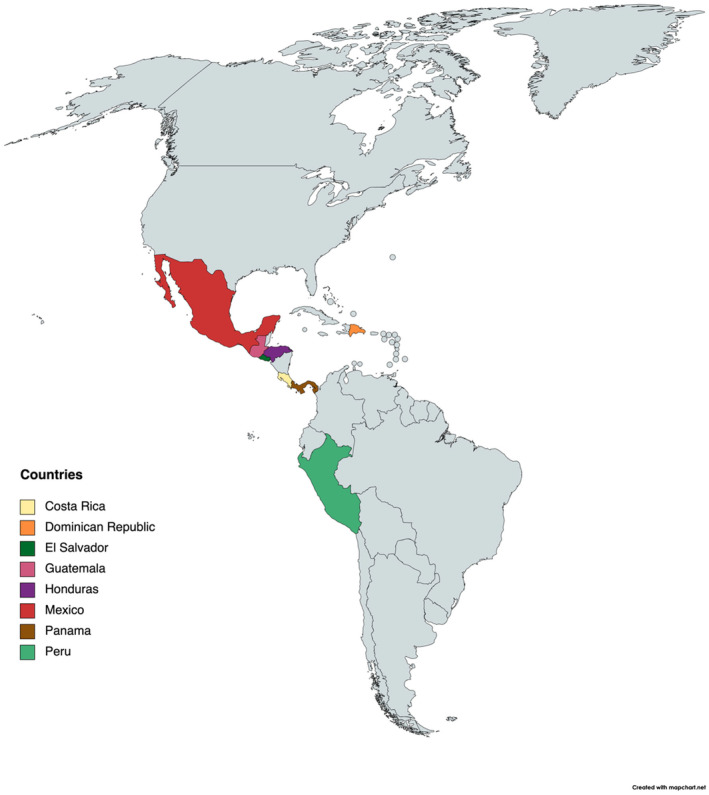
Thirty participants representing eight countries were interviewed, providing 1202 min of transcript data. Data were organized into barriers, facilitators, and strategies to improve the delivery of health care for AYA with cancer in LATAM at the patient- (e.g., financial barriers, continued schooling), parent- (e.g., limited medical literacy, advocacy), and hospital-level (e.g., structural barriers, increasing funding).
There are many similarities in the barriers and facilitators to AYA care between LATAM and high-income countries (HIC); however, some characteristics are more unique to LATAM, for example, strict age restrictions for pediatric care and abandonment of therapy. As LATAM countries continue to build cancer control programs, there is an opportunity to consider our identified barriers, facilitators, and strategies to address the unique needs of AYA with cancer.
癌症是全球青少年和青年(AYA)人群的第四大死因。尽管近年来在世界大多数地区,AYA 癌症的成功治疗有所增加,但在许多中低收入国家(LMIC)并非如此,那里超过 80%的 AYA 居住在这些国家。本研究通过非医师医疗保健提供者和合作伙伴的视角,调查了拉丁美洲(LATAM)部分地区癌症 AYA 的需求。
通过 Zoom 对来自墨西哥、秘鲁、中美洲和加勒比地区的非医师合作伙伴进行了半结构式访谈(西班牙语)。参与者通过先前确定的在这些国家工作的当地医生和国际非医师专业人员招募。对抄本进行编码,并确定关键主题,直到达到主题饱和(Atlas.ti)。
代表八个国家的 30 名参与者接受了采访,提供了 1202 分钟的转录数据。数据分为障碍、促进因素和策略,以改善 LATAM 青少年和青年癌症患者的医疗保健,包括患者层面(例如经济障碍、继续接受教育)、家长层面(例如有限的医学素养、倡导)和医院层面(例如结构障碍、增加资金)。
在 LATAM 和高收入国家(HIC)中,青少年癌症护理的障碍和促进因素有许多相似之处;然而,有些特征在 LATAM 更为独特,例如,儿科护理的严格年龄限制和放弃治疗。随着 LATAM 国家继续建立癌症控制计划,有机会考虑我们确定的障碍、促进因素和策略,以满足癌症 AYA 的独特需求。